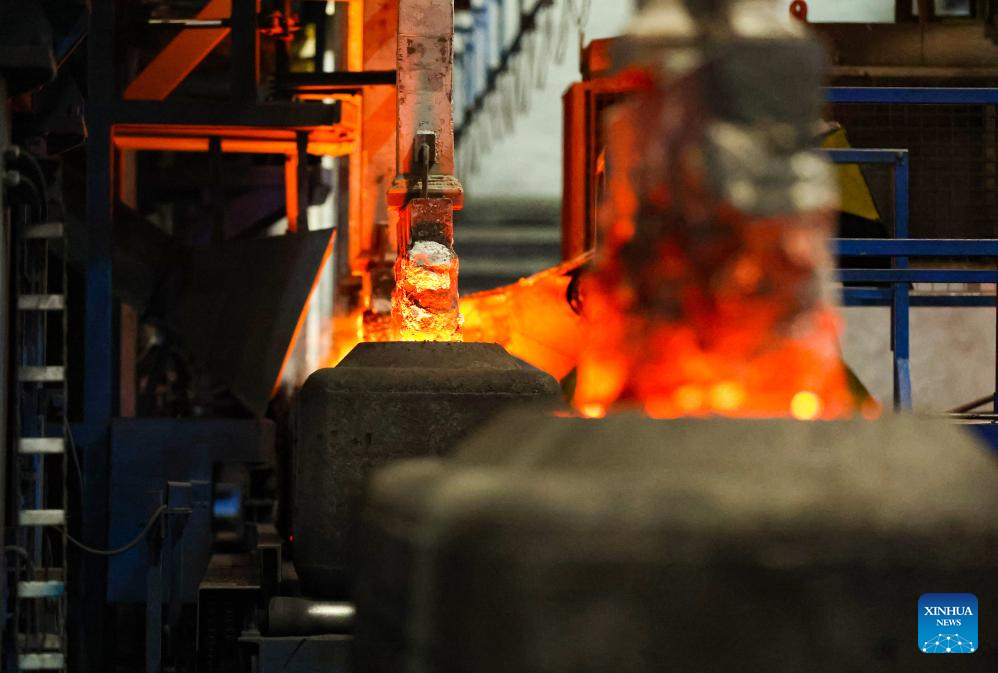
Construction has officially begun on a high-end rare earth aluminum alloy facility in the Baotou Jinshan Economic Development Zone in Inner Mongolia, China, marking one of the most significant new industrial investments in the country’s rare earth heartland in recent years. With a total investment of approximately 500 million yuan and a planned annual output of 100,000 metric tons, the project will be advanced in two phases, steadily building capacity while extending what is already one of the world’s most integrated rare earth industrial ecosystems. The development signals China’s intensifying push to move beyond raw rare earth extraction and into the higher-value manufacturing products that global supply chains increasingly depend upon.
The Capital of Rare Earths Builds Higher Up the Chain
To understand the significance of this project, it is necessary to understand where it is being built. The Baotou Rare Earth High-Tech Industrial Development Zone was established in 1990 and approved by China’s State Council as a national-level high-tech industrial development zone in 1992. It is the only national-level high-tech zone dedicated to the rare earths industry among 108 such zones across China. Sitting atop the Bayan Obo mining district — which holds the world’s largest known rare earth deposits — Baotou has spent three decades transforming from a mining town into the nerve centre of China’s rare earth industrial complex. The zone hosts 8,447 registered companies, of which 95 are rare earth producers, with 22 listed companies, seven subsidiaries of Fortune Global 500 groups, and 39 foreign-funded enterprises.
Project Fact Sheet
Project Name: High-End Rare Earth Aluminum Alloy Project, Baotou Jinshan Economic Development Zone
Location: Baotou Jinshan Economic Development Zone, Inner Mongolia, China; associated cluster development in Guyang
Total Investment: Approximately 500 million yuan (~USD 69 million)
Target Annual Output: 100,000 metric tons (full build-out)
Phase I Capacity: 30,000mt — high-end rare earth aluminum alloy production line; focus on R&D and scaled production
Phase II Capacity: Additional 70,000mt — industrial chain extension, product mix optimisation, and cluster development
Construction Start: April 2026
Key Products: High-end rare earth aluminum alloys for aerospace, EV, rail, electronics, and power transmission applications
Strategic Objective: Anchor a distinctive rare earth aluminum alloy industrial cluster centred on Guyang
Project Team
Host Zone: Baotou Jinshan Economic Development Zone, Baotou, Inner Mongolia
Oversight Authority: Baotou Rare Earth High-Tech Industrial Development Zone Administration
Developer / Operator: To be confirmed (operating within the Baotou rare earth industrial ecosystem)
Key Research Partners: Baotou Materials Research Institute of Shanghai Jiaotong University; Baotou Rare Earth R&D Centre of the Chinese Academy of Sciences
Industry Regulator: Inner Mongolia Autonomous Region Government; Baotou Municipal Government
Engineering & Construction Contractors: To be confirmed
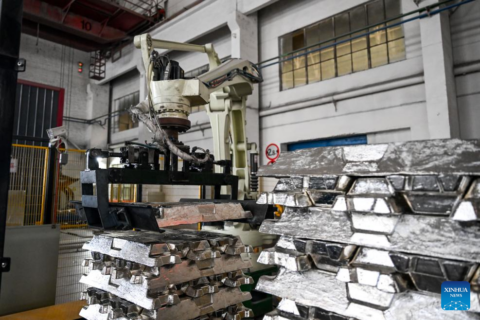
Within this formidable ecosystem, the new rare earth aluminum alloy project represents a deliberate step up the value ladder. Phase I will build a 30,000mt high-end rare earth aluminum alloy production line, focusing on technology research and development and capacity release to rapidly achieve scaled-up production. Phase II will expand capacity by 70,000mt, further extend, supplement, and strengthen the industrial chain, optimise the product mix, increase added value, and support Guyang in building a distinctive high-end rare earth aluminum alloy industrial cluster. That final objective — building a distinctive industrial cluster centred on Guyang — points to a deliberate geographic expansion of Baotou’s rare earth industrial footprint beyond the established high-tech zone, seeding a new node in the broader regional ecosystem.
What Makes Rare Earth Aluminum Alloy Worth 500 Million Yuan
Rare earth aluminum alloys are not a niche product. By incorporating small quantities of rare earth elements — most commonly cerium, lanthanum, or yttrium — into standard aluminum, manufacturers achieve significant improvements in mechanical strength, corrosion resistance, thermal stability, and electrical conductivity. These enhanced properties make rare earth aluminum alloys particularly valuable in aerospace components, high-speed rail infrastructure, electric vehicle powertrains, advanced electronics, and next-generation power transmission lines. In an era defined by lightweighting demands across transportation and electrification across energy, rare earth aluminum alloys occupy a strategically important position in multiple converging industrial trends.
The application of rare earth in steel, aluminum, copper and other fields has been continuously expanded across the Baotou zone, which has built a solid foundation for the development of rare earth plus alloy industries. Existing enterprises in the zone such as Huijin New Material have already demonstrated commercial viability for rare earth aluminum alloy production at smaller scales. The new 100,000mt project, if it reaches full Phase II capacity, would dwarf existing operations and establish Baotou as not merely a participant in the rare earth aluminum alloy market but its dominant supplier — a position with major implications for industries worldwide that depend on this material.
A Strategic Move in a High-Stakes Global Competition
The timing of this investment is not coincidental. Rare earth supply chains have become one of the most contested domains in global industrial policy, as Western governments scramble to reduce dependence on Chinese rare earth processing. The United States, European Union, Australia, Canada, and Japan have all announced programmes to develop alternative rare earth supply chains and processing capacity. The US Department of Energy has outlined plans to provide up to $500 million in funding to expand domestic critical minerals processing and battery materials manufacturing, as Washington seeks to reduce reliance on foreign supply chains. Europe is making parallel moves in adjacent materials sectors — Norsk Hydro’s NOK 1.7 billion aluminium wire casthouse facility in Norway being one example of the continent’s broader push to onshore strategic materials processing. Yet the gap between ambition and operational capacity remains vast: China currently controls over 85% of global rare earth processing and an even higher share of the downstream rare earth alloy and magnet manufacturing that translate raw materials into usable industrial components.
Baotou’s Rare Earth High-Tech Industrial Development Zone has been accelerating industrial upgrading with 80 key projects each exceeding 100 million yuan in investment, reflecting a deliberate, state-backed strategy to consolidate China’s position not just in extraction but in advanced manufacturing — the part of the value chain that generates the highest margins and the deepest strategic lock-in. The new rare earth aluminum alloy project fits squarely within that trajectory, adding high-value production capacity at a moment when global demand for lightweight, high-performance materials is accelerating and Western alternatives remain years away from meaningful scale.
Leave a Reply