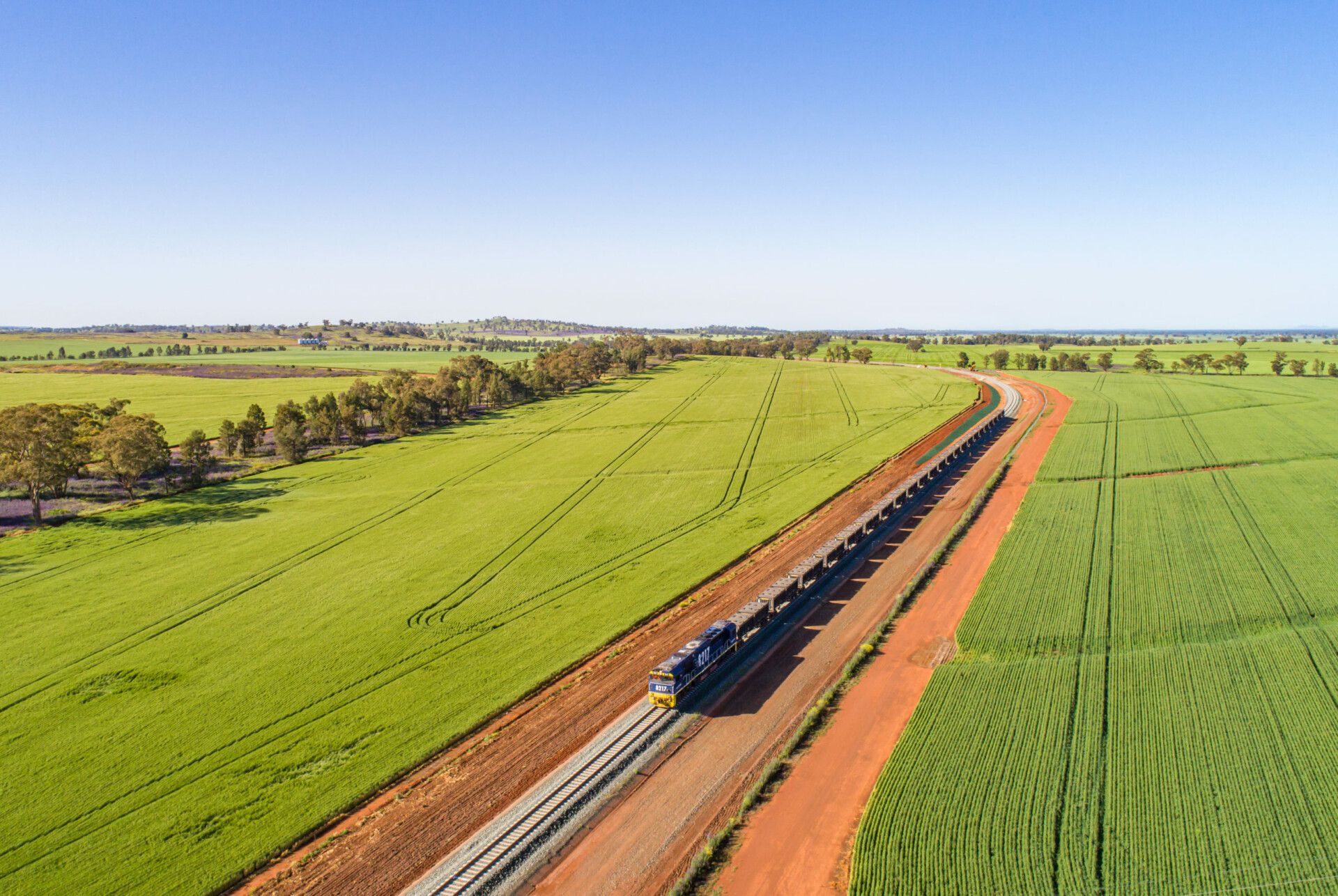
The Melbourne-Brisbane Inland Rail project continues to advance as Australia’s largest freight rail construction program, with phased delivery underway across multiple sections. The 1,600-kilometre corridor connects Victoria, New South Wales, and Queensland, and developers are progressing construction while refining scope and timelines following earlier reviews.
The project focuses on improving freight efficiency by enabling double-stacked trains and reducing transit time between Melbourne and Brisbane. Therefore, it supports national supply chains and reduces reliance on road transport. In addition, the development enhances regional connectivity and unlocks long-term economic benefits for inland communities.
As of 2026, construction continues across several active sections, although delivery remains staged due to complexity and cost adjustments. Meanwhile, authorities have prioritized key segments, including the Beveridge to Parkes corridor, while planning and approvals continue for northern sections.
Melbourne-Brisbane Inland Rail Project Progresses with Phased Construction
The Melbourne to Brisbane Inland Rail project has entered an advanced construction phase, with multiple sections either completed or under development. Recently, contractors completed the Stockinbingal to Parkes segment, marking a significant milestone in the broader program.
Furthermore, Inland Rail Pty Ltd continues to deliver upgrades and new track installations across the corridor. The project includes approximately 600 kilometers of new track and upgrades to about 1,000 kilometers of existing infrastructure.
However, project reviews have led to scope refinements, and stakeholders have adjusted delivery priorities to manage costs and environmental approvals. Consequently, authorities now focus on completing viable sections while maintaining long-term commitments to the full corridor.
In parallel, Australia is also advancing major passenger rail developments, including the Logan and Gold Coast Faster Rail project, which complements freight upgrades by improving commuter capacity.
Melbourne-Brisbane Inland Rail Project Strengthens Freight Connectivity
The Melbourne-Brisbane Inland Rail project aims to transform freight logistics by linking key agricultural and industrial regions. Specifically, the corridor will allow trains to move goods between Melbourne and Brisbane in under 24 hours.
Moreover, the project enhances network resilience by providing an inland alternative to coastal rail routes. As a result, freight operators will benefit from improved reliability and increased capacity for bulk and containerized goods.
In addition, construction activities continue to generate employment and stimulate regional economies along the route. Therefore, the project delivers both immediate construction value and long-term operational efficiency across Australia’s freight network.
Overall, the Inland Rail project remains a critical infrastructure investment, despite delivery challenges. With phased construction ongoing, the development continues to reshape national logistics and transport systems.
Remarks on the proposed review
The Federal Minister for Infrastructure, Transport, Regional Development, and Local Government spoke about the project’s independent review. Catherine King said that the review will certainly give the Government a wide and clear-eyed view. More especially, on what the pressing problems are and the way forward. The Federal Minister also said that the project delivery serves as their election commitment.
By 2040, Australia’s freight supply chain is projected to grow by well up to 35%. Therefore, the Inland Rail marks a significant part of the journey towards building capacity alongside the capability to meet the ever-growing demand.
The Federal Minister for Finance also spoke about the project. Katy Gallagher revealed that the Inland Rail will support growing Australian companies in addition to local jobs. As it stands, well over $2.7 billion in contracts have already been awarded to over 400 businesses and suppliers across Australia.
Melbourne-Brisbane Inland rail project overview
The Melbourne to Brisbane Inland Rail project is an Australian Government initiative to repair and build a 1,700km freight railway that, once finished, will allow express trains to travel between Tottenham in Melbourne and Acacia Ridge in Brisbane in less than 24 hours.
The project is reportedly the largest transport infrastructure project in the Australian Government’s US$ 120bn pipeline, and a critical action under the National Freight and Supply Chain Strategy.
The Australian and Queensland governments signed a Bi-Lateral Agreement for Inland Rail on November 29, 2019, allowing the project to be completed in Queensland. The Bi-Lateral Agreement establishes the terms and conditions for the development of inland rail in Queensland, including criteria for:
- the utilization of the state government’s protected/preserved Gowrie-Granchester and Southern Freight Rail Corridors – the development of joint business cases for: – Brisbane to Toowoomba Passenger Services by December 31, 2022 – Intermodal South East Queensland Inland Rail by December 31, 2022
- Rail Access to Brisbane’s Port Study
- A rail line between Salisbury and Beaudesert
Also Read: Australia’s Bruce Highway Upgrade Project
- Construction on the Kagaru to Acacia Ridge and Bromelton sections will be limited to passing loops until the business cases are finished and the traffic requirements, including double stacking, on the line are better understood
- restricting coal traffic on the Kagaru to Acacia Ridge segment until the Salisbury to Beaudesert line is completed or until another date agreed upon by the federal and state governments
- a panel of independent global experts to advise on the scope, interpretation, assumptions, and application of flood modeling and best practices for structural design in a floodplain setting throughout the whole Queensland Inland Rail network.
The Inland Rail Project’s Development
In the next years, freight traffic in Queensland is expected to triple, with South East Queensland witnessing the most substantial growth. As part of the effort to plan for this development, the Australian Rail Track Corporation (ARTC) delivers Inland Rail on behalf of the Australian Government.
The new Inland Train infrastructure will improve connectivity and increase rail freight volumes from southern and southwest Queensland. The construction of inland rail is a large and demanding endeavor. To ease the delivery of the new and upgraded 1,700km rail line, ARTC has divided the program into 13 sub-projects.
The Queensland Government is working with the ARTC on environmental planning, state requirements like the flood panel, future-proofing the corridor for future upgrades, statutory approvals, maximizing the benefits of inland rail to Queensland businesses and communities, and land acquisition for sections of inland rail in Queensland through the Department of Transport and Main Roads (TMR).
As the acquiring authority for Queensland’s portion of Inland Rail, TMR will conduct the compulsory land acquisition procedure following Queensland laws stated in the Acquisition of Land Act 1967. TMR will assist ARTC in its interactions with landowners immediately impacted by the planned alignment and individuals with a direct interest in affected properties. Both lessees and occupants are protected.
An impartial international panel of experts has been constituted to perform flood research in Queensland. Under the Department of Transport and Main Roads, the Australian and Queensland governments have developed an Independent International Panel of Experts for Flood Studies. The Panel will advise the Australian and Queensland governments on the flood models and structural designs developed for Queensland Inland Rail by the Australian Rail Track Corporation.
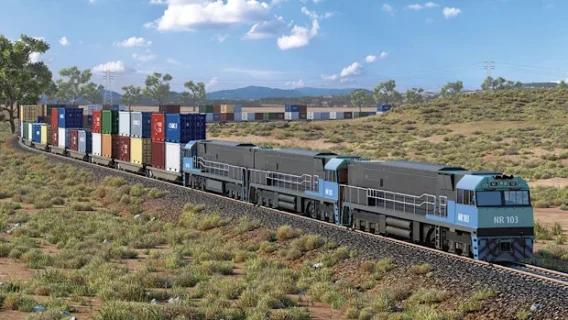
Project Fact Sheet: Melbourne-Brisbane Inland Rail
Project Name: Inland Rail (Melbourne to Brisbane Inland Rail Project)
Location: Victoria, New South Wales, Queensland, Australia
Length: Approximately 1,600 kilometers
Project Type: Freight rail infrastructure
Project Value: Estimated above USD 20 billion (subject to revisions and scope adjustments)
Client: Australian Government
Delivery Entity: Inland Rail Pty Ltd (subsidiary of Australian Rail Track Corporation)
Scope of Works:
- Construct approximately 600 km of new railway track
- Upgrade about 1,000 km of existing rail infrastructure
- Enable double-stacked freight train operations
- Develop intermodal terminals and logistics hubs
- Improve signalling and operational systems
Timeline:
- Project commencement: 2018
- Construction: Ongoing (multi-phase delivery)
- Key sections targeted: Progressive completion through late 2020s
Project Team
Project Owner: Australian Government
Delivery Authority: Inland Rail Pty Ltd
Parent Organization: Australian Rail Track Corporation (ARTC)
Key Contractors and Partners (various sections):
- Martinus – Rail construction contractor (selected project sections)
- Multiple regional contractors and engineering firms – Supporting civil, track, and systems works
Key Objectives:
- Improve freight efficiency between Melbourne and Brisbane
- Reduce transit time to under 24 hours
- Enhance national supply chain resilience
- Support regional economic development



Leave a Reply