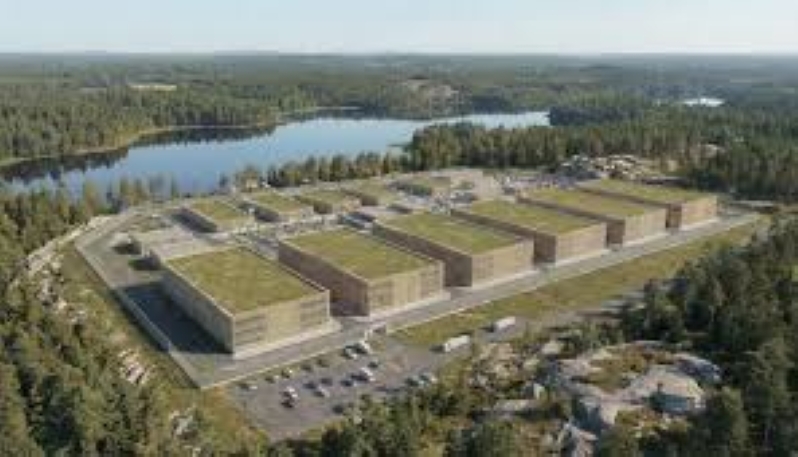
Blykalla has formally applied to build a nuclear park with six small modular reactors (SMR) in Norrsundet, near Gavle, marking one of Sweden’s most ambitious advanced nuclear proposals in decades. The move aligns with Stockholm’s push to restore nuclear power as part of its long-term energy security strategy. This follows new legislation that simplifies approvals and unlocks state-backed financing for next-generation reactors.
Sweden’s Changing Nuclear Landscape
Sweden is undertaking a major reversal of its historical anti-nuclear stance. After a 1980 referendum triggered a gradual phase-out policy, six of the country’s 12 reactors were eventually shut down. However, surging electricity demand from industrial electrification, green hydrogen production, transport decarbonization and data center growth has forced policymakers to reconsider nuclear energy as a stable baseload solution.
The government now targets up to 5GW of new nuclear capacity with state loans and long-term price guarantees to reduce financing risk for developers. To further advance nuclear development, Sweden is also building the 100,000-year Forsmark spent nuclear fuel repository about 150km north of Stockholm. This facility will store about 12,000 tons of spent nuclear fuel starting late 2030s.
Additionally, Blykalla’s application is particularly significant because it is among the earliest commercial advanced modular reactor proposals submitted under Sweden’s new nuclear permitting regime. The company is betting on lead-cooled advanced modular reactor technology as a scalable alternative to large conventional nuclear builds.
Blykalla Norrsundet SMR Park Project Overview
Blykalla’s proposed nuclear park will be located in Norrsundet, approximately two hours north of Stockholm in the Gavle municipality. The development is planned as a cluster of six lead-cooled advanced modular reactors (AMRs), each based on Blykalla’s proprietary SEALER technology.
Combined, the facility will deliver approximately 330MW of clean baseload electricity – sufficient to power about 150,000 households, industrial facilities, or medium-sized data centers. Blykalla is also targeting operations in the early 2030s. This is however subject to regulatory approvals and financing.
Project Financing
Blykalla has not publicly disclosed total project costs.
The company has also indicated it will soon apply for Swedish government funding support, although the exact financing package remains undisclosed.
Fact Sheet for Blykalla Norrsundet SMR Park
Technology: SEALER lead-cooled advanced modular reactors
Number of units: 6
Installed capacity: 330MW
Estimated households powered: 150,000
Project type: Small Modular Reactors
Expected commissioning: Early 2030s
Status: Government application submitted (May 2026)
Blykalla Norrsundet SMR Park: Project Development Timeline
2013: Blykalla founded as a spinout from KTH Royal Institute of Technology
March 2026: Company confirms next-stage planning for Norrsundet reactor park
May 2026: Formal government application submitted for six-reactor nuclear park
2026 through 2028: Regulatory review, environmental approvals, financing process expected
Early 2030s: First power generation
Project team
Developer: Blykalla AB
Government Stakeholders:
- Sweden’s Ministry of Climate and Enterprise
- Swedish Radiation Safety Authority (SSM)
- Land and Environment Court
Site Stakeholders:
- Port of Gavle/Norrsundet industrial zone
- Municipality of Gavle
Outlook on Blykalla Norrsundet SMR Park
If approved, Blykalla’s project would place Sweden among Europe’s earliest movers in commercial advanced modular reactors, complementing parallel SMR efforts by state utility Vattenfall and other developers. Success here could strengthen Sweden’s plan to become a regional nuclear technology hub. This is while supporting domestic industrial competitiveness and grid stability. However, delivery will depend heavily on regulatory speed, financing and maintaining of political continuity beyond future elections.


Leave a Reply