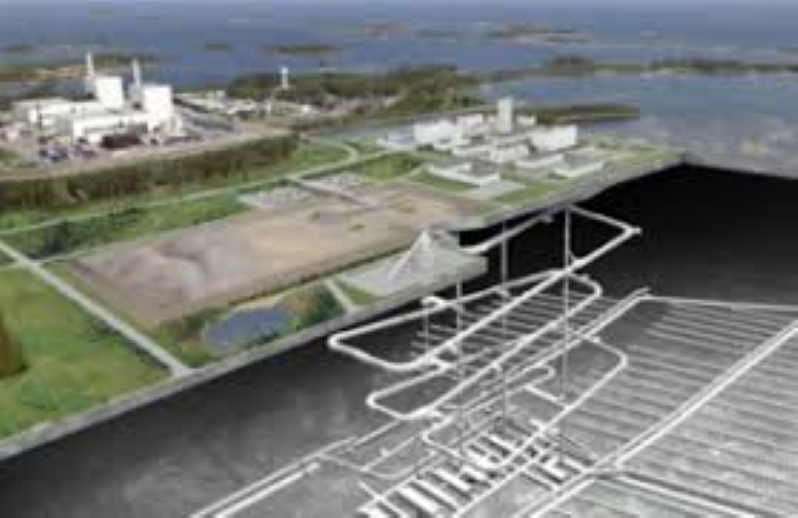
Forsmark spent nuclear fuel repository in Sweden, widely described as the country’s 100,000-year nuclear waste storage site, broke ground in January 2025. Construction work is underway as of 2026. Located near Forsmark in Osthammar municipality, about 150km north of Stockholm, the deep geological repository is being developed by Sweden’s Nuclear Fuel and Waste Management Company (SKB) as one of only two permanent high-level nuclear waste repositories under construction in the world. This is alongside Finland’s Onkalo facility.
The project will eventually comprise approximately 60km of tunnels excavated 500 meters underground into 1.9-billion-year-old bedrock. It will permanently isolate up to 12,000 tons of spent nuclear fuel in corrosion-resistant copper canisters encased in bentonite clay.
With first waste emplacement targeted for the late 2030s and full closure expected around 2080, the repository has become increasingly important amid Sweden’s renewed nuclear expansion agenda in 2026. This includes the new Blykalla Norrsundet SMR Park and other large-reactor ambitions. These continue to bring attention on long-term waste infrastructure capacity, even as legal and scientific scrutiny continues over copper canister durability and groundwater safety.
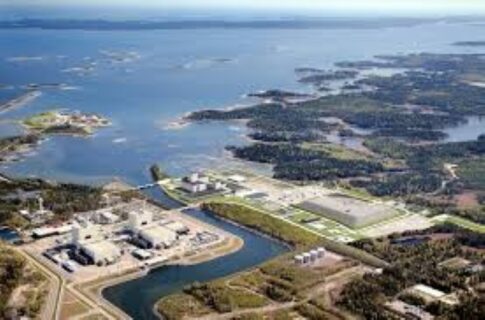
Forsmark Spent Nuclear Fuel Repository Fact Sheet
Location: Forsmark in Osthammar Municipality, Uppland
Developer: Swedish Nuclear Fuel and Waste Management Company (SKB)
Parent owners: Swedish nuclear utilities consortium
Project type: Deep geological repository for high-level radioactive waste
Status: Under construction
Construction start: January 2025
Operational target: Late 2030s
Final closure target: Around 2080
Design life: More than 100,000 years containment period
Storage depth: Approx. 500m below ground
Underground network: 60km of tunnels
Storage capacity: Approx. 12,000 tons of spent nuclear fuel
Waste packaging: Copper canisters with cast iron inserts and bentonite clay barriers
Estimated project cost: Approx. SEK 19-20 billion
Nearby nuclear complex: Forsmark Nuclear Power Plant
Project Timeline
1970s-1980s: Sweden begins long-term national radioactive waste management research.
1983: Swedish parliament adopts KBS-3 disposal method as technical basis.
2009: SKB selects Forsmark as preferred repository site.
2011: Formal license application submitted by SKB.
January 2022: Swedish government approves repository construction after decades-long review.
October 2023: Land and Environment Court grants final environmental permit.
January 2025: Official groundbreaking and construction launched.
Late 2020s: Main underground excavation expected to accelerate.
Late 2030s: Planned first fuel emplacement.
2080: Repository sealing and closure target.
Project Team
Developer: Swedish Nuclear Fuel and Waste Management Company (SKB)
SKB shareholders
- Vattenfall
- Fortum
- Uniper
- OKG AB
- Karlshamn Kraft AB
Government Partners
- Swedish Radiation Safety Authority (SSM)
- Land and Environment Court, Nacka District Court
- Ministry of Climate and Enterprise
- Osthammar Municipality
Technical Partners
- Swedish Nuclear Fuel and Waste Management R&D divisions
- KTH Royal Institute of Technology
- Uppsala University
Sweden Commences Construction on 100,000-Year Nuclear Fuel Storage Site: Expected to be Completed in 2080
Reported January 16, 2025 – Sweden’s nuclear fuel storage site has commenced construction, a project aimed at storing spent nuclear fuel. The endeavour is only the second such site in the world where highly radioactive waste will be stored for 100,000 years. The construction of nuclear fuel storage facilities that store deadly radioactive waste has always puzzled the nuclear industry. However, with the prevalence of commercial nuclear reactors rising, it has become a necessity. Finland is the only nation in the world close to completing a permanent storage site.
Environment Minister, Romina Pourmokhtari noted that it is hard to exaggerate the significance of the repository on Sweden and on climate transition once it is concluded. “They said it would not work, but it does,” he added. The World Nuclear Association contemplates there are around 300,000 tons of spent nuclear waste globally. All of these are in dire need of safe disposal as most of them are stored in cooling ponds near the reactors that produce them.
Also read: World’s tallest wooden wind turbine starts work in Sweden
Scope of Implementation on Sweden’s Nuclear Fuel Storage Site
Sweden’s nuclear fuel storage site is expected to open an avenue to encourage the safe disposal of fuels. It comes at a time when several countries around Europe and the globe are planning to build new reactors. One of the reasons for this is to facilitate the transition away from fossil fuels. The Forsmark final repository is being constructed about 150 kilometers north of Stockholm on Sweden’s east coast. Moreover, it comprises 60 kilometers of tunnels buried 500 meters down in 1.9 billion-year-old bedrock. Once completed, it will be home to 12,000 tons of spent nuclear fuel. The fuel is expected to be encased in 5-meter-long, corrosion-resistant copper capsules. After this, it will be packed in clay and buried.
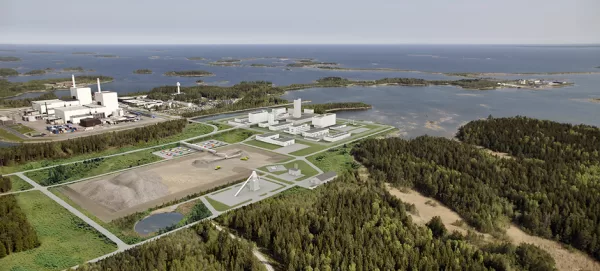
The Forsmark repository is expected to take its first waste in the late 2030’s but will not be completed until around 2080. During this final phase, the tunnel will be backfilled and closed according to insight from Sweden’s Nuclear Fuel and Waste Management Company. However, the process is noted that it could face delays due to opposition. MKG, a Swedish non-governmental organization working on nuclear waste, has lodged an appeal in a Swedish court for more safety checks. Research from Sweden’s Royal Institute of Technology showed that copper capsules could corrode and leak radioactive elements into groundwater.
Also read: $11.1 Billion Sweden’s Nuclear Waste Management Plan
Also read: Construction set to start on Harjumaa Vitberget onshore wind farm in sweden

Leave a Reply