The BMCT Phase 2 Bharat Mumbai Container Terminal expansion reflect continued evolution at Jawaharlal Nehru Port in Mumbai. The BMCT Phase 2 Bharat Mumbai Container Terminal expansion updates highlight PSA International’s expansion of India’s largest container terminal into a high-capacity logistics hub. Moreover, MSC engagement discussions reinforce the global shift toward carrier-aligned terminal capacity. Consequently, BMCT Phase 2 strengthens India’s western maritime gateway.
BMCT Phase 2 Bharat Mumbai Container Terminal: Capacity and automation gains
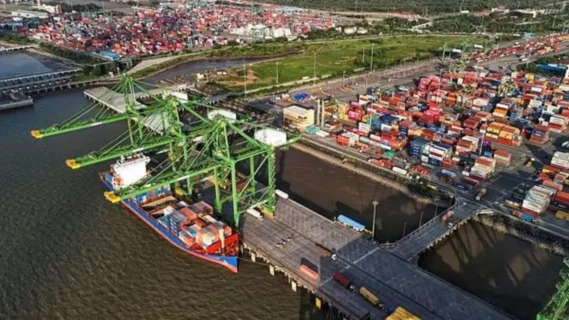
BMCT Phase 2 now operates as a fully integrated mega container terminal. It delivers approximately 4.8 million TEUs annual capacity. Furthermore, the terminal spans around 2,000 metres of quay length.
PSA International has deployed automated yard systems and electrified handling equipment. Additionally, crane productivity improvements support faster vessel turnaround times. Consequently, operational efficiency has increased across peak shipping cycles.
Rail integration links the terminal to India’s inland freight corridors. Therefore, cargo movement to industrial hubs has become faster and more reliable.
BMCT Phase 2 Bharat Mumbai Container Terminal: MSC partnership dynamics
MSC and PSA explored structured collaboration during Phase 2 planning. The discussions focused on capacity assurance and potential berth alignment. Moreover, MSC’s global shipping network strengthened demand visibility for the terminal.
However, the final operational model retained PSA-led multi-carrier access. As a result, BMCT maintains flexibility across global shipping lines. Meanwhile, MSC remains a key volume driver in the region. Therefore, BMCT reflects a hybrid terminal strategy balancing control and carrier engagement.
As of 2026, BMCT Phase 2 is fully operational and scaled. The terminal plays a key role in managing Mumbai port traffic. Furthermore, it reduces congestion across competing terminals at Jawaharlal Nehru Port.
Automation and rail connectivity continue to improve supply chain performance. Consequently, cargo dwell times have reduced across key trade routes. However, regional competition among Indian ports continues to intensify.
In parallel, global logistics transformation trends remain visible in inland infrastructure projects such as China’s Three Gorges waterway project, which expands river-based freight capacity and complements global maritime efficiency goals.
According to reports, the collaboration could offer MSC, exclusive use to the terminal. Moroever, the company, headquartered in Geneva could also potentially gain the opportunity to acquire a minority stake in BMCT.
The development’s first phase officially began operations in 2018. It includes a quay length of 1,000 meters, alongside the deepest berths at Nhava Sheva. Furthermore, it can handle super post-Panamax vessels. By April 2025, the project’s targets to have complete its second phase development. Thereafter, the terminal will boast a berth length of 2,000 meters. Alongside a handling capacity of about 4.8 million TEUs in a year.
Read Also: Saral Satya Legacy Officially Launched By DS Group In India
The BMCT Phase 2 Project Benefits To MSC & PSA
Quite impressively, BMCT Phase 2’s potential partnership with MSC will serve various advantages to the development. For starters, it will help the terminal garner the 50,000, to 60,000 TEUs a month, that the carrier ships, on 9 weekly services, through JN ports. A shipping industry source noted that a major chunk of the volumes are currently shipped by MSC through Dubai’s DP World Ltd terminals. However, the source noted that if the partnership materializes with PSA, the volumes will be diverted to its dedicated facility in BMCT.
As it stands, BMCT currently hosts 13 long-haul weekly sailings, boasting immense overall growth among terminal operators. While commenting on plans for its second phase, PSA Mumbai said that the network expansion will offer better transit experiences. Moreover, the official noted that it will offer more faster and direct transit time, from India as well as the far east.
Project Fact Sheet
- Project name: BMCT Phase 2 Bharat Mumbai Container Terminal Expansion
- Location: Jawaharlal Nehru Port (Nhava Sheva), Mumbai, India
- Operator: PSA International
- Port authority: Jawaharlal Nehru Port Authority (JNPA)
- Estimated investment: $1.3 billion (combined phases)
- Capacity:8 million TEUs annually
- Quay length: ~2,000 metres
- Status: Fully operational (Phase 2 completed by 2026)
- Infrastructure: Automated cranes, electrified yard systems, rail-linked logistics
- Connectivity: Dedicated Freight Corridor and inland container depots
- Sector: Container terminal and maritime logistics infrastructure
Project Team
- PSA International – Terminal developer and operator
- Jawaharlal Nehru Port Authority (JNPA) – Concession grantor and port regulator
- Ministry of Ports, Shipping and Waterways (India) – National oversight authority
- Government of Maharashtra – Regional infrastructure coordination
- Mediterranean Shipping Company (MSC) – Key global shipping line partner
- Terminal Investment Limited (MSC Group) – Investment and advisory support
- Port equipment suppliers consortium – Automation, cranes, and electrification systems
- Indian Railways logistics ecosystem – Inland freight connectivity integration



Leave a Reply