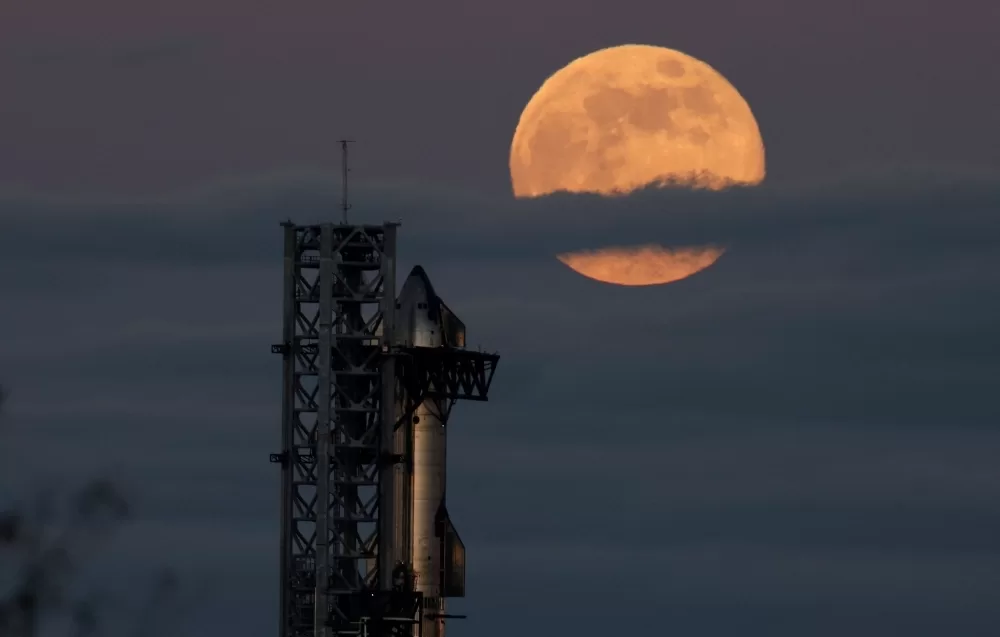
China–Russia lunar nuclear power project remains in an early conceptual and planning phase as both countries refine long-term ambitions for a nuclear-powered infrastructure supporting the International Lunar Research Station (ILRS). The initiative, first formalized through a cooperation memorandum, targets a future lunar nuclear energy system designed to support sustained scientific operations and robotic infrastructure on the Moon. However, as of 2026, no physical construction has begun, and the project remains dependent on engineering validation, mission sequencing, and international coordination timelines extending into the 2030s.
China and Russia continue to position the project within broader space cooperation frameworks, particularly the ILRS program, which aims for phased lunar development through the 2030s. Reports indicate that the nuclear power system would support continuous energy supply for habitats, research modules, and robotic systems operating in extreme lunar conditions. Moreover, the collaboration reflects growing geopolitical competition in space energy systems, where multiple nations are exploring nuclear-based lunar power solutions.
China–Russia lunar nuclear power project linked to International Lunar Research Station rollout
The China–Russia lunar nuclear power project is directly tied to the International Lunar Research Station, which is currently planned for phased construction between the late 2020s and 2035. According to official cooperation frameworks, the nuclear system would serve as a baseline power source for long-term lunar presence, particularly at or near the Moon’s South Pole.
Furthermore, the project aligns with broader lunar infrastructure ambitions, including surface habitats, communication systems, and autonomous construction technologies. Russia’s Roscosmos and China’s space authorities have indicated that early mission stages will rely heavily on robotic assembly and pre-deployed energy systems. Consequently, nuclear energy is positioned as a critical enabler for sustained lunar operations beyond short-duration missions.
In addition, the program reflects increasing global interest in lunar nuclear systems, with parallel developments in the United States also targeting reactor deployment on the Moon within the next decade. This convergence underscores a new phase of space infrastructure competition focused on energy autonomy beyond Earth.
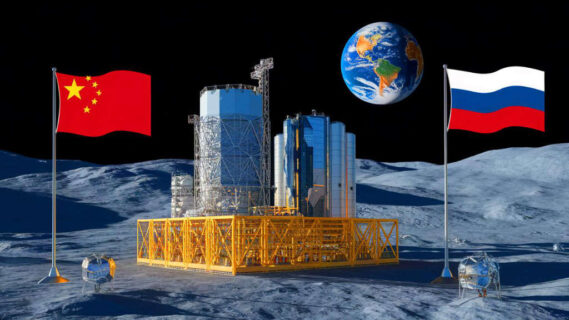
China–Russia lunar nuclear power project status remains pre-construction with long-term deployment horizon
The China–Russia lunar nuclear power project is currently in the research, design, and international coordination stage. No procurement contracts for lunar reactor hardware have been publicly confirmed, and no launch vehicles have been assigned for deployment missions.
However, planning documents and joint statements suggest a target timeline around the mid-2030s for potential deployment, aligned with ILRS construction phases. Additionally, technical studies are ongoing to assess reactor shielding, autonomous installation, and lunar surface energy distribution systems.
Meanwhile, supporting missions under China’s Chang’e programme and Russia’s lunar exploration roadmap are expected to provide key data for future infrastructure deployment. These missions will test surface conditions, resource availability, and long-term habitation feasibility before any nuclear system is sent to the lunar surface.
Importantly, analysts note that funding mechanisms, reactor design finalization, and international legal frameworks for nuclear deployment on the Moon remain unresolved, making the timeline highly conditional.
The expanding nuclear space agenda also connects to Earth-based nuclear expansion, including China’s ongoing Taipingling Nuclear Power Project in Guangdong, which recently began construction of its fourth Hualong One reactor unit as part of a $17 billion clean energy programme. This reflects China’s broader strategy of scaling nuclear capability across both terrestrial and extraterrestrial domains.
Also read:
The Lunar Nuclear Power Race is On: Russia and China’s Atomic Gambit on the Moon
Scope of Implementation of the China-Russia Nuclear Power Plant
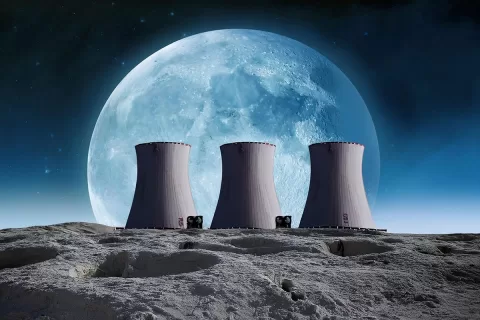
The China-Russia nuclear power plant project will be located at the south pole of the moon. The region is vital for its long periods of sunlight. Furthermore, it is optimal for the acquisition of potential resources. The plan entails building pipelines, solar panels, and power cables across the surface. Moreover, Roscosmos will contribute nuclear expertise, and China will provide infrastructure and launch services. The nuclear module is expected to be ready by 2035, which will coincide with the full deployment of the ILRS. This mission would reduce Russia’s dependence on Western technology. It would also allow China to become the leader in space energy. As Wu Weiren noted, “This time, both countries must succeed.” China’s timeline to build an outpost on the moon’s south pole coincides with NASA’s more ambitious and advanced Artemis programme, which aims to put U.S. astronauts back on the lunar surface in December 2025.
Also read:
San’ao Nuclear Power Plant in China: Nuclear Island Installation Work Starts at Unit 1
China to construct world’s first waterless nuclear reactor
Project Fact Sheet
Project Name: China–Russia Lunar Nuclear Power Station (ILRS Energy Module)
Type: Lunar nuclear energy infrastructure (conceptual stage)
Program: International Lunar Research Station (ILRS)
Lead Countries: China, Russia
Estimated Completion Target: 2035–2036 (conceptual timeline)
Current Status (2026): Planning and feasibility study phase
Deployment Method: Autonomous robotic installation (proposed)
Primary Purpose: Power supply for lunar base infrastructure and scientific operations
Energy Output Target: Not officially disclosed (early-stage concept)
Location: Lunar surface (proposed near South Polar Region)
Supporting Missions: Chang’e lunar program, Roscosmos lunar exploration series
Technology Focus: Space nuclear fission power systems, autonomous assembly
Key Partners: CNSA, Roscosmos, associated nuclear research institutes
Program Framework: Multi-phase ILRS development roadmap (2026–2035+)
Project Team
Owners: China National Space Administration (CNSA), Roscosmos State Space Corporation
Program Lead: International Lunar Research Station (ILRS) Coordination Committee
Technical Developers:
- China Academy of Space Technology (CAST)
- Rosatom State Atomic Energy Corporation
- Kurchatov Institute (nuclear research support)
Engineering Partners:
- China Aerospace Science and Technology Corporation (CASC)
- Lavochkin Association (Russia)
- ILRS Joint Engineering Working Group
Scientific Oversight Bodies:
- Chinese Academy of Sciences (CAS)
- Russian Academy of Sciences (RAS)
Mission Support Systems:
- China Deep Space Exploration Laboratory
- Roscosmos Lunar Exploration Division
Regulatory & Policy Framework:
- Bilateral China–Russia Space Cooperation Agreements
- ILRS Multinational Partner Framework

Leave a Reply