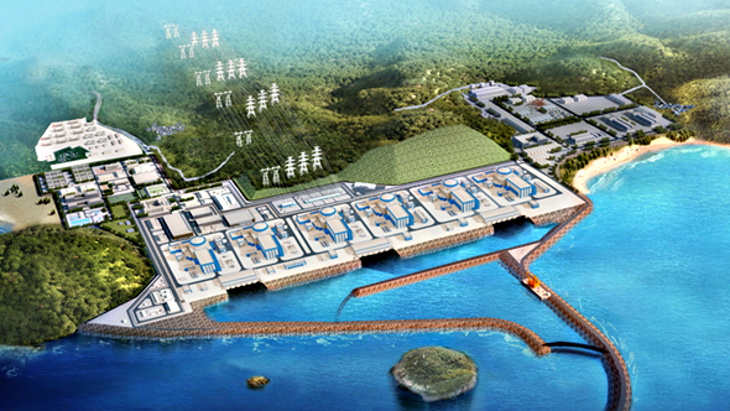
The Taipingling nuclear power project has entered a new construction phase after China approved two additional Hualong One reactors. The approval expands the Guangdong development to six planned nuclear units. Meanwhile, Unit 2 has entered commercial operation, while Unit 4 advances through major civil construction. The $17 billion project is therefore moving toward a six-unit nuclear power complex.
China’s State Council approved Units 5 and 6 in July 2026. The decision adds the final two reactors to the planned Taipingling development in Huizhou, Guangdong Province.
Units 5 and 6 will demonstrate the upgraded Hualong One 2.0 technology. Each reactor will have an electrical capacity of approximately 1,217MW.
The latest approval follows major progress across the project’s earlier phases. Unit 1 entered commercial operation in April 2026, marking an important generation milestone.
Unit 2 subsequently connected to the grid on July 4, 2026. The reactor entered commercial operation after completing commissioning and a 168-hour trial run.
Consequently, two reactors now contribute electricity while four additional units remain under construction or development.
Taipingling Nuclear Power Project Advances Unit 4 Construction
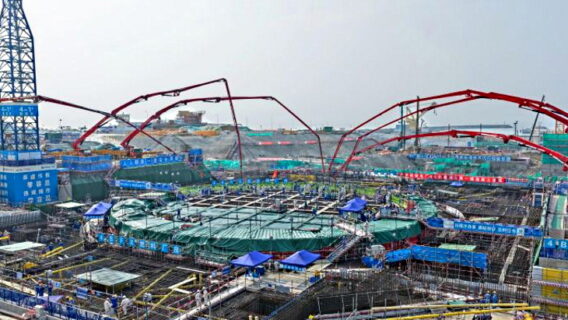
The Taipingling Nuclear Power Project began Unit 4 construction on May 10, 2026. Workers poured the first nuclear safety-related concrete for the reactor island.
This milestone launched the main civil construction programme for Unit 4. It also marked the full-scale construction start for the project’s second phase.
Workers poured approximately 8,600 cubic metres of concrete for the reactor building raft foundation. The foundation measures approximately 27 metres in radius and 3.7 metres in height.
The concrete operation required around 60 hours of continuous construction. Meanwhile, Unit 3 continues progressing through its major civil construction activities.
Furthermore, the project team has introduced digital and automated construction systems. These include three-dimensional integrated design, intelligent equipment and digital handover systems.
More than 700 improvement measures have supported construction efficiency and safety. The project also applies modularisation, mechanisation, automation and digital construction techniques.
Taipingling Nuclear Power Project Moves Toward Six Units
The Taipingling Nuclear Power Project will eventually comprise six Hualong One reactors across three construction phases. China has now approved all six planned units.
Phase I covers Units 1 and 2, while Phase II includes Units 3 and 4. Units 5 and 6 will form the third project phase.
Once completed, the six reactors should generate more than 55 billion kWh annually. The output will support electricity demand across the Greater Bay Area.
The completed plant should also reduce standard coal consumption by approximately 16.65 million tonnes annually. Furthermore, the facility could cut carbon dioxide emissions by approximately 50.82 million tonnes each year.
Unit 1 already demonstrates the project’s contribution to regional electricity supply. The reactor can generate more than 9 billion kWh annually.
Similarly, Unit 2 should generate more than 9 billion kWh annually. That output could meet the electricity requirements of nearly one million people.
The development therefore combines nuclear construction with an expanding operational generation base. Additionally, Hualong One 2.0 units could strengthen Taipingling’s role in China’s future nuclear expansion.
The expansion of China’s Hualong One program extends beyond Guangdong’s Taipingling development. In Zhangxing Town, Zhaoyuan City the Zhaoyuan Nuclear Power Project is advancing with China building another Hualong One reactor alongside 666-foot-tall cooling towers.
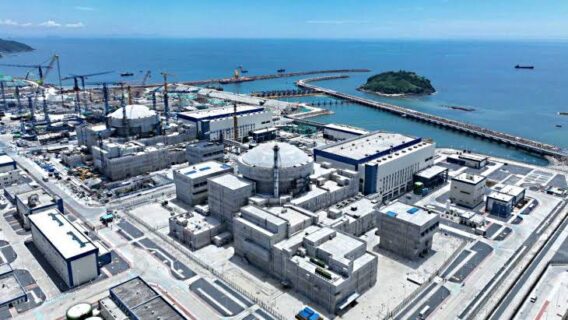
Taipingling nuclear power project strengthens China’s clean energy construction pipeline
The Taipingling nuclear power project already achieved several operational milestones before the latest construction start. Unit 1 entered commercial operation on 19 April 2026 after completing commissioning tests and connecting to the national grid in February. Furthermore, Unit 2 recently completed fuel loading and entered the nuclear commissioning phase ahead of expected commercial operation later this year.
Developers expect the six-unit facility to generate more than 55 billion kilowatt-hours annually once completed. Consequently, the plant could significantly reduce coal consumption across southern China and lower regional carbon emissions. China General Nuclear estimates the project will cut standard coal consumption by approximately 16.65 million tonnes each year and reduce carbon dioxide emissions by about 50.82 million tonnes annually.
The project also highlights China’s accelerated nuclear construction capability. Industry analysts noted that China currently leads the world in active nuclear reactor construction. Several new reactors started construction during 2026, including Taipingling Unit 4.
Taipingling nuclear power project advances Hualong One reactor deployment
The Taipingling nuclear power project uses Hualong One pressurized water reactor technology developed jointly by Chinese nuclear companies. The reactor design has become central to China’s domestic and international nuclear expansion plans because it supports standardized construction and localized manufacturing.
Construction of Unit 1 began in December 2019, while Unit 2 started in October 2020. Since then, developers have shortened construction and commissioning timelines through improved digital management systems and optimized building methods. According to China General Nuclear, teams implemented digital handover systems, spare-parts digitization, and robotic technologies during the delivery of Unit 2.
The Taipingling site sits in Huangbu Town within Huidong County, Huizhou. Once all six reactors become operational, the nuclear station will rank among China’s major clean electricity hubs. Additionally, the project supports rising electricity demand from industrial manufacturing, artificial intelligence infrastructure, and expanding data center operations across the Greater Bay Area.
China continues increasing investment in nuclear infrastructure despite global construction cost pressures. The Taipingling development demonstrates the country’s emphasis on large-scale energy projects that combine industrial growth with emissions reduction targets. As construction progresses on Units 3 and 4, the project remains a flagship example of China’s rapidly expanding nuclear construction sector.
China’s accelerating nuclear construction program also aligns with the country’s broader long-term energy ambitions beyond Earth. In early 2025, China and Russia unveiled plans for the construction of a nuclear power plant on the moon to support the proposed International Lunar Research Station, highlighting Beijing’s growing investment in advanced nuclear technologies and strategic energy infrastructure.
Project Fact Sheet
Project Name: Taipingling Nuclear Power Plant
Location: Huangbu Town, Huidong County, Huizhou, Guangdong Province, China
Project Value: $17 billion
Project Type: Nuclear power plant development
Reactor Technology: Hualong One (HPR1000) pressurized water reactors
Number of Planned Units: Six reactors
Current Construction Milestone: First concrete poured for Unit 4 reactor building
Unit 4 Construction Start: 10 May 2026
Expected Total Power Generation: Over 55 billion kWh annually
Estimated Coal Reduction: 16.65 million tonnes annually
Estimated CO₂ Emissions Reduction: 50.82 million tonnes annually
Total Planned Capacity: Approximately 7.2 GW
Project Approval Authority: State Council of China
Primary Energy Objective: Clean electricity generation and carbon reduction
Project Team
Project Owner: China General Nuclear Power Group
Developer: CGN Huizhou Nuclear Power Co Ltd
Project Operator: CGN Huizhou Nuclear Power
Reactor Technology Provider: China General Nuclear Power Group and China National Nuclear Corporation
Engineering Model: Hualong One (HPR1000) Reactor Platform
Regulatory Oversight: National Nuclear Safety Administration
Environmental Licensing Authority: Ministry of Ecology and Environment of China
Construction Approval Authority: State Council of China
Stock Exchange Disclosure Platform: Hong Kong Stock Exchange
Project Region: Guangdong-Hong Kong-Macao Greater Bay Area

Leave a Reply