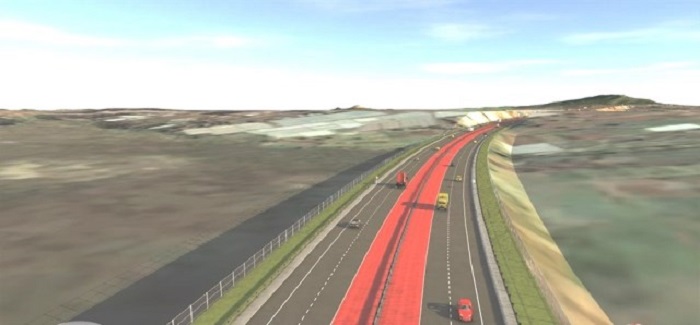
Kenya has reached an official decision to abandon the $3.2 billion greenfield proposal submitted by U.S.-based developer Everstrong Capital in favor of upgrading the existing highway. Following an extensive evaluation, the National Treasury’s Public-Private Partnerships (PPP) Committee formally rejected Everstrong’s proposal in mid-2025 citing financial structure and technical viability concerns, as well as the high land acquisition costs associated with constructing a brand-new road. Although Everstrong Capital petitioned the PPP Petitions Committee to contest the decision, reaffirming that it had organized approximately $3.2 billion in private financing alongside an international consortium, the committee declined to uphold the appeal.
Consequently, the Kenya National Highways Authority (KeNHA) and the National Treasury have restructured the project into a brownfield expansion, issuing a Request for Proposals (RFP) to procure a Transaction Advisor to oversee the widening of the current 461-kilometer A8 Nairobi–Mombasa highway into a minimum four-lane, access-controlled toll road.
October 30, 2025
The Nairobi–Mombasa Usahihi Expressway Project is a proposed large-scale road infrastructure development planned in Kenya. The project involves the construction of a 459km expressway linking Nairobi and Mombasa and carries an estimated investment value of $3.6 billion. Everstrong Capital is promoting the project and has confirmed that UK-based firm Turner & Townsend has joined as a strategic delivery partner to support the development.
Turner & Townsend’s role will cover programme management, governance, cost control, risk management, and project assurance activities. The partnership is intended to strengthen the project’s delivery structure and oversight framework as planning and preparatory activities continue. The expressway remains at a development and structuring stage, with further progress dependent on approvals, financing, and implementation arrangements. Once complete, the project compliments other road projects currently underway such as the Ngong Road Bridge project and the Nairobi-Nakuru dual-carriageway project
Other than the Nairobi-Mombasa Usahihi expressway project, the Nairobi Railway City Central station project is also expected to be impactful despite its setbacks. A tender awarded for the $232 million Nairobi Railway City central station project by the Kenya Railway Commission (KRC) has been cancelled. Kenya Railways Corporation (KRC) has been ordered to re-evaluate the project’s tender and award it within 21 days. The directive follows a successful challenge by China Civil Engineering Construction Corporation (CCECC), the lowest bidder. The company challenged the tender that had been awarded to rival firm China Road and Bridge Corporation (CRBC).
The cancellation was done by the Public Procurement Administrative Review Board (PPARB). The board ordered KRC to reconvene the evaluation committee and re-evaluate its financial aspects. Moreover, this was done in line with the tender documents and the Constitution. It was also done in line with the Public Procurement and Asset Disposal Act and the 2020 regulations.
The Scope of Implementation on Africa’s Largest Highway Project
The partnership on the Nairobi Mombasa Usahihi Expressway project comes two months after Everstrong Capital submitted fresh and updated feasibility study report. The report was submitted to the Kenya National Highways Authority (KeNHA) after its initial report was rejected. The Public Private Partnership (PPP) Committee rejected the US company’s feasibility study report because it failed to meet the set threshold. However, Despite turning down the report, the Committee directed Everstrong Capital to restructure the proposal to meet the evaluation criteria.
August 19, 2025: For nearly a decade, the proposed Nairobi Mombasa Usahihi Expressway Project has been one of Kenya’s most ambitious yet elusive infrastructure projects. First unveiled in 2017 with the promise of cutting travel time between the capital and the coast from more than ten hours to under four, the 440–470 km toll road has moved through phases of excitement, controversy, and uncertainty. From the initial award to U.S. contractor Bechtel, to stalled negotiations over funding, to its revival in 2024 under a $3.6 billion public-private partnership with Everstrong Capital, the project has repeatedly captured headlines.
Now, in 2025, it finds itself at another crossroads as government officials signal a shift away from the expressway plan in favor of upgrading the existing Nairobi–Mombasa highway, even as investors insist the deal is still alive. Motorists have also joined in the opposition, as they noted that projects such as Nairobi-Nakuru Highway and the Nairobi Mombasa Usahihi Expressway project will do more harm than good. One of the reasons they oppose this is the toll fees of ksh5000 that motorists will be tolled for using the expressway which in their view is a hefty amount. Furthermore, they note that this will not benefit ordinary Kenyans but rather private contractors such as Everstrong Capital who are overseeing the project.
A chronological list of events to date on the Nairobi-Mombasa Usahihi Expressway Project
Sep 2017 — Bechtel selected (EPC model). Kenya National Highways Authority (KeNHA) picked Bechtel to design and build a 473-km high-speed expressway between Nairobi and Mombasa; early materials touted sub-4-hour travel time. It was touted then that the state-of-the art expressway would include 76 overpasses, 21 underpasses, 189 culverts and 20 interchanges. It would reduce the traveling duration in between the two cities to 3 and a half hours, plus the travelers will pass through 22 major towns which include: Emali, Mtito Andei, Voi, Mariakani among others; before reaching their destination.
2018–2021 — Funding model pushback and stall. As costs and debt implications were debated, Treasury resistance to an EPC/publicly funded approach led to delays and reconsideration of a PPP/tolled model. A public-private partnership had been deemed efficient for the funding of the project. According to a report that was released by the Parliamentary Budget Office (PBO) in the year 2021, Bechtel turned down the offer that required the firm to build the road and recover the construction costs later by charging toll fees to the motorists using the road. This led to a fall out with Bechtel who said that the Public Private Partnership (PPP) model would inflate the cost of the project to approximately Sh1.5 trillion.
2022 – The contract for the construction of the Nairobi-Mombasa Expressway in Kenya has been awarded to Korean Overseas Infrastructure and Urban Development Corporation Africa (KIND). KIND was hired by the East African country to build the 473-km expressway after US contractor Bechtel Corp pulled out of the project. Nothing more was heard about the Koreans.
May 23, 2024 — PPP revival with Everstrong Capital. KeNHA and U.S. investment manager Everstrong Capital announced a $3.6 billion PPP deal to deliver the 440 km tolled highway, aligning with President Ruto’s U.S. state visit. The U.S.-based infrastructure investment manager Everstrong Capital signed a project development agreement with the Kenyan government for the planned $3.6-billion Usahihi Nairobi-Mombasa Expressway project.
Feb 2025 — Everstrong Capital it was reported had commenced searching Funds for Usahihi Expressway. It would be a $3.5 billion initiative and the company had kicked off a race to raise funds from local pension funds.
August 2025 — Kenya’s treasury decided to pull the plug on the $36 billion Nairobi-Mombasa Expressway project. It issued a notice to the Kenya National Highways Authority (KeNHA) to expand the existing highway.
August 2025 —The public-private partnership (PPP) committee directed KeNHA to restructure the project into an expansion of the existing A8 highway. Once done, they are expected to resubmit for evaluation in line with Section 43(12) of the PPP Act, 2021.
Aug 2025 — Conflicting statements from stakeholders. Everstrong Capital, said that it had submitted an updated feasibility study report which is in response to the feedback from the Public Private Partnership (PPP) Committee for the construction of the Nairobi-Mombasa Expressway Construction.
The fate of the Nairobi–Mombasa Expressway now hangs in the balance, caught between shifting government priorities and private sector determination to keep the vision alive. What began as a flagship mega-project promising to redefine transport between Kenya’s capital and its main port city has instead become a case study in the complexities of financing, politics, and long-term planning. Whether the country ultimately builds a new expressway or opts to expand the existing highway, the debate underscores one central truth: Kenya’s busiest transport corridor remains in urgent need of modern, reliable infrastructure to match its role as the backbone of regional trade and economic growth.
Project Factsheet
Project Name: Usahihi Nairobi–Mombasa Expressway (“Usahihi” translates to “Done Correctly” in Swahili)
Project Developer / Lead Sponsor: Everstrong Capital Kenya Limited (U.S.-owned infrastructure investment manager)
Partnering Strategic Manager: Turner and Townsend (Program Delivery Partner)
Project Type: Greenfield Dual-Carriageway Toll Expressway
Delivery Model: Design, Build, Finance, Operate, Maintain, and Transfer (DBFOMT) via a 30-year Public-Private Partnership (PPP) concession model
Current Status: Shelved / Rejected. The National Treasury’s PPP Committee rejected the feasibility study in July 2025, and the PPP Petitions Committee declined Everstrong’s appeal in April 2026. The government has pivoted to expanding the existing A8 highway.
Technical and Route Specifications
Total Length: 440 to 459 kilometers (connecting Mlolongo in Nairobi to Mombasa
Carriageway Design: 4 to 6-lane access-controlled dual-carriageway
Travel Time Reduction: Cuts driving time from 10.5 hours down to 4.5 hours
Green Features: Electric vehicle (EV) charging infrastructure powered by renewables, wildlife observation points, animal overpasses/underpasses, and climate-resilient engineering
Special Facilities: Dedicated heavy truck lanes, rest stops, emergency services, and digital tolling stations
Financial Structure and Capital Allocation
Estimated Capital Cost: $3.2 Billion – $3.6 Billion (approx. Ksh450 Billion – Ksh468 Billion)
Sovereign Debt Risk: Structured to be 100% off-balance-sheet with zero direct financial guarantees, sovereign debt, or direct capital contributions from the Government of Kenya.
Local Capital Mobilization:
$1 Billion (Ksh129 Billion): Local bond issuance led by CPF Capital and Advisory targeted at Kenyan pension funds, institutional investors, and local banks.
Landowner Equity Plan: Proposed option for landowners along the route to convert land compensation into equity shares yielding up to 17.5% returns.
International Capital: $2.2 Billion+ sourced from global private equity, development finance institutions (DFIs), and international pension funds across North America, Europe, and Africa.
Projected Economic and Social Impact
Job Creation: Estimated 50,000+ direct and indirect jobs generated during the construction and operation phases.
Freight and Regional Integration: Designed to capture heavy commercial vehicles along the Northern Corridor, reducing transport logistics costs between the Port of Mombasa, Nairobi, and landlocked East African nations (Uganda, Rwanda, South Sudan, DRC).
Project Team
Core Consortium Leadership and Project Sponsors:
Everstrong Capital Kenya Limited
Trans Africa Concessions (TRAC): Anchor Consortium Member & Infrastructure Partner.
Arab Contractors: Anchor Consortium Engineering and Construction Partner.
Program Delivery and Technical Management
Turner and Townsend (Strategic Delivery Partner): Lead program and project manager handling governance, cost control, risk oversight, and construction assurance.
Kurrent Technologies: Environmental, engineering, and local content strategy partner
Lotz to Develop: Design and infrastructure development partner.
Financial Advisors & Capital Arrangers
CPF Capital and Advisory Ltd. (Subsidiary of CPF Group): Lead Transaction Advisor for local capital raising, managing the $1 Billion (Ksh129B) bond issuance for Kenyan pension funds and local institutions.
J.P. Morgan and Standard Bank: Joint Lead Arrangers organizing global private equity and debt financing.
U.S. Government Development Finance Agencies: Expected debt providers including the U.S. International Development Finance Corporation (DFC), U.S. Ex-Im Bank, and U.S. Trade and Development Agency (USTDA).
Legal, Risk & Advisory Partners
Rebel Group: Financial and economic structuring advisors.
Ashitiva Advocates: Kenyan legal and regulatory counsel.
Andersen: Tax, governance, and audit advisors.


Leave a Reply