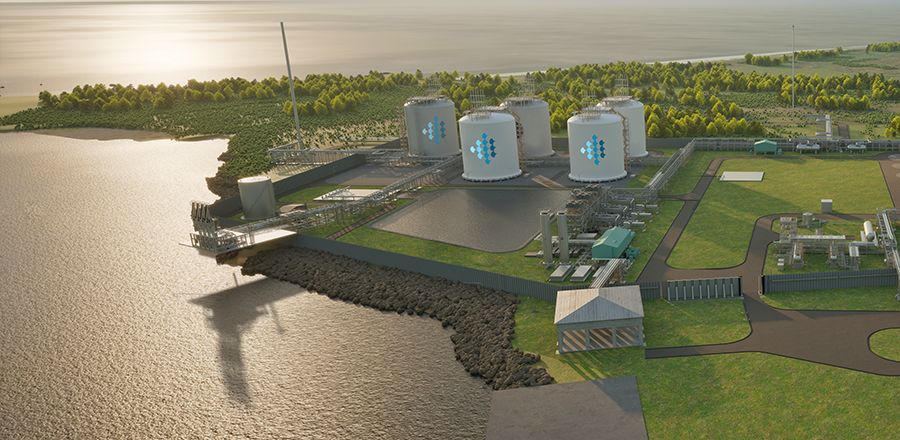
The Commonwealth LNG export terminal is a large-scale liquefied natural gas (LNG) development located in Cameron Parish, Louisiana, designed to serve global energy markets through long-term LNG exports from the U.S. Gulf Coast.
Developed by Caturus LLC — a platform backed by Kimmeridge Energy Management, Mubadala Energy, and CPP Investments — the project represents a fully commercialized and investment-backed LNG infrastructure asset now advancing through full engineering, procurement, and construction execution.
With a total estimated development value of approximately $13 billion and a planned export capacity of 9.5 million tonnes per annum (Mtpa), Commonwealth LNG is positioned as a major long-term export hub in the global LNG supply chain.
Project Overview and Strategic Positioning
Commonwealth LNG is strategically located on a 118.8-acre site along the west bank of the Calcasieu Ship Channel near the Gulf of Mexico, enabling direct marine access for large-scale LNG carrier export operations.
The project is designed to capitalize on the United States’ expanding role in global natural gas exports, particularly amid rising demand in Europe and Asia and shifting long-term supply security strategies across international energy markets.
Its development framework combines large-scale LNG liquefaction capacity with integrated storage, pipeline connectivity, and marine export infrastructure.
Core Infrastructure and Facility Design
The Commonwealth LNG terminal is engineered as a multi-train modular LNG facility with the following core components:
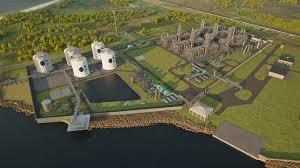
- Six modular liquefaction trains designed for scalable production
- Five full-containment LNG storage tanks with a combined capacity of 250,000 cubic meters
- A 3-mile, 42-inch feed gas pipeline connecting to regional gas transmission systems
- A dedicated marine terminal capable of handling LNG carriers up to 216,000 cubic meters
The facility is designed for up to 9.5 Mtpa of LNG export capacity once fully operational.
Modular Execution and Construction Strategy
A defining feature of Commonwealth LNG is its modular construction and execution approach, developed in partnership with Technip Energies.
This strategy significantly reduces on-site construction intensity by shifting major fabrication activities to controlled offsite environments.
Key execution characteristics include:
- More than 10 million workhours shifted offsite through modular fabrication
- Reduced peak onsite workforce below 2,000 personnel
- Improved schedule predictability through parallel fabrication streams
- Enhanced quality control through standardized module production
Major equipment integration includes gas turbines, cryogenic systems, and LNG storage technology supplied by global energy engineering firms.
Commercial Foundation and Project Bankability
The project is fully underpinned by long-term commercial agreements covering its entire 9.5 Mtpa capacity.
These 15–20-year sales and purchase agreements (SPAs) include major global LNG buyers such as Aramco Trading Americas, EQT Corporation, PETRONAS LNG, Mercuria Energy Trading, Glencore, and Woodside Energy.
This full commercialization structure provides long-term revenue certainty and enabled the project’s financing package and final investment approval.
The project has secured approximately $9.75 billion in project financing, supported by institutional capital commitments totaling roughly $21.25 billion.
Execution Status and Current Development Phase
Commonwealth LNG is now in full-scale execution mode following key structural milestones that define its current development stage:
- The project is fully commercialized, with 100% of LNG capacity contracted under long-term agreements
- Final Investment Decision (FID) has been achieved, formally authorizing full construction
- Full Notice to Proceed (FNTP) has been issued to the EPC contractor Technip Energies, enabling full project execution
- Major subcontract packages are actively underway across key infrastructure segments
A significant construction package has also been awarded to CB&I, covering LNG storage tank engineering and construction, one of the most critical components of the facility’s long-term operational capability.
Economic and Strategic Importance
Once operational, Commonwealth LNG is expected to generate over $3 billion in annual export revenue and support thousands of construction and operational jobs across Louisiana and the broader Gulf Coast region.
The project strengthens U.S. LNG export capacity at a time of increasing global demand for flexible and secure natural gas supply chains.
Its modular construction model and fully contracted commercial structure also position it as a reference project for next-generation LNG development in North America.
Development Timeline
- Project development and regulatory progression: 2014–2025
- Full commercialization achieved (100% contracted capacity): April 7, 2026
- Final Investment Decision (FID) reached: May 15, 2026
- Full Notice to Proceed issued: May 15, 2026
- Major LNG storage subcontract awarded: May 27, 2026
- Full construction phase underway: 2026 onward
- Mechanical completion (storage systems): 2029 (target)
- First LNG exports: 2030
Gulf Coast Energy Momentum
While the Commonwealth LNG Export Terminal in Louisiana has achieved full construction status, other major multi-billion-dollar projects are also advancing in the region. These include the First U.S. Floating LNG Facility, which has reached a $5 billion investment decision, and in Texas, the America First Refining project in Brownsville, which recently advanced into early engineering under Fluor Corporation.
Together, these milestones underscore the region’s growing role in both LNG exports and domestic refining capacity, reflecting continued investment in critical energy infrastructure.
Commonwealth LNG Export Terminal — Project Factsheet
Location: Cameron Parish, Louisiana, USA
Developer: Caturus LLC (backed by Kimmeridge Energy Management, Mubadala Energy, CPP Investments)
Total Project Value: $13 billion
Total Capital Commitments: $21.25 billion
Project Financing Secured: $9.75 billion
Export Capacity: 9.5 million tonnes per annum (Mtpa)
Project Status
- Fully commercialized (100% capacity contracted)
- FID approved and active
- Full EPC execution underway (FNTP issued)
- Major construction packages awarded
Key Infrastructure
- 6 LNG liquefaction trains
- 5 full-containment LNG storage tanks (250,000 m³ total)
- 3-mile feed gas pipeline (42-inch diameter)
- Dedicated LNG marine export terminal
EPC & Major Contractors
- Technip Energies — Lead EPC contractor (FNTP active)
- CB&I — LNG storage tank EPC subcontractor
Key Equipment Suppliers
- Baker Hughes — LM9000 gas turbine compressor systems
- Honeywell — cryogenic heat exchangers
- Solar Turbines — gas turbine generators
Offtake Partners
- Aramco Trading Americas
- EQT Corporation
- PETRONAS LNG
- Mercuria Energy Trading
- Glencore
- Woodside Energy
Construction & Delivery Timeline
- Active construction phase: 2026 onward
- Storage tank completion: 2029
- First LNG exports: 2030
Economic Impact
- Major Gulf Coast energy infrastructure investment
- Thousands of construction and operational jobs
- Estimated $3+ billion annual export revenue
- Strengthens U.S. LNG export capacity globally


Leave a Reply