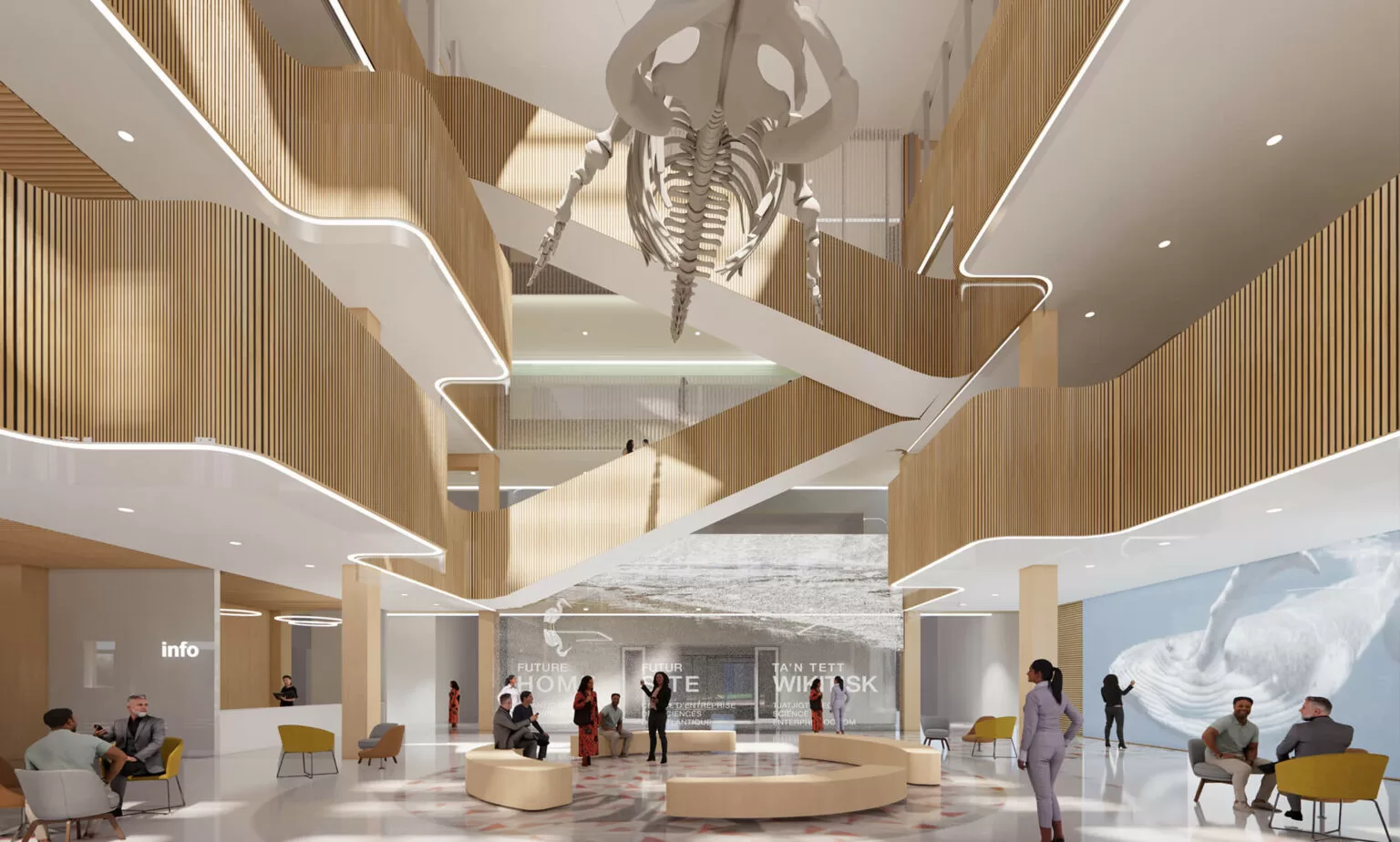
Construction of the science wing of the Atlantic Science Enterprise Centre (ASEC) is progressing steadily, with site preparation having begun in 2023.
It is a project of Diamond Schmitt architects together with EXP, the visioning sessions and engagements with the local Indigenous community as well as the Congregation of the Sisters of Notre-Dame du Sacré-Coeur, the founders of the former College Notre Dame d’Acadie have been used in the design process. The building which houses ASEC has the old Gulf Fisheries Centre’s walls on the exterior of the building.
The ministers launched the Atlantic Science Enterprise Centre’s new design depictions for the enlarged structure when they launched the project which is being developed on the existing Gulf Fisheries Centre. The design keeps the historic look of the exterior of the old building. It was complete after holding Visioning Sessions and Engagement with local Indigenous Community Members and Representatives of the Congregation of the Sisters of Notre-Dame du Sacré-Coeur, the founders of the former College Notre Dame d’Acadie.
While the Atlantic Science Enterprise Centre pays tribute to Schmitt, they have made sure that ASEC is sustainable. To this end, ASEC aims to achieve the LEED Gold certification and the reduction of greenhouse gas emissions to zero, which will be achieved through the use of mass timber structure that helps to reduce the carbon footprint of the building materials.
Projected Scientist Capacity
When the construction is over, the ASEC will be able to accommodate more than 700 scientists from five federal departments and agencies including Fisheries and Oceans Canada, Environment and Climate Change Canada, Canadian Food Inspection Agency, and National Research Council Canada among others. Laboratory facilities, offices and other workspace will be provided in the centre and this will enhance interdisciplinary co-operation in the understanding, management and protection of Atlantic freshwater and coastal ecosystems of Canada.
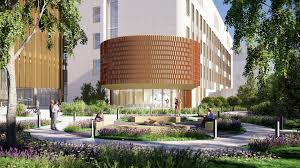
Scale and Financial Impact
Largest Regional Investment: The project stands as the largest federal infrastructure project built in Atlantic Canada since the Confederation Bridge.
Massive Space Expansion: The finalized facility will cover approximately 337,700 square feet, effectively doubling the physical footprint of the legacy Gulf Fisheries Centre.
On-Site Workforce: During peak construction periods, up to 200 tradespeople and contractors will be working on-site simultaneously
Deep Dive into Sustainable Engineering
The facility is a flagship project for the Government of Canada’s Laboratories Canada strategy, aiming to set a new standard for green public architecture:
- Geothermal Energy Fields: To achieve its net-zero carbon emissions target, the building will rely on localized, on-site geothermal fields for heating and cooling rather than burning fossil fuels.
- Mass Timber Construction: The primary structural frameworks utilize mass timber. This material requires significantly less fossil fuel to manufacture and acts as a natural carbon sink compared to traditional steel and concrete.
- High-Efficiency Systems: The building is optimized using advanced energy modeling to secure a LEED Gold certification
Read also: Canada’s first LEED Gold building set to open at Centennial College
Atlantic Science Enterprise Centre construction cost
The Atlantic Science Enterprise Centre (ASEC) represents a $600 million federal investment, standing as the largest infrastructure project in Atlantic Canada since the Confederation Bridge. Planned strategically in three phases, the project ensures the current building remains operational during construction. The final phase will begin in 2028, with full occupancy targeted for 2032.
The new facility will deliver world-class laboratories and workspaces, promising to significantly contribute to economic growth in the Atlantic region. By creating an integrated scientific environment, the project aims to enhance interdepartmental research capabilities and support innovation in Canada’s scientific infrastructure
ASEC also complies with the Government of Canada’s plan for the modernization of the scientific infrastructure. “As part of the Laboratories Canada strategy, the Atlantic Science Enterprise Centre is a major investment in the science infrastructure of Atlantic Canada. Through constructing new, sustainable buildings that house different units and departments of the federal government, the federal scientists are being equipped with the necessary infrastructure to foster collaboration for the growth of innovation in Canada.” Mention The Honourable Jean-Yves Duclos, Minister of Public Services and Procurement.
Construction of the science wing of the Atlantic Science Enterprise Centre (ASEC) is progressing steadily, with site preparation having begun in 2023.
Managed by Public Services and Procurement Canada and built by Pomerleau Inc., the facility will house over 700 federal employees. It acts as a collaborative science hub to study and protect Atlantic freshwater and coastal ecosystems. Scientists from five federal agencies will work here, including:
- Fisheries and Oceans Canada
- Environment and Climate Change Canada
- Canadian Food Inspection Agency
- National Research Council of Canada
- Canadian Space Agency (participating as a virtual partner
The Atlantic Science Enterprise Centre is part of Canada’s broader investment in science infrastructure, alongside major public-facing projects such as the new Science Centre at Ontario Place, which broke ground recently, it focuses on education, exhibitions, and visitor experiences.
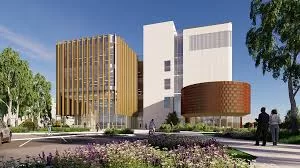
Atlantic Science Enterprise Centre (ASEC) Construction project factsheet
Project Overview
Location: Gulf Fisheries Centre Site
Architects: Diamond Schmitt Architects in collaboration with EXP
Total Project Cost: $600 million
Project Phases: Three-phase development
Expected Full Occupancy: 2032
Design
The new Atlantic Science Enterprise Centre design;
Preserves exterior walls of the historic Gulf Fisheries Centre
Designed through collaborative visioning sessions with:
- Local Indigenous Community
- Congregation of the Sisters of Notre-Dame du Sacré-Coeur
Sustainability Goals
Targeting LEED Gold Certification
Zero greenhouse gas emissions target
Utilizing mass timber structure to reduce carbon footprint
Scientific Capacity
Projected Scientist Capacity: Over 700 scientists
Read also: BMO Centre at Stampede Park becomes Western Canada’s largest convention centre
Participating Departments in construction of Atlantic Science Enterprise Centre
Fisheries and Oceans Canada
Environment and Climate Change Canada
Canadian Food Inspection Agency
National Research Council Canada
Infrastructure Features
State-of-the-art laboratory facilities
Modern offices and workspaces
Designed to enhance interdisciplinary cooperation
Focus on understanding, managing, and protecting Atlantic freshwater and coastal ecosystems
Atlantic Science Enterprise Centre construction Project Timeline
Site Preparation Started: 2023
Construction Commenced: 2024
Final Phase Construction: Expected to start in 2028
Full Occupancy: Anticipated by 2032
Read also: Construction of Canada’s first indigenous-led ESS factory


Leave a Reply