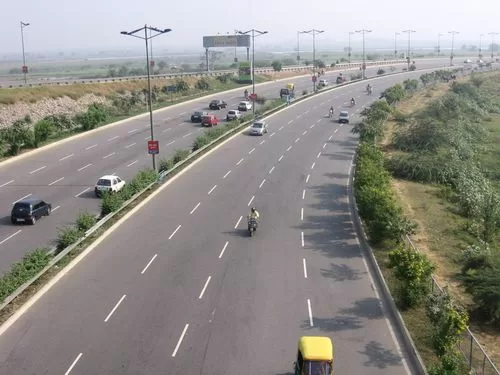
The Mumbai–Bangalore 14-lane expressway project is progressing as part of India’s broader highway expansion strategy aimed at reducing travel time and boosting logistics efficiency. The greenfield corridor is planned to cut journey time between Mumbai and Bengaluru from about 18 hours to nearly 6 hours. Moreover, the project carries an estimated cost of ₹40,000 crore (approximately $4.8 billion) and forms part of the Bharatmala Pariyojana initiative.
Mumbai–Bangalore 14-lane expressway project scope and alignment
The Mumbai–Bangalore 14-lane expressway project is designed as a high-capacity, access-controlled corridor linking two major economic hubs. It aims to complement existing national highways while easing congestion on heavily trafficked routes. Additionally, the expressway will support long-distance freight movement and reduce logistics bottlenecks across western and southern India.
Furthermore, the project integrates into India’s expanding expressway network, which already exceeds 6,000 kilometers, with thousands more under construction. This positions the corridor within a larger national push to modernize transport infrastructure and improve connectivity between industrial regions.
Mumbai–Bangalore 14-lane expressway project status update (2026)
As of 2026, the Mumbai–Bangalore 14-lane expressway project remains in the planning and early development phase. Authorities have announced the corridor and outlined its alignment under the Bharatmala programme. However, large-scale construction has not yet reached the advanced execution stage seen in projects such as the Delhi–Mumbai Expressway.
Meanwhile, similar expressway developments across India indicate phased delivery timelines driven by land acquisition, environmental approvals, and financing structures. Therefore, full-scale construction and commissioning of the Mumbai–Bangalore corridor will likely extend into the late 2020s.
Strategic role within India’s expressway expansion
The corridor is expected to play a critical role in strengthening economic integration between western ports and southern technology hubs. It will also enhance freight movement efficiency, reducing delivery times and operational costs. Consequently, industries along the route are expected to benefit from improved connectivity and reduced transit delays.
Project timeline
The bid for the project has already been floated and the real construction of the project could start any time this coming six months. This new facility is expected to reduce congestion on the present Mumbai Pune Expressway taking more vehicles off the Pune city roads and give faster connectivity between Mumbai and Pune cities.
It was declared at the COEP Pride Awards function organised by the College of Engineering Pune (COEP) and it’s Almuni Association. During a recent event to address the crowd, the rational behind the decision was explained by Gadkari who used a real-life experience.
Read also Implementation of Mumbai Metropolitan Region’s longest metro line project begins
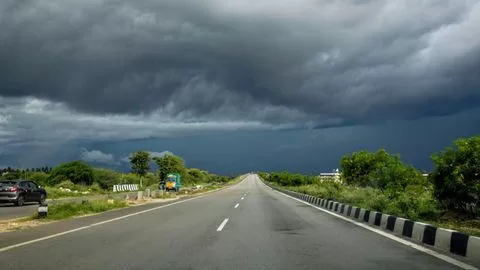
The 14 lane expressway project to connect Mumbai to Bangalore unveiled concepts to address environmental concerns and development of future transportation systems. The only special feature that can be discerned is that the proposed expressway shall mainly be made from recycled waste material and around 80 lakh tones of material for garbage has already been used in previous expressway projects.
Mumbai to Bangalore expressway is being planned with provisions for charging points for electric vehicles that Nitin Gadkari, the union minister, has predicted that almost all automobiles in India could turn electrical in the following twenty five years. Further, the project is also connected with the scheme of smart village which targets to develop the infrastructure of the rural areas and benefiting the farmers to live better lifestyle and thus contributes towards the Atmanirbhar Bharat mission. This places the expressway in a wider social context as not just a transport infrastructure but an investment in sustainable development and rural advancement.
Read also One of the most expensive projects in Mumbai to be inaugurated this month
Significance
This new super highway will consist of 14 lanes enabling transport from Mumbai to Bangalore and will link up to the Pune’s Ring Road. This new route will help in easing the traffic constrain on the existing Mumbai-Pune Expressway with Gadkari predicting that more than half of the motorists will move to the new route.
Gadkari further added, “When we constructed Mumbai-Pune expressway, we thought it would be sufficient for future fifty years, but recently when I travelled from Nagpur to Pune my son and daughter-in-law they were coming from Mumbai, they stuck in Lonavala for one hour and then I realize it is required to build new expressway. ”
The new Mumbai to Bangalore expressway from which vehicles moving out of Mumbai will have a smooth access to Bangalore through the Pune Ring Road. Besides, the expressway will extend the connectivity of the vehicles to the Chhatrapati Sambhajinagar Road within two hours at most.
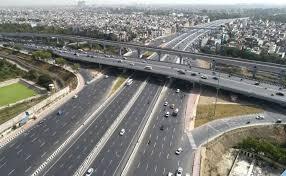
Project Fact Sheet
Project Name: Mumbai–Bangalore 14-Lane Expressway Project
Estimated Cost: ₹40,000 crore (approx. $4.8 billion)
Project Type: Greenfield access-controlled expressway
Configuration: 14 lanes
Length: Not fully disclosed (multi-state corridor)
Travel Time Reduction: From ~18 hours to ~6 hours
Program: Bharatmala Pariyojana
Status (2026): Planning and early-stage development
Objective: Improve freight efficiency and reduce congestion
Project Team
Project Owner: Government of India
Lead Authority: Ministry of Road Transport and Highways (MoRTH)
Implementing Agency: National Highways Authority of India (NHAI)
Program Framework: Bharatmala Pariyojana
Delivery Structure:
- Multi-package execution strategy expected, similar to other national expressways
- Combination of EPC and Hybrid Annuity Model (HAM) likely for implementation
Stakeholders and Participants:
- National and regional EPC contractors (to be finalized through tendering)
- Engineering and design consultants for alignment and feasibility studies
- Environmental and regulatory bodies overseeing clearances

Leave a Reply