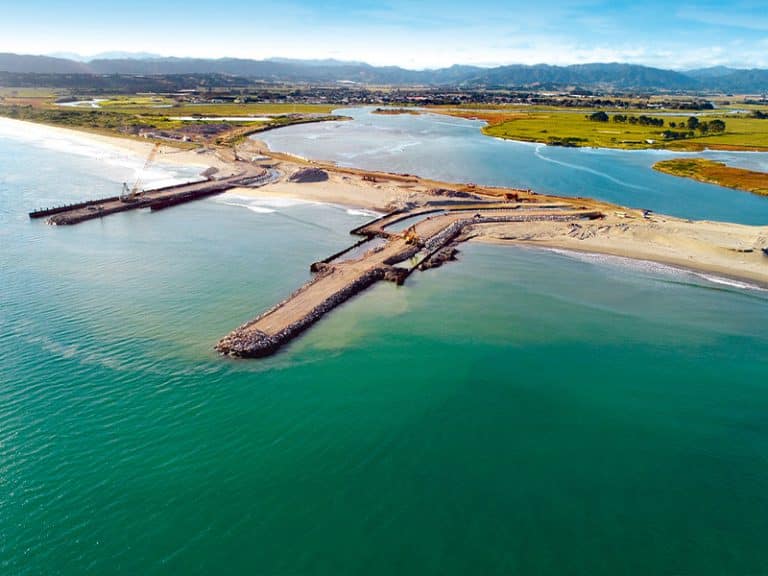
The Ōpōtiki Harbour entrance project advances marine infrastructure development in New Zealand with an investment of about $100 million. The harbour entrance project improves navigability at the Waioeka River mouth through new breakwaters, dredging works, and channel realignment. Additionally, the project supports aquaculture expansion and regional economic development in the Eastern Bay of Plenty. Moreover, it replaces a historically shallow and weather-sensitive harbour mouth with a more stable, engineered access channel. Consequently, the works enhance all-weather maritime access for commercial and recreational vessels.
Furthermore, the project forms part of a long-term effort to restore Ōpōtiki’s historic port function, which declined after the mid-20th century due to silting and shifting transport patterns. The development strengthens marine logistics capacity and supports offshore mussel farming operations. Therefore, authorities aim to improve long-term resilience and economic activity across the coastal region.
Harbour Entrance Project Strengthens Marine Navigation and Coastal Access Systems
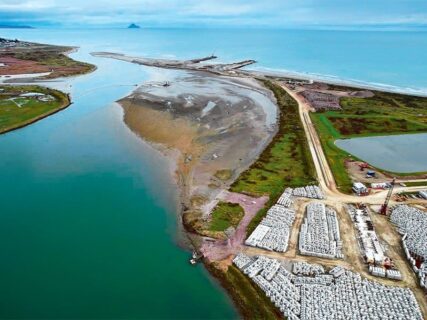
The harbour entrance project delivers a new engineered channel positioned east of the original river mouth. Construction teams completed major seawalls and training structures to stabilise the entrance and control sediment movement. Additionally, dredging operations support channel depth maintenance for safe vessel movement.
Moreover, engineers closed the original river mouth after redirecting water flow through the new entrance. This transition reduced navigational risk and improved consistency of harbour access. As a result, vessels can now operate under more predictable tidal and weather conditions compared to previous decades.
HEB Construction led the delivery of major marine works, including dredging, breakwater construction, and material placement. According to project updates, the works reached advanced completion stages by 2024, with operational use beginning shortly after key structural milestones were achieved.
Harbour Entrance Project 2026 Status Update and Infrastructure Performance Review
As of 2026, the Ōpōtiki harbour entrance project operates in its post-construction optimisation phase. The channel remains open and continues to support aquaculture vessels and regional marine traffic. However, ongoing maintenance dredging and environmental monitoring continue to ensure long-term channel stability.
Additionally, authorities monitor sediment movement and wave interaction along the training walls to maintain design performance. While the major construction phase has been completed, minor optimisation works continue to improve efficiency and resilience of the harbour system. Therefore, the project has transitioned from construction delivery into operational management.
Importantly, the project demonstrates New Zealand’s broader coastal infrastructure strategy focused on engineered marine access solutions. In comparison, similar principles apply to the Cook Strait ferry infrastructure project delivered by HEB Construction, which upgrades port systems in Picton and Wellington to support next-generation ferry operations and strengthen national inter-island connectivity.
Also Read: $25M Connecticut Water Project Awarded To Jacobs Company
New Zealand Ōpōtiki Harbour Entrance: A $100 Million Marvel Opens Up Opportunities
Despite less-than-ideal weather, 30 to 40 boats set sail smoothly when the channel opened to the public at noon. David Moore, Ōpōtiki’s Mayor, emphasized that the channel’s opening represents a significant milestone for the project, while they plan an official opening next year upon completing the work for commercial mussel boats’ accessibility. Moore thanked Ōpōtiki’s patient residents and acknowledged ex-Mayor John Forbes, who dedicated two decades to advancing the Ōpōtiki harbour entrance.
He also paid tribute to those who had been instrumental in making the Ōpōtiki harbour entrance a reality but had, unfortunately, passed away. Their vision and commitment to the project left an indelible mark.
The project succeeded largely due to $95 million in equity funding from Kānoa, the Ministry of Business, Innovation, and Employment’s unit. Jason Hall, the ministry’s investment director, praised Whakatōhea iwi and Ōpōtiki District Council’s vision, emphasizing its regional origin, not Wellington-based.
Regional councilors Kevin Winters and Malcolm Campbell attended. Winters expressed delight as the regional council contributed $20 million from its Infrastructure Fund. He also recognized Jon Jon Peters, who leads the regional council’s harbour team. Noting that this project would increase the presence of the maritime patrol team in Ōpōtiki harbour.
In conclusion, the unveiling of the $100 Million New Zealand Ōpōtiki Harbour Entrance marks a remarkable achievement for the community. This project, driven by dedication and collaboration, signifies not only the beginning of new opportunities for Ōpōtiki but also a testament to the persistence and vision of those who made it a reality. With a bright future ahead, this harbour promises to be a key driver of progress, economic growth, and unity in the region.
Project Fact Sheet
Project Name: Ōpōtiki Harbour Entrance Development Project
Location: Ōpōtiki, Eastern Bay of Plenty, New Zealand
Project Value: Approximately $100 million
Scope of Works:
- New harbor entrance channel
- Breakwaters, training walls
- Dredging
- Sediment relocation
- Closure of old river mouth
Primary Objective: Improve all-weather harbor access and support aquaculture logistics
Delivery Period:
- Major works 2020–2024
- Operational phase ongoing into 2026
Client / Governance: Ōpōtiki District Council with regional and national infrastructure partners
Key Sector Impact: Aquaculture, marine transport, regional economic development
Project Team
Ōpōtiki District Council – Project owner and regional infrastructure authority
Bay of Plenty Regional Council – Environmental oversight and coastal management coordination
Kanoa (MBIE Regional Development Unit) – Funding and program management support
Whakatohea Iwi – Local iwi partner involved in regional development and aquaculture interests
Ministry of Business, Innovation and Employment (MBIE) – National funding and infrastructure program oversight



Leave a Reply