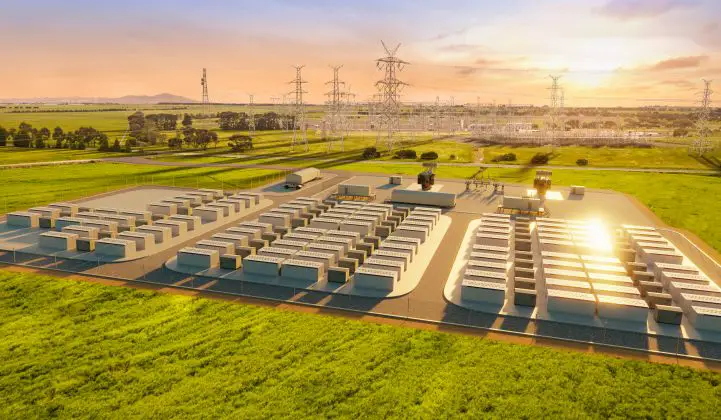
New England BESS project has reached the commissioning stage at ACEN Australia’s 720MW New England Solar development near Uralla, New South Wales. The 200MW/400MWh battery is transitioning from construction after major site works progressed through 2025 and early 2026. ACEN now says final testing and commissioning are underway, marking a significant change from the project’s earlier construction phase.
The battery represents a major expansion of energy-storage infrastructure within the New England Renewable Energy Zone. It will store renewable electricity and release power when demand increases. Moreover, its grid-forming capabilities will provide important stability services for the electricity network.
ACEN initially developed the project with a projected investment of A$250 million. The investment translates to roughly $163 million at current exchange rates. ACEN partnered with Marubeni on the battery’s development, while Energy Vault later secured the battery deployment contract.
New England BESS Project moves from construction to commissioning
Construction on the New England BESS Project began in February 2025, following earlier development and contracting activities. Energy Vault is delivering the 200MW/400MWh system for ACEN Australia.
The project uses Energy Vault’s B-VAULT battery system and VaultOS energy management platform. Siemens S120 inverters support the battery’s grid connection and system-control functions.
ACEN confirmed in April 2026 that the construction team had begun demobilizing its site compound. The project had then moved into commissioning and testing activities.
The latest project information confirms that final testing remains underway. Therefore, the battery has moved substantially beyond the construction status reported in the earlier Construction Review article.
The project includes significant electrical infrastructure beyond the battery units. An expanded switching yard will connect the BESS and New England Solar Stage 2 to Transgrid’s network.
The development also requires high-voltage infrastructure and associated grid-connection works. Earlier project plans included a 250MVA transformer supporting the battery connection.
New England BESS Project strengthens renewable-energy integration
The New England BESS Project will operate alongside ACEN’s existing solar generation. New England Solar Stage 1 already operates with 400MW of installed solar capacity.
Stage 2 will add another 320MW of solar capacity to the wider development. ACEN continues to list New England Solar Stage 2 and the BESS among its projects under construction.
The co-location strategy allows the battery to capture greater value from existing renewable-energy infrastructure. It also enables stored electricity to reach the grid during periods of stronger demand.
Furthermore, the battery will support customers across New South Wales and Queensland. Its two-hour storage duration allows it to discharge 200MW for approximately two hours.
The system will also provide grid-forming services that strengthen network stability. These services include system strength, voltage support and frequency ride-through capabilities.
The development carries additional expansion potential within the approved New England Solar and Battery project. Existing approvals provide for a much larger future battery component.
ACEN’s approved development framework includes a potential 1,200MW two-hour BESS expansion. That would add substantial storage capacity beyond the current 400MWh system.
The project also complements Australia’s growing pipeline of large-scale battery construction. For example, the Queensland Supernode Battery Project is advancing toward more than 3GWh of storage across its first three stages. That development demonstrates the rapidly increasing scale of Australian battery infrastructure.
Scope f the Project
Updated September 2025
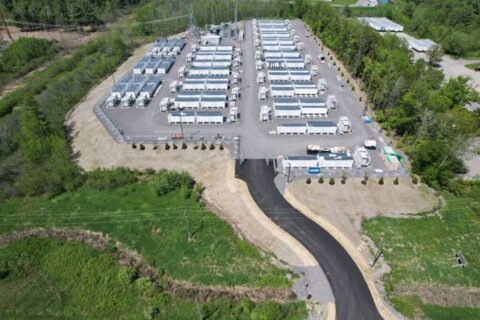
Acen Australia, a subsidiary of the Philippines-based Ayala Corporation, is constructing a 200 MW/400 MWh battery energy storage system (BESS) at its New England Solar Farm near Uralla, New South Wales. Designed with approvals to expand up to 1.4 GW/2.8 GWh, the project represents the first large-scale BESS in the New England region and, when combined with the 720 MW solar farm, will rank among Australia’s largest co-located renewable energy facilities. The development, delivered in partnership with Energy Vault, will not only supply reliable on-demand power to customers in NSW and Queensland but also enhance grid stability with advanced grid-forming inverter technology, marking a significant milestone in Australia’s clean energy transition.
The project integrates advanced grid-forming inverters to provide system strength, voltage and frequency ride-through, reactive power control, and grid stability services. Civil and base electrical work is underway, including the installation of an expanded switching yard to connect the battery and second stage of the solar project to Transgrid’s transmission network. A 250 MVA, 261-tonne transformer will be installed to support the BESS, with high-voltage connections managed by EPEC. The facility is designed to provide energy on demand to NSW and Queensland and can cycle repeatedly to maintain grid reliability and stability. Commercial operations are expected in 2026, with delivery of battery modules scheduled for the second half of the year.
The scope of the New England battery project is extensive, encompassing civil works, electrical infrastructure, and integration with the existing solar farm and transmission network. It includes the installation of a 250 MVA transformer, an expanded switching yard, and advanced grid-forming inverters to deliver system strength and network security services. The project also involves the delivery and commissioning of battery modules, with Energy Vault overseeing construction and technology integration, while Lumea and EPEC manage transmission connections and high-voltage systems. Once fully built, the battery will not only support the 720 MW solar farm but also provide scalable storage capacity capable of meeting future energy demands across New South Wales and Queensland. Also in Queensland the Stanwell BESS Project reached its halfway mark this Septmeber with all its Tesla Megapack Units having been delivered and installed signifying Australia’s serious investment in Energy storage facilities.
Updated in March 2024
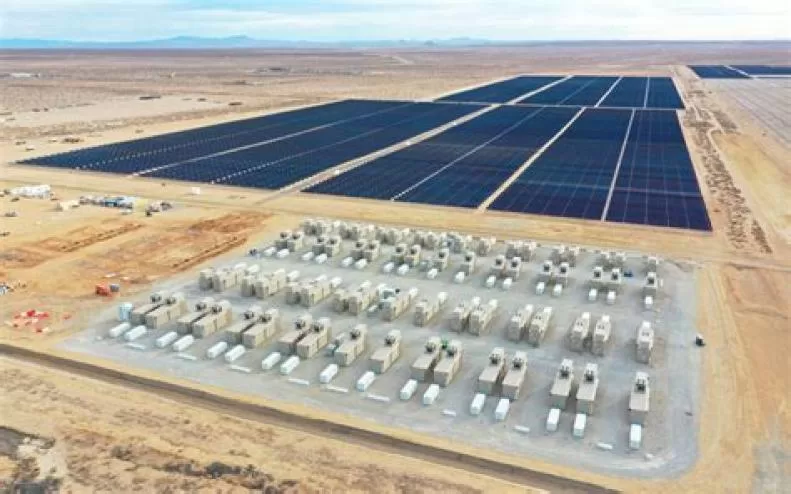
6th March 2024 – An agreement has been signed for the development of a 400 MWh battery energy storage system (BESS) next to New England, one of Australia’s biggest solar projects. The agreement was signed between Acen Australia and Marubeni Corporation in Melbourne during the Philippine Business Forum held ahead of the ASEAN conference.
ACEN Australia is a wholly owned subsidiary of ACEN, the listed energy platform of the Ayala group. Marubeni Corporation on the other hand is a major Japanese integrated trading and investment business conglomerate.
The agreement commits the parties involved to work together on a 50-50 basis on the delivery of the 200 MW, two-hour (400 MWh) battery project at an estimated cost of $A250 million. Reportedly, the BESS has the potential for “significant future expansion.”
The 400 MWh BESS project next to one of Australia’s biggest solar projects is set to be completed by 2025 with the support of host landholders, First Nations, and the Uralla community. Once complete, the BESS will reportedly be one of the nation’s largest co-located solar and battery energy storage facilities.
Alongside the partnership agreement, a connection contract was also signed with Lumea, a subsidiary of Transgrid and an essential energy infrastructure services provider building competitive and innovative pathways to shape Australia’s energy future.
Speaking on this contract, Brett Redman the head of Transgrid, said that it’s a very big step forward in the transition to renewables and for Australian consumers who will be the main beneficiaries of access to cheaper and cleaner energy.
David Pollington, Acen Australia’s managing director, on the other hand, said that the battery storage system shall enable energy to be stored and made available to the grid when it is needed.
Overview of one of Australia’s biggest solar projects
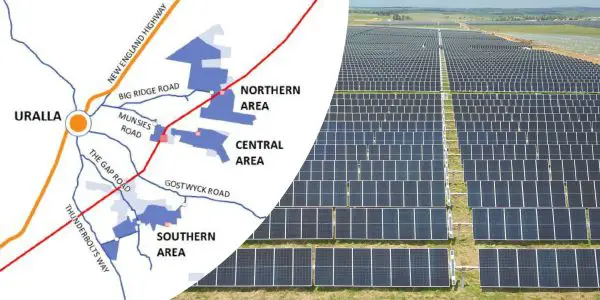
New England solar power plant is one of Australia’s biggest solar projects with a planned capacity of 720MW. The project is being developed in two phases (stages 1 and 2) on a 2,000-hectare site of mostly cleared grazing land located near Uralla in New South Wales. Particularly, the project is being developed in the New England Renewable Energy Zone.
The zone is a part of the NSW state government’s AUD 79 million plan to deliver new energy infrastructure in a bid to lower electricity costs, create jobs and ensure the region becomes a key area for renewable energy investment.
Stage one of the New England solar power plant comprises the development of a 400MW solar farm and a 33/330-kilovolt substation. SMEC completed geotechnical investigations, feasibility studies and pile design for this phase of the project in 2020.
The company was subsequently engaged to develop the concept through to a detailed design in 2021. The scope of work included early works and technical support across geotechnical, environmental, civil, structural, and electrical disciplines.
Fast forward to 2023, Stage 1 of the New England solar power plant commenced generating clean, renewable electricity in NSW and Queensland. Stage 2 which comprises the development of an additional 320MW solar farm and a 200MW/2-hour battery will start construction in 2024.
Also Read
Contractor appointed for the 1st stage of Bulli Creek Solar Park, Australia
Construction of Australia’s largest solar power plant in the offing
EnergyConnect Powers On: New Transmission Backbone Nears Completion Across Australia
Project fact sheet
Project: New England Battery Energy Storage System.
Location: Near Uralla, New South Wales, Australia.
Developer: ACEN Australia.
Parent company: ACEN Corporation.
Project location: New England Renewable Energy Zone.
Battery capacity: 200MW.
Energy storage: 400MWh.
Storage duration: Two hours.
Estimated investment: A$250 million.
Approximate investment: US$163 million.
Associated solar project: 720MW New England Solar.
Operational solar capacity: 400MW from Stage 1.
Stage 2 solar capacity: 320MW.
Construction start: February 2025.
Current status: Final testing and commissioning.
Expected function: Renewable-energy storage and grid support.
Grid connection: Transgrid transmission network.
Grid infrastructure: Expanded switching yard and high-voltage equipment.
Battery technology: Energy Vault B-VAULT.
Energy management: Energy Vault VaultOS.
Inverter technology: Siemens S120.
Government support: NSW Government Emerging Energy Program.
Future expansion approval: Up to 1,200MW additional two-hour BESS.
Community support: Host landholders, First Nations and Uralla community.
Project team
Developer: ACEN Australia.
Parent company: ACEN Corporation.
Development partner: Marubeni Asian Power Singapore.
Battery technology and deployment provider: Energy Vault.
Inverter supplier: Siemens.
Transmission network operator: Transgrid.
Transmission connection provider: Lumea.
High-voltage works: EPEC.
Solar project owner: ACEN Australia.
NSW government program: Emerging Energy Program.
Host community: Uralla community and surrounding New England region.