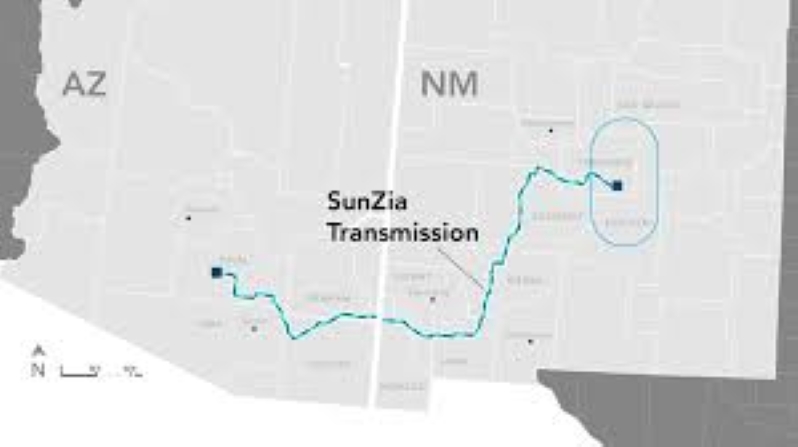
The SunZia Transmission Line, a 550-mile high-voltage corridor linking New Mexico wind resources to Arizona and the western U.S., is well into its execution phase. Construction began in late 2023, and by late 2025 developers have reported steady progress on foundations, access roads, and tower staging along multiple segments. Once completed, the line will carry up to 3 GW of renewable electricity, making it one of the largest clean energy transmission networks in North America. It will also serve as a critical enabler of the adjacent SunZia Wind project as the U.S. continues to spur its clean energy transition
SunZia Transmission Project Team
Developer
- Pattern Energy
Primary Contractors
- Quanta Services — transmission construction
- Hitachi Energy — HVDC equipment
Key Stakeholders
- U.S. Bureau of Land Management
- U.S. Department of Interior
Construction Begins on SunZia Transmission Line and Wind Facility in New Mexico
Reported January 15, 2024—The SunZia transmission line and wind facility have started construction between Torrance, Lincoln, and San Miguel Counties in New Mexico for the purpose of sending energy across the state. This will be to urban markets situated in Arizona and potentially California.
Construction Cost
On Dec. 27, Pattern Energy announced that it had completed the $11 billion necessary for financing to build a facility estimated by the Obama administration as capable of producing renewable energy reserves sufficient to economically contribute to local communities and about 3 million Americans at least.
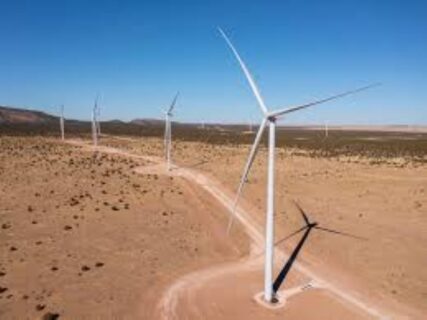
900 turbines that make up the wind farm will occupy Lincoln, Torrance, and San Miguel counties, with the 550-mile transmission line crossing southwest New Mexico to a termination point in Pinal County of Southern Arizona.
That power could then be sold to large markets in cities such as Phoenix or Tucson, or even sent further west into California.
SunZia Transmission Line Capacity
Together, along the route, it will be able to carry about 3,000 megawatts (MW) of wind power from this wind farm, generating up to 3,514 MW.
It took $8.8 billion in construction costs, which were funded by a group of investment banks from all over the U.S., as well as another about 2.5 million dollars on tax equity loans. Pattern Chief Executive Officer Hunter Armistead said the project was “the largest clean energy” initiative in American history and would help to transition America and the world towards carbon-free power.”
Read also Empire Wind Project Secures Approval from the U.S. Government

“Our hope is that this successful raising of institutional funding for
“Our hope is that this successful raising of institutional funding for the largest clean energy infrastructure project in American history provides a precedent for similarly big ambitious renewable infrastructure initiatives, which are needed to hasten our transition towards a carbon-free future,” Armistead said.
Completion Date
The pattern predicted the SunZia wind facility and SunZia transmission line would be in service by 2026. “Work is already underway on this historic project that will provide cheap power, with a load profile to support the vast amount of solar generation resources available across the major part of the western United States.
“The full financing SunZia received indicates that large-scale renewable energy projects are becoming appealing to investors,” said Pattern Executive Vice President Daniel Elkort.
“This financing demonstrates a continuing support from our finance partners to the renewables sector as well as Pattern,” he said.
Outlook on SunZia Transmission Line and Wind Facility
“The sheer size and scope of both projects at SunZia, but more broadly, in what has been deployed today, is an indication that the space can secure compelling capital resources on scales such as terms not previously used for traditional generation,” Elkort added.
Bill Rogers, global head of sustainable energies at Canada Pension Plan Investment Board (CPP Investments), which purchased Pattern in 2020, said the investment firm is keen on assisting Pattern to develop and operate the SunZia system.
“SunZia wind facility and SunZia transmission line are a major step forward in the worldwide shift to renewable energy, and we are pleased to support Pattern as it seeks to bring this project closer to realization,” Rogers said.

Read also Ternium Set To Expand The Olavarria Wind Farm From 72 MW To 99 MW
What SunZia Transmission Line and Wind Facility Bring to New Mexico
BLM New Mexico State Director Melanie Barnes stated that such a project was consistent with the federal government’s aim to increase renewable energy across the U.S.
She said in a press release, “This effort is an important contribution to the development of renewable energy and transmission infrastructure in our country.
4,411 megawatts were installed as of 2023 based on the most recent data from Energy Information Administration in wind capacity ranking New Mexico ninth in the nation.
About 42 percent of electricity in the state was provided by renewable energy. Additionally, wind made up 85% of that power.
The report states, “New Mexico is one of the leading states in potential for wind energy.
Much of it exists on high plains throughout eastern portions of this state.”
According to information from the New Mexico State Land Office, renewable energy seemed poised for even greater advancement in its power generation for New Mexico, as well as how much it contributed to state funds.
Read also: SunZia Power Transmission project in New Mexico receives financial boost
Other projects
The Hunter Transmission Project contract has gone to Downer. On November 23, the Australian contractor said it won a contract worth about A$1.1 billion (roughly US$700 million) to build a 110 km, 500 kV transmission line in New South Wales. The line will help the state replace aging coal power with renewable energy.
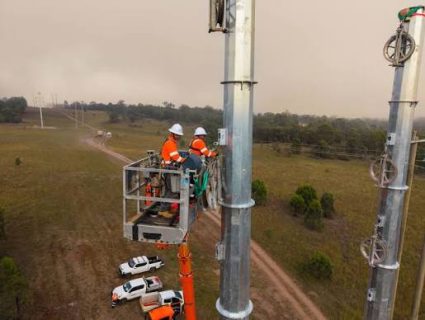
The Energy Corporation of NSW (EnergyCo) awarded the three-year contract. Downer will build a new double-circuit 500-kilovolt overhead line with lattice steel towers. It will run between the Bayswater South and Olney switching stations. Transgrid, the state’s main network operator, will work alongside Downer on the project.