
Rail Baltica is a €7.5+ billion, 870km new-build standard-gauge (1,435mm) high-speed railway connecting Tallinn, Estonia through Pärnu, Riga, Panevėžys, Kaunas, and Vilnius to the Polish border at Suwalki, integrating the Baltic states into Europe’s TEN-T core network for the first time and replacing the legacy Russian broad-gauge (1,520mm) infrastructure inherited from the Soviet era. Designed for passenger speeds of up to 249 km/h and dual freight use, the project carries major strategic significance for both EU economic connectivity and NATO military mobility along Europe’s eastern flank. By end of 2025, 43% of the mainline was either under construction or construction-ready across all three Baltic states, with two historic €726 million mainline construction contracts — the largest infrastructure contracts in Estonia’s history — signed in May 2025, bringing the entire Estonian passenger main line under contract, and a €1.77 billion design-and-build electrification contract signed with the COBELEC consortium in September 2025, covering the entire standard-gauge corridor. Rail Baltica’s accelerating procurement sits within a broader Northern European rail renaissance, alongside Sweden’s own landmark commitments — most recently the €900 million HOCHTIEF contract for the OL31 Vagnhärad section of Ostlänken — the single largest contract on the largest infrastructure investment in modern Swedish history — confirming that Northern Europe’s rail transformation is now advancing simultaneously on multiple national fronts.
Project Overview
Type: New-build standard-gauge high-speed and freight railway (1,435mm gauge)
Route: Tallinn (Estonia) → Pärnu → Riga (Latvia, via airport) → Panevėžys → Kaunas → Vilnius (Lithuania) → Suwalki (Poland border)
Total length: ~870km of new mainline across three countries
Design speed: Up to 249 km/h (passenger); dual-use freight capability
Total estimated project cost: €7.5–€9 billion (revised upward from original ~€5.8 billion)
EU funding: Connecting Europe Facility (CEF); additional €1.4 billion CEF funding secured in November 2024; additional €1.2 billion secured in 2024; further €295.5 million in 2025
Phase 1 target completion: 2030 (single-track operational corridor Tallinn–Polish border)
Phase 2: Full double-track integration — dependent on future funding
Latvia now viewing 2035 as more realistic completion date; Estonia maintaining 2030 target
First operational milestone: Ülemiste Linda Terminal first platform opened to passengers, June 12, 2025
Estonia: 70+ km of substructure under construction; Latvia: 230km framework agreement active, works near Iecava; Lithuania: 114km under construction including Neris River bridge and 9km of track laying
Electrification: €1.77 billion design-and-build contract signed September 2025 with COBELEC consortium — unified electrification system across entire corridor
March 2026: Consolidated framework agreements signed for core superstructure materials procurement
Strategic significance: NATO military mobility corridor on EU’s eastern flank; supported by February 2026 high-level military mobility forum in Vilnius
Socioeconomic benefits: Estimated €16.2 billion measurable benefits; €2 billion additional GDP multiplier (Ernst & Young)
Project Team
Joint Coordinator: RB Rail AS (joint venture of national railway bodies of Estonia, Latvia, Lithuania)
RB Rail AS Interim CEO: Marko Kivila
National implementing body (Estonia): Rail Baltic Estonia OÜ; CEO: Anvar Salomets
National implementing body (Latvia): Eiropas Dzelzceļa līnijas SIA
National implementing body (Lithuania): Rail Baltica Statyba UAB + LTG Infra
Estonia’s Minister of Infrastructure: Kuldar Leis
Estonia mainline Section 1 contractor (Alliance 1): GRK Eesti AS, GRK Suomi Oy, Merko Ehitus Eesti, NGE Contracting, Sweco Finland, Sweco Sverige, TSO SAS (€394 million; Ülemiste–Pärnu + Tootsi–Pärnu substructure/superstructure)
Estonia mainline Section 2 contractor (Alliance 2): Bouygues Travaux Publics, Budimex S.A., INGEROP ICI, KMG Infra OÜ, WSP Finland (€332 million; Pärnu–Ikla full design and build)
Electrification contractor: COBELEC consortium (€1.77 billion)
Lithuanian section design/supervision: DB Engineering & Consulting (96km Polish border–Kaunas section)
EU oversight: European Commission — formal 2030 milestone decision adopted July 2025
Programme framework: EU Trans-European Transport Network (TEN-T) Core Network Corridor
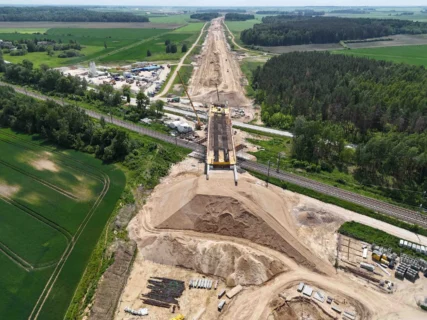
Published 5th October 2024: Rail Baltic Estonia, Rail Baltica’s national implementing body, has launched a landmark infrastructure tender valued at up to $1 billion. The tender is for the construction of the Rail Baltica main line, a project of key strategic importance for the entire European rail network. The project will create a seamless economy as a missing link in Europe’s north-south connectivity. It will also provide an amicable mobility corridor, strengthening ties between the Baltic States. These include Finland, Central Europe, and beyond. The tender will result in two contracts for the construction of the railway between Ülemiste and Pärnu, as well as Pärnu and the Latvian border. More than just a rail connection, the project is a critical component of Europe’s efforts to enhance transport efficiency. Furthermore, it will improve accessibility and bolster economic competitiveness.
Rail Baltica as a Fundamental Link in Europe
Vladimir Svet, Estonia’s Minister of Infrastructure, emphasized the broader European importance of the project. “Rail Baltica is more than a regional project, it connects Estonia and the Baltic states to Europe’s extensive rail network. It will also creating new opportunities for economic growth and improving mobility across the continent. While we often discuss Rail Baltica in terms of passenger and freight transport, its role as a strategic backbone for military mobility on NATO’s Eastern flank has become increasingly significant. This is due to the on-going Russia’s aggressive war in Ukraine. Today’s announcement of extensive construction procurement for Rail Baltica’s mainline is a testament to our commitment to this pivotal project that brings Europe closer together.” As a part of the EU’s Trans-European Transport Network (TEN-T), Rail Baltica will not only improve the region’s connectivity but also foster international collaboration.
Also read:
Construction officially begins on Europe’s latest railway, the $4 billion Rail Baltica
The Significance of the Mega Project in Europe
The project scope of Rail Baltica offers significant opportunities for global construction companies, as well as rail industry players. Furthermore, it creates a new value chain during both the construction and operational phases. Rail Baltica is set to attract companies involved in rail technology, logistics, and manufacturing. This will further enhance Estonia’s role in the European rail industry.
The alliance tender will result in two contracts:
- The first contract, with an estimated value of €394 million, will cover the construction of the railway superstructure for the Ülemiste–Pärnu section. It also includes the substructure for the Tootsi–Pärnu section.
- The second contract, valued at approximately €332 million, will encompass the design and construction of the Pärnu–Ikla section. This will complete the main line.
Anvar Salomets, CEO of Rail Baltic Estonia, added:
“Today’s announcement regarding the alliance procurement for the Rail Baltica mainline construction in Estonia signifies a major advancement. We are eager to see participation from international construction firms in this procurement process. Our goal is to have all sections of Rail Baltica’s mainline either contracted out or already under construction by this time next year. I can assure you all stakeholders are fully committed to completing this project by 2030.” Construction of the main line will take place in several stages. The development phase is set to run from Q3 2025 to Q2 2026, followed by the construction phase from 2026 to the end of 2030.
Also read:
Construction Commences on the $8B World’s Longest Underwater Rail and Road Tunnel in Europe
Rail Baltica, the largest rail to be constructed in Baltic Countries in over 100 years

Leave a Reply