Maryland is advancing the replacement of Baltimore’s Francis Scott Key Bridge through a four-contract construction program with an estimated cost of $4.3 billion to $5.2 billion.
The Maryland Transportation Authority is procuring the replacement in separate packages covering demolition and marine work, the two land approaches, and the main span with its marine approaches.
The new crossing will be a cable-stayed bridge with a 1,665-foot main span and a minimum 230-foot clearance above the federal navigation channel. Maryland currently expects the bridge to open to traffic in late 2030.
Construction is already underway on foundation work and a temporary over-water trestle while Maryland advances procurement for the remaining packages.
Why the Key Bridge Is Being Replaced
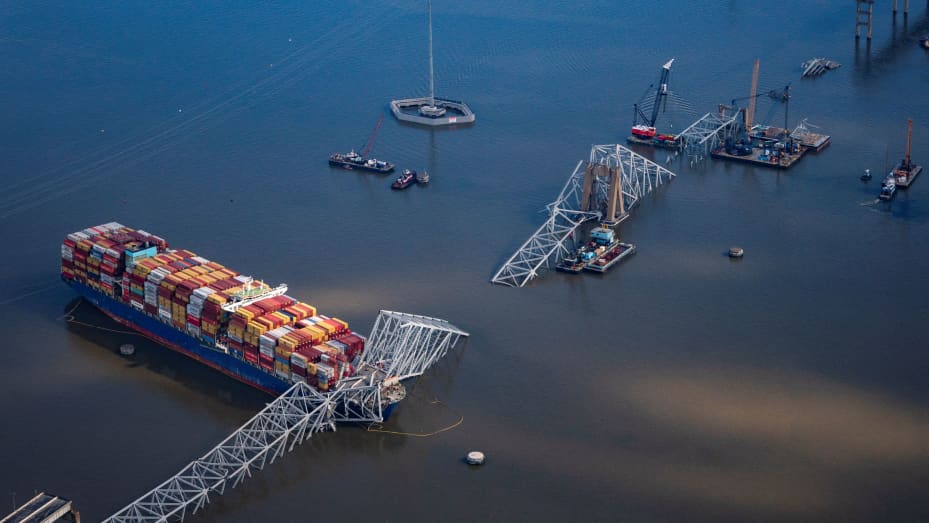
The original Francis Scott Key Bridge collapsed on March 26, 2024, after the container ship Dali struck one of its piers while leaving the Port of Baltimore.
The collapse killed six road workers and removed a major Interstate 695 connection across the Patapsco River.
The bridge formed part of the Baltimore Beltway and provided a direct highway connection between communities on opposite sides of the river.
The replacement will restore that connection while incorporating a vessel-collision protection system around the main bridge supports.
The new structure will also provide a larger navigation clearance for ships using the federal channel serving the Port of Baltimore.
Maryland Is Using Four Construction Contracts
MDTA announced in May 2026 that it would divide the remaining Key Bridge reconstruction into four separate procurements.
The packages cover:
- Demolition of the remaining structures over the water and miscellaneous marine work.
- Construction of the south land approach.
- Construction of the north land approach.
- Construction of the main span, pier protection and marine approaches.
MDTA said the multiple-contract approach is intended to increase competition and accelerate the award of new contracts.
Kiewit Infrastructure Co. continues work under its existing contract. That work includes driving permanent foundation piles and constructing the over-water trestle.
MDTA began bidding the demolition and miscellaneous marine package in August 2026. The agency also released the RFQ for the main span and marine approaches in July.
The main-span package will use a two-step competitive process to select a design-build team.
Webuild’s Earlier Proposal for the Key Bridge
Webuild also submitted an unsolicited concept for the replacement as part of Maryland’s early industry engagement. The Italian contractor developed the proposal with MIT professor Carlo Ratti and French structural engineer Michel Virlogeux, offering the concept as a pro bono contribution to the reconstruction effort.
The concept included a cable-supported structure with pylons positioned away from the main navigation channel, along with additional traffic capacity and wider emergency lanes. Webuild also brought experience from the reconstruction of Genoa’s Ponte Morandi, where it built the San Giorgio Bridge, which opened in 2020.
What the New Bridge Will Look Like
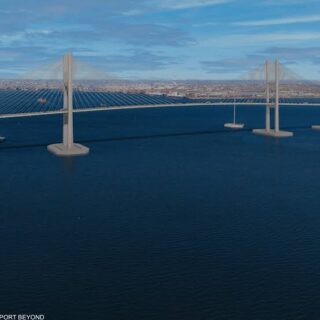
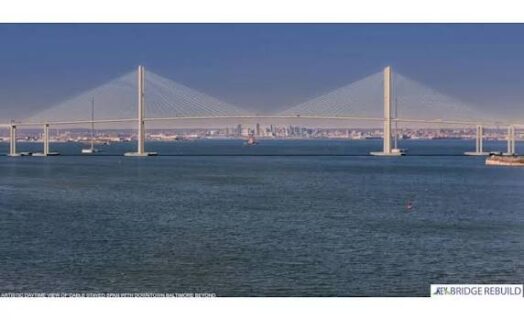
The replacement will use a cable-stayed design rather than reproducing the original bridge.
The main span will measure approximately 1,665 feet, while the full bridge and its marine approaches will extend about 3,365 feet.
Two concrete pylons will reach an elevation of approximately 602 feet.
The bridge will provide at least 230 feet of vertical clearance above the federal navigation channel.
The main-span contract also includes approximately 660 feet of south approach bridge over water and approximately 1,560 feet of north approach bridge over water.
The roadway will maintain two traffic lanes in each direction. The project also includes a concrete median and upgraded roadway features.
A vessel-collision protection system will surround the main pylon piers.
Construction Underway
The replacement program has moved beyond planning into early construction.
Crews are installing permanent foundation piles and building a temporary trestle over the Patapsco River.
The trestle will provide an over-water work platform during construction.
The project also involves marine demolition, foundation work, land approaches and the construction of the new cable-stayed span.
The four-contract structure allows Maryland to advance different portions of the project while procurement continues for the remaining work.
Project Cost and Funding
MDTA estimates the replacement will cost between $4.3 billion and $5.2 billion.
The agency updated the estimate in November 2025 as design and pre-construction work progressed. The revised estimate reflected higher material costs and changes to the bridge design, including a robust pier-protection system and taller towers supporting the longer main span.
The project is eligible for a 100% federal cost share through the Federal Emergency Relief program under federal legislation enacted after the collapse.
Maryland is also pursuing financial recovery from the Dali and its owners. The state has said recovered funds will be applied toward the reconstruction costs.
Project Timeline
The original bridge collapsed on March 26, 2024.
MDTA began reconstruction-related pre-construction work in 2025. That work included project development, engineering, testing and early construction activities.
Permanent foundation pile installation and construction of the over-water trestle are now underway.
MDTA released the RFQ for the main span and marine approaches in July 2026.
The agency opened bidding for the demolition and miscellaneous marine work package in August 2026.
MDTA anticipates additional procurements for the south and north land approaches.
The main-span and marine-approaches contract is expected to begin construction in summer 2027, according to the agency’s current procurement schedule.
MDTA currently anticipates opening the replacement bridge to traffic in late 2030. The agency notes that the final construction schedule will depend on the competitive procurement process and contract awards.
Agencies and Project Partners
MDTA is responsible for the reconstruction program and owns, operates and maintains Maryland’s toll bridges, tunnels and highways.
The agency is working with the Maryland Department of Transportation and federal agencies on the replacement.
Key public-sector partners include:
- Maryland Transportation Authority
- Maryland Department of Transportation
- Federal Highway Administration
- U.S. Army Corps of Engineers
- U.S. Coast Guard
- Maryland Port Administration
- Maryland State Highway Administration
The project also requires coordination with local governments, utilities, emergency services, maritime operators and other stakeholders affected by construction and navigation activities.
Why the Replacement Matters
The Francis Scott Key Bridge was an important Interstate 695 connection and a major crossing of the Patapsco River.
Its replacement will restore the missing highway link between the Baltimore communities on either side of the river.
The new bridge will also maintain access for commercial vessels using the Port of Baltimore while providing greater clearance than the former structure.
The project combines highway construction, marine engineering, foundation work, navigation requirements and multiple construction contracts.
Its four-package procurement strategy allows Maryland to advance different portions of the replacement while the largest bridge contract moves through its design-build selection process.
The Francis Scott Key Bridge replacement is advancing through a multi-package procurement strategy, while Massachusetts has moved its $1.6 billion Sagamore Bridge replacement into the final bidding phase. The two projects show how major U.S. bridge replacements are progressing through different delivery and contracting stages as agencies prepare for large-scale construction.
Factsheet: Francis Scott Key Bridge Replacement
- Project: Francis Scott Key Bridge Replacement
- Location: Baltimore, Maryland, over the Patapsco River
- Lead agency: Maryland Transportation Authority
- Main public partners: Maryland Department of Transportation, Federal Highway Administration, U.S. Army Corps of Engineers, U.S. Coast Guard, Maryland Port Administration and Maryland State Highway Administration
- Original bridge collapse: March 26, 2024
- Vessel involved: Container ship Dali
- Planned bridge type: Cable-stayed highway bridge
- Estimated project cost: $4.3 billion to $5.2 billion
- Main span: Approximately 1,665 feet
- Total main-span bridge length: Approximately 3,365 feet
- Main pylon elevation: Approximately 602 feet
- Navigation clearance: At least 230 feet vertically
- Traffic capacity: Two lanes in each direction
- Main construction packages: Four
- Main-span procurement: Design-build
- Original Phase 1 contractor: Kiewit Infrastructure Co.
- Current construction: Permanent foundation piles and over-water trestle
- Expected main-span construction start: Summer 2027
- Current planned opening: Late 2030
Also read: Plans for construction of Strait of Messina Bridge in Italy revived
Italy to build world’s longest suspension bridge, design approved