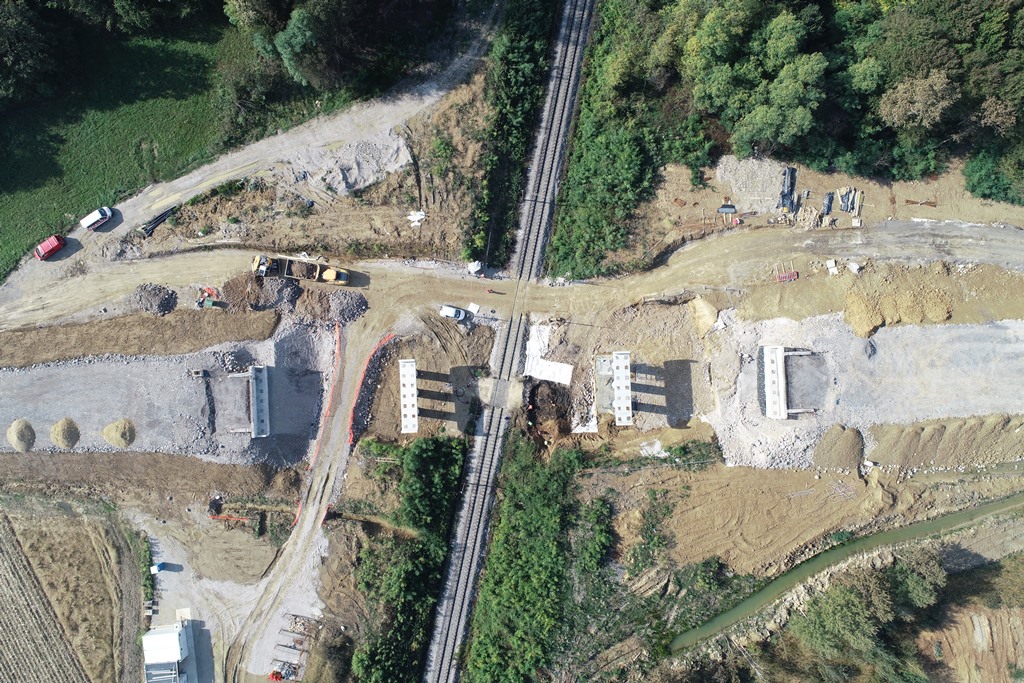
After years of procurement complications, a failed contract, and a wave of legal appeals, the Hrvatski Leskovac–Karlovac rail section has finally been awarded to Spanish infrastructure group COMSA Corporación by Croatia’s HŽ Infrastruktura for reconstruction and electrification works. With a contract value of approximately EUR 348.5 million including VAT, the project marks one of the most significant and most turbulent railway procurement exercises in Central and Eastern Europe in recent memory. Work on the 44 kilometre section, a critical link in Croatia’s main Zagreb–Rijeka corridor, is now expected to commence during the summer of 2026.
Derailed Before It Started: The STRABAG Chapter
Back in July 2022, HŽ Infrastruktura signed a civil and electrical works contract worth approximately EUR 227.4 million with a consortium led by Austrian construction giant STRABAG, comprising STRABAG d.o.o., STRABAG AG, and STRABAG Rail a.s. At the same time, Czech firm AŽD Praha was awarded a EUR 35 million contract for the control, signalling, and interlocking subsystem on the same section. At the time, the project was heralded as a cornerstone of Croatia’s ambition to modernise its rail corridor to the Adriatic port of Rijeka and bring the Zagreb–Rijeka axis up to international standards.
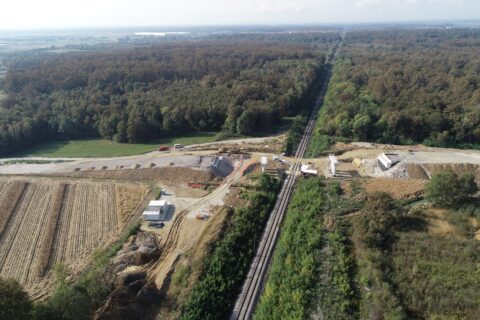
The STRABAG contract, however, never fully materialised. Croatian sources indicate that not all the necessary construction and environmental permits were obtained in time, which meant that meaningful civil works could not proceed across the full project scope. Progress continued only on select structures and auxiliary facilities. After protracted negotiations, STRABAG and HŽ Infrastruktura reached an amicable agreement to wind down the original arrangement, and a fresh tender was launched at the end of 2024.
Project Fact Sheet
Project Name: Reconstruction, Doubling and Electrification of the M202 Hrvatski Leskovac–Karlovac Section
Country: Croatia
Section: Hrvatski Leskovac to Karlovac, M202 line
Length: 44 kilometres
Contract Value: EUR 278.8 million excluding VAT, or EUR 348.5 million including VAT
Client/Owner: HŽ Infrastruktura, the Croatian Railway Infrastructure manager
Contractor: COMSA Corporación, Spain
Previous Contractor: STRABAG consortium comprising Austrian and Czech entities, contract terminated by mutual agreement
Signalling Subsystem: AŽD Praha, awarded EUR 35 million in 2022, current status under review
Design Speed: Up to 160 km/h upon completion
Expected Works Start: Summer 2026
Corridor: Part of the Zagreb to Rijeka rail axis
EU Relevance: Designated section of the Mediterranean TEN-T Corridor
Project Team
Client: HŽ Infrastruktura d.o.o., the state-owned Croatian railway infrastructure manager responsible for the national rail network
Main Contractor: COMSA Corporación, a Spanish infrastructure and construction group with an established operational footprint across Europe and Latin America
Previous Main Contractor: The STRABAG consortium, comprising STRABAG d.o.o., STRABAG AG, and STRABAG Rail a.s., whose contract was terminated following a mutual agreement with the client
Signalling Contractor: AŽD Praha s.r.o., a Czech specialist in railway signalling and automation systems
Supervising Authority: The Republic of Croatia’s Ministry of the Sea, Transport and Infrastructure
EU Co-financing Body: The European Commission through the CEF Transport programme, also known as the Connecting Europe Facility
Steel, Concrete and Speed: What COMSA Will Deliver
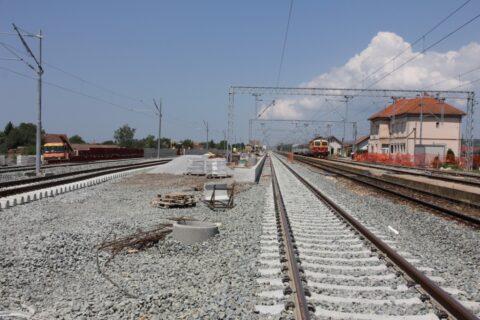
Under the new contract, COMSA is tasked with a comprehensive transformation of the 44 kilometre section between Hrvatski Leskovac and Karlovac. The scope of works is extensive, covering the full reconstruction of the existing single track line, the construction of an entirely new parallel second track, the replacement and construction of bridges and viaducts, and the modernisation of stations and passenger stops along the route. Critically, the project includes the installation of a new electrification system alongside modern signalling and interlocking technology, which together will enable train operations at speeds of up to 160 km/h, more than double what is currently achievable on this corridor.
The introduction of double tracking alone will fundamentally change the operational capacity of the line, allowing simultaneous bidirectional train movements that are not currently possible on single track sections. For freight operators, this is particularly significant. The Zagreb to Rijeka axis is a vital artery connecting Central European industrial markets to the Port of Rijeka, Croatia’s main deep water gateway to the Adriatic. The port handled over 12 million tonnes of cargo in 2023, and improving its rail access remains a strategic economic priority for Croatia and its EU trade partners alike.
The Bigger Picture: Rail Modernisation Across the Western Balkans and the Adriatic
The Karlovac project does not exist in isolation. It is one piece of a far larger strategic puzzle spanning the Western Balkans and the broader Adriatic hinterland. Croatia, as a European Union member state since 2013, is eligible for significant EU funding through the Connecting Europe Facility and cohesion funds to modernise its transport network. The Hrvatski Leskovac–Karlovac section falls within the Mediterranean Corridor of the Trans-European Transport Network, the EU’s flagship framework for harmonising infrastructure across member states. EU co-financing has been instrumental in reviving the project, and without it the tender would likely never have been relaunched following the STRABAG collapse.
This momentum in continental connectivity is being mirrored in the Atlantic Corridor, where the European Investment Bank (EIB) has disbursed €875 million for Portugal’s first high-speed railway. This disbursement is the first tranche of a massive €3 billion financing package aimed at constructing a 290km line between Lisbon and Porto. Supported by the InvestEU program and augmented by a €480 million grant from the Connecting Europe Facility, the project will slash travel times from three hours to just 1 hour and 15 minutes. This landmark investment—the largest infrastructure project in Portugal in decades—serves as a cornerstone for completing the Trans-European Transport Network and accelerating the transition to sustainable, low-carbon mobility across the region.
The project also reflects a wider regional trend. Slovenia has been upgrading its Divača to Koper railway to boost the Port of Koper’s throughput capacity. Serbia is pressing ahead with modernisation works along its Corridor X rail lines, drawing on both Chinese and European financing. Hungary, meanwhile, is expanding its Budapest to Belgrade connection in partnership with Chinese and state railway firms. In this context, Croatia’s efforts to upgrade the Zagreb to Rijeka axis form part of an interconnected push to capture growing freight and passenger flows as EU integration deepens across the region. COMSA, with its proven track record on major infrastructure contracts across Spain, Portugal and beyond, enters the project as a capable and experienced operator. Even so, the turbulent procurement history of this particular section serves as a timely reminder that permitting processes, stakeholder alignment, and administrative capacity can prove just as decisive as technical and financial strength when it comes to delivering complex railway infrastructure on time.




Leave a Reply