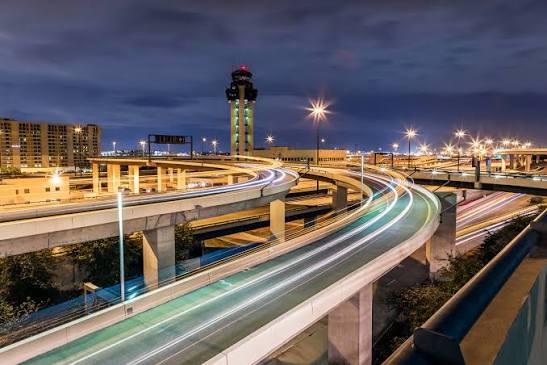
Dallas Fort Worth International Airport (DFW) has installed all six prefabricated modules for its new Terminal F Skylink Station, completing a major construction milestone in the airport’s $4 billion expansion program.
The modules were lifted into position above the active Skylink guideway during carefully coordinated overnight operations. The installation advances construction of the station that will connect DFW’s future sixth terminal to its existing automated people-mover network.
The operation required a heavy-lift crawler crane delivered in approximately 60 truckloads and nearly two weeks to assemble. Each of the six modules weighed between 210 and 310 tons, with the heaviest comparable in weight to a fully loaded Boeing 777.
Each lift took approximately eight hours and required precise alignment to integrate the new station with the existing guideway. By assembling the modules at ground level before lifting them into place, the construction team sought to minimize disruption to airport operations and avoid the extended Skylink shutdowns that conventional construction methods could have required.
Terminal F construction advances
With all six modules now in place, construction will continue with structural connections between the sections and integration of the station with the existing Skylink system.
The station is part of the first phase of Terminal F, which is expected to open with 15 gates in 2027. The expanded terminal will ultimately provide 31 gates for American Airlines, increasing DFW’s capacity for international operations and widebody aircraft.
The broader program also includes facilities for parking, ticketing, check-in, security screening and baggage operations. A centralized Skylink Station will serve the new terminal, while the final configuration will provide a walking connection to Terminal D.
A separate milestone from Terminal F’s earlier module installation
The Skylink Station installation is distinct from the six massive Terminal F modules that DFW moved across the airfield in August 2025.
Those structures formed the framework for the first phase of the terminal itself and were transported on self-propelled modular transporters before being placed on foundations. The Skylink Station modules, by contrast, are being lifted onto the existing guideway.
The remaining structural and systems work will determine when the station can be brought into service.
DFW’s Skylink system currently connects the airport’s five terminals, operating around the clock. The new station will extend that network to Terminal F, supporting passenger transfers as the airport expands its capacity.
Elsewhere in Texas, airport expansion is also driving major infrastructure investment at Austin-Bergstrom International Airport, where construction has started on a major utility upgrade designed to support future airport growth. While DFW is expanding passenger capacity through its $4 billion Terminal F program and a new Skylink connection, Austin-Bergstrom is addressing the underlying utility infrastructure needed to accommodate its own expansion. Together, the projects highlight how Texas’s major airports are investing in both terminal capacity and the infrastructure required to support growing passenger demand.
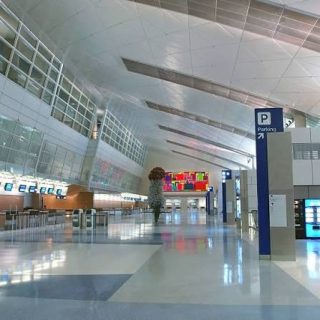
Dallas Fort Worth International Airport Terminal F expansion: Project factsheet
- Location: Dallas-Fort Worth, Texas
- Estimated investment: $4 billion
- Terminal capacity: 31 gates at full buildout
- First phase: 15 gates, expected to open in 2027
- Skylink Station: New connection to the future Terminal F
- Owner: Dallas Fort Worth International Airport
- Airline: American Airlines
The Terminal F expansion is part of DFW’s broader airport modernization program, which aims to accommodate passenger growth while improving connections between terminals.




Leave a Reply