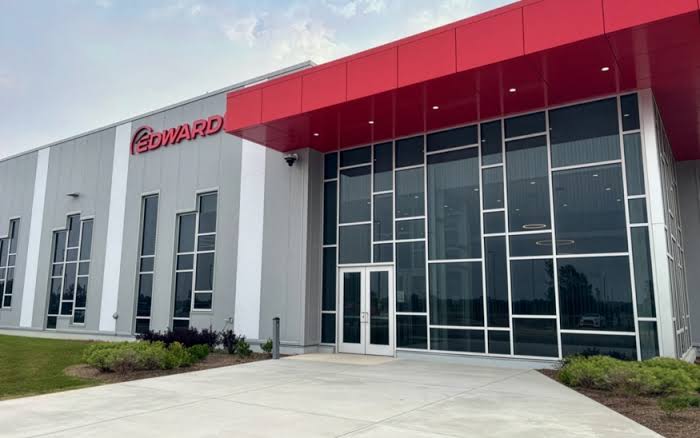
Edwards Vacuum has opened a $319 million manufacturing facility in Genesee County, New York, establishing a new U.S. production base for dry vacuum pumps used in semiconductor fabrication. The 240,000-square-foot facility at the Western New York Science & Technology Advanced Manufacturing Park (STAMP) is designed to produce 10,000 pumps annually, with the potential to increase output to 20,000 as production expands.
The opening on October 29 marks a significant step in efforts to strengthen the domestic semiconductor equipment supply chain. The facility brings specialized manufacturing capacity to the United States for a product that the federal government previously identified as having no domestic semiconductor-grade production.
Edwards Vacuum, part of the Sweden-based Atlas Copco Group, developed the facility to serve semiconductor manufacturers in the United States and North America. Its products support the highly controlled vacuum environments required during chip fabrication, making the factory an important supplier-side investment as the country expands its semiconductor manufacturing capacity.
New production capacity for semiconductor equipment
The Genesee facility will manufacture dry vacuum pumps, which remove gases and other substances from semiconductor processing chambers to maintain the controlled conditions needed for chip production. These systems are used across fabrication processes, including etching and deposition, where contamination and variations in chamber conditions can affect manufacturing yields.
Edwards plans to manufacture several pump product lines at the New York site, including its iXL and iXM ranges. The company has also identified Ganymede pumps among the products associated with the facility, with production expected to begin in 2027.
The factory has an initial stated production capacity of 10,000 pumps annually, while Edwards identifies the potential to reach 20,000 units per year. The higher figure represents an expansion opportunity rather than its confirmed initial output.
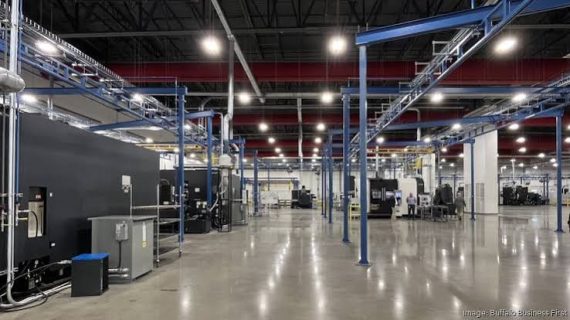
Production has already begun. At the October 29 opening, the plant had manufactured approximately 75 pumps and employed 85 people, according to Buffalo Business First. Those figures provide an early indication of the facility’s transition from construction into manufacturing, although the company still has to build toward its planned production capacity.
Addressing a gap in the U.S. semiconductor supply chain
The investment addresses a less visible part of America’s semiconductor manufacturing challenge: the availability of specialized equipment needed to operate chip fabrication plants.
When the U.S. Department of Commerce finalized an award of up to $18 million for Edwards Vacuum under the CHIPS and Science Act, it identified the absence of domestic semiconductor-grade dry vacuum pump production as a supply-chain vulnerability. The department said the New York facility would introduce this specialized manufacturing capability in the United States and could supply pumps to nearly all fabs built domestically through the end of the decade.
The distinction is important. Federal investment in semiconductor manufacturing has largely focused on expanding chip production, but new fabrication capacity also requires a reliable supply of specialized equipment and components. Vacuum systems are among the technologies needed to maintain the conditions in which semiconductor wafers are processed.
Edwards’ investment therefore extends the domestic manufacturing effort beyond chip fabrication itself. Producing these pumps in New York is expected to shorten delivery times for U.S. customers, improve service responsiveness and reduce the need to transport finished equipment over longer international supply routes.
The facility does not eliminate dependence on overseas suppliers across the wider semiconductor equipment industry. However, it creates a domestic manufacturing source for an important category of equipment that the Commerce Department had identified as missing from the U.S. supply chain.
$319 million investment backed by federal and state incentives
The project represents a $319 million investment by Edwards Vacuum, supported by federal and New York state economic development programs.
The Department of Commerce awarded the company up to $18 million in direct CHIPS Act funding to support construction of the greenfield manufacturing facility. The federal award was intended to encourage domestic production of equipment considered important to semiconductor manufacturing and national economic security.
New York also committed up to $21 million through a combination of performance-based Excelsior Jobs Tax Credits and Investment Tax Credits. The incentives are tied to the creation of up to 600 jobs. An additional $1 million was allocated to workforce development and training.
The employment figures require some distinction. New York’s incentive agreement references up to 600 jobs, while Edwards’ facility information has cited approximately 280 skilled positions. The plant’s 85 employees at opening represent its early workforce, not its final employment level. The different figures reflect targets and company projections that should not be treated as interchangeable.
Hydropower supports an all-electric manufacturing facility
Electricity availability was another consideration in the development of the Genesee facility. The manufacturing campus is designed as an all-electric operation, with much of its electricity expected to come from hydropower.
The New York Power Authority allocated 4.9 megawatts of low-cost Niagara hydropower to the project and will procure an additional 2.1 megawatts of high-load-factor electricity for Edwards through the energy market.
The combined 7-megawatt allocation gives the facility access to power arrangements intended to support its manufacturing operations. It should not, however, be interpreted as a confirmed measure of the plant’s actual electricity consumption.
Edwards has also identified environmental performance as part of the project’s design. The facility is pursuing LEED certification, while the company estimates that manufacturing pumps closer to its U.S. customers could reduce carbon dioxide emissions by as much as 13,000 tons annually. That figure is the company’s estimate rather than an independently verified operational result.
Edwards becomes STAMP’s first operating manufacturing tenant
The factory’s opening also marks a milestone for the wider STAMP industrial development in Genesee County. Edwards is the first operating tenant at the approximately 1,250-acre manufacturing park, which was established to attract advanced manufacturing and technology investment to Western New York.
The site’s development has encountered setbacks. Hydrogen company Plug Power previously began infrastructure work for a proposed project at STAMP but abandoned its plans in 2026. A separate hyperscale data center proposal from Stream U.S. has also been put on hold amid New York’s restrictions on large data center developments.
The Edwards facility therefore represents a tangible manufacturing operation at a site where other major industrial proposals have not advanced as planned. Its opening could help demonstrate the park’s ability to attract and accommodate advanced manufacturing companies, although further investment will be needed to establish a broader industrial cluster.
The company has also been working to develop relationships with regional suppliers and workforce training organizations. Its local procurement efforts include connecting with manufacturers capable of supplying sheet metal, piping, tubing, hardware and other components required for production.
That approach could extend the project’s economic impact beyond direct employment at the factory by creating opportunities for suppliers and technical service providers across the region.
Production expansion will be the next milestone
With construction complete and initial manufacturing underway, the next test for Edwards Vacuum will be how quickly the Genesee facility moves toward its planned production levels.
Reaching 10,000 pumps annually would establish the plant’s initial intended manufacturing scale, while the longer-term opportunity to double output to 20,000 units would depend on demand, production expansion and the development of its workforce and supplier network.
The opening also gives the U.S. semiconductor industry another domestic source of equipment as major chipmakers continue investing in new fabrication capacity. Whether the facility can translate its initial production into a substantial share of the domestic market will depend on customer adoption, manufacturing performance and the pace of semiconductor industry expansion.
For Genesee County, the project delivers more than a completed industrial building. It establishes an operating advanced-manufacturing facility at STAMP and introduces a specialized component of the semiconductor supply chain that the United States has been seeking to develop domestically.
Edwards Vacuum’s new facility also supports the wider expansion of U.S. semiconductor manufacturing, including Intel’s $28 billion Ohio One campus in New Albany, Ohio. While Intel is adding domestic chip fabrication capacity, Edwards will manufacture the dry vacuum pumps needed to support semiconductor production, highlighting the importance of developing local equipment suppliers alongside new chip factories.
Project Factsheet: Edwards Vacuum Genesee Dry Pump Manufacturing Facility
- Location: Western New York Science & Technology Advanced Manufacturing Park, Town of Alabama, Genesee County, New York
- Developer/operator: Edwards Vacuum, part of Atlas Copco Group
- Investment: $319 million
- Facility area: Approximately 240,000 square feet
- Manufacturing output: 10,000 dry pumps annually initially
- Potential annual capacity: Up to 20,000 pumps
- Federal funding: Up to $18 million through the CHIPS and Science Act
- New York state incentives: Up to $21 million in tax credits and $1 million in workforce development support
- Electricity allocation: 4.9 MW of Niagara hydropower and 2.1 MW of market-procured power
- Employment target: Up to 600 jobs under the state incentive agreement
- Opening: October 29, 2026




Leave a Reply