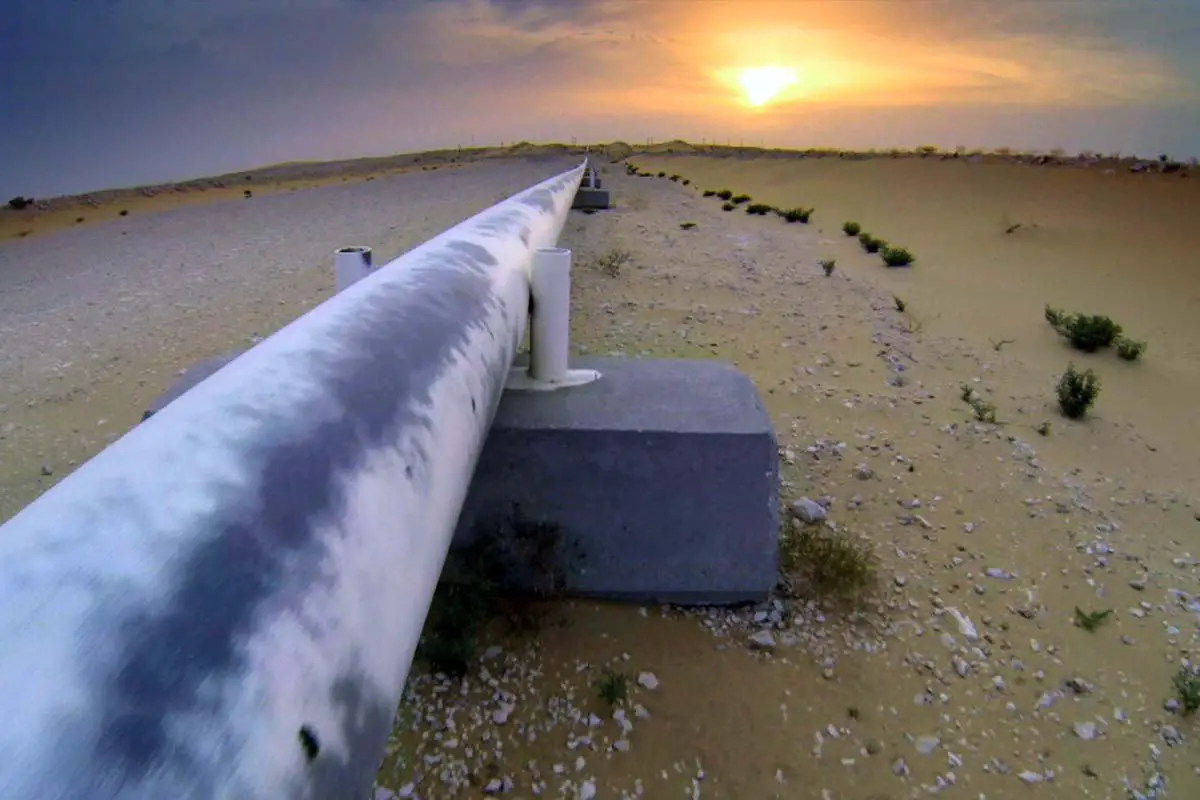
The massive natural gas export agreement between Israel and Egypt, originally structured as a $15 billion deal but recently expanded to a historic $35 billion framework, has taken major steps forward despite significant regional geopolitical friction. Under the ratified terms, Israel’s Leviathan and Tamar offshore fields, operated by Chevron, are contracted to supply Egypt with 130 billion cubic meters of gas through 2040. To handle the initial phases of this massive volume, infrastructure expansions are actively hitting milestones. This includes the completion of the 46-kilometer Ashdod-Ashkelon subsea pipeline link to ease bottlenecks, alongside ongoing progress on the onshore Nitzana pipeline connector which is on track to be fully operational by 2028.
While the agreement represents a vital commercial lifeline for Egypt, which faces a severe domestic power deficit and declining production at its own Zohr gas field, it has required intense diplomatic navigation to stay on course. The final authorization of export licenses faced months of delays as Cairo and Jerusalem grappled with acute political strains over border security issues and the ongoing regional crisis. Ultimately pushed over the finish line by sustained U.S. diplomatic mediation, the expanding pipeline network is successfully ramping up flows toward a target of 1.3 billion cubic feet per day. This serves a dual purpose for the region: it provides critical, cost-effective energy stabilization for Egypt’s electrical grid while anchoring Israel’s position as the central energy hub of the Eastern Mediterranean.
Similarly, in another pipeline development project in the MENA region, Saudi Arabia has unveiled plans to expand its major pipeline, Pertoline, in bid to ensure energy security following disruptions at the Strait of Hormuz that were brought by conflict in Iran.
August 15, 2021
Egypt and Israel have announced plans to partner and develop a natural gas pipeline worth US $15bn on the Red Sea in Sinai for export to Asia.
Israeli Energy Minister, Yuval Steinitz revealed the reports during his visit to Egypt and said that the new liquefaction facility in Sinai will be similar to one originally put forward by Eilat-Ashkelon Pipeline Co to be constructed in Israel, near Eilat, but was scrapped after the Ministry of Environmental Protection opposed it.
Also Read:Nigeria’s Kaduna power plant to be powered by liquefied Natural Gas
Natural gas facility
The proposed facility, is symbolic of tightening relations between Israel and Egypt over energy projects. Building the facility on the Red Sea is designed to open the option of exporting Israeli and Egyptian liquefied natural gas (LNG ) to the East Asian market: India, China, Japan, South Korea, and other countries, which constitute 70% of the global liquefied gas market.
The facility will also be advantaged when located on the Red Sea because it will shorten the route for transporting the gas and bypasses the expensive passage through the Suez Canal.
Steinitz also announced that Israel’s natural gas exports to Egypt will begin in November as part of a US $15bn export agreement between Israel’s Delek Drilling and the US’ Noble Energy with an Egyptian counterpart.
Israel has called this deal the most significant to emerge since the 1979 peace treaty. In 2011 protesters sabotaged the pipeline carrying Egyptian gas to Israel. When former President Mohamed Morsi was voted in Egyptian gas companies cancelled an agreement to supply gas to Israel.
This time, the idea is to construct the facility on the Egyptian side of the border, which will make it possible to overcome the opposition to the huge project. In Egypt, the ability to delay such projects for environmental reasons is much more limited. Furthermore, a liquefaction project on Egyptian territory can provide jobs for thousands of Egyptians during the construction stage and hundreds more during the operational stage.
Project Factsheet: Israel-Egypt Natural Gas Pipeline and Expansion Framework
Project Framework Value: $35 Billion (Expanded from the initial $15 Billion framework agreement)
Contract Duration: Through 2040 (15-year baseline supply agreement)
Total Contracted Volume: 130 Billion Cubic Meters (BCM) of natural gas
Primary Source Fields: Leviathan Field (635 BCM recoverable reserves) & Tamar Field (Offshore Israel)
Primary Operators: Chevron Mediterranean Limited (Operator), NewMed Energy, Ratio Energies
Egyptian Offtaker: Blue Ocean Energy (Formerly partnering via Dolphinus Holdings)
Target Flow Rate: Ramping up to 1.3 Billion Cubic Feet (bcf) per day
Strategic Upstream Milestones
- The Leviathan Expansion FID: Chevron and its partners reached a final investment decision (FID) on a $2.36 billion expansion of the Leviathan platform. This project includes drilling three new subsea wells and upgrading treatment facilities to increase the field’s total annual capacity to 21 BCM.
- The Tamar Optimization Project: Completed in mid-2026, this infrastructure upgrade added a third 150-kilometer gathering line and restored onshore compressors at Ashdod, boosting Tamar’s maximum technical capability from 1.1 bcf to 1.6 bcf per day, drastically improving regional supply security.


Leave a Reply