
Updated October 26, 2026 – Egypt has signed a preliminary financing agreement for the US$650 million Dandara Solar Power Project in Nagaa Hammadi, Qena Governorate, Upper Egypt, in a move aimed at supplying cleaner electricity to the country’s aluminum industry and strengthening its renewable energy infrastructure.
The agreement was signed on October 26, 2026, by Norwegian renewable energy developer Scatec and three multilateral development banks. These include European Investment Bank (EIB), European Bank for Reconstruction and Development (EBRD), and African Development Bank (AfDB).
The National Bank of Egypt will also acquire an equity stake in the project company, according to the Egyptian government.
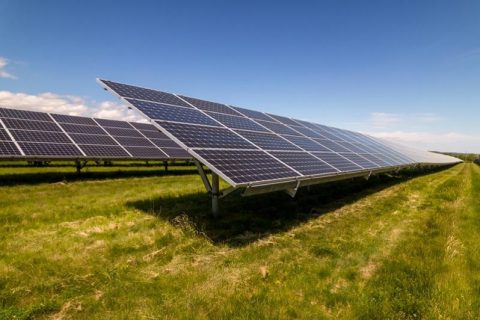
The Dandara project will feature 1,000 megawatts (MW) of solar photovoltaic capacity. Dandara will also have a battery energy storage system (BESS) with a capacity of 200 megawatt-hours (MWh). Development is planned in two phases, each comprising 500 MW of solar generation and 100 MWh of battery storage.
The latest agreements also cover the project’s connection to Egypt’s national electricity grid. However, the financing arrangements remain at the preliminary-agreement stage. Further implementation and financial close requirements still need to be completed.
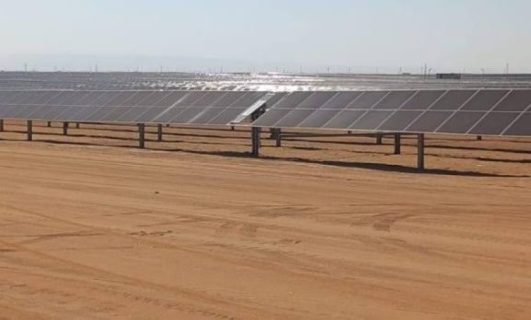
Dandara Solar Power Project to Support Egypt’s Aluminum Industry
One of the project’s defining features is its focus on supplying electricity to the Egypt Aluminium Company (EgyptAlum). The Dandara solar facility is expected to meet one-third of the EgyptAlum’s electricity requirements, helping reduce the carbon intensity of its energy-intensive aluminum production.
Aluminum smelting requires substantial and consistent electricity supplies. This makes power costs and reliability important factors in production economics.
Solar-Storage Co-location
By integrating battery storage with solar generation, Dandara solar project is designed to help make renewable electricity more useful to an industrial consumer whose demand cannot simply stop when sunlight fades. The storage system can also shift some electricity generated during daylight hours to periods of higher demand. However, the 200 MWh battery storage capacity has not been explicitly said to provide continuous power to the entire aluminum complex.
The solar power development also comes as the European Union’s Carbon Border Adjustment Mechanism (CBAM) enters its definitive phase in 2026. For Egyptian aluminum exports exposed to European markets, reducing production-related emissions could also become increasingly important to maintaining competitiveness as carbon costs and requirements continue to affect trade. Ultimately, lower-emissions aluminum production could help EgyptAlum manage the implications of the EU’s CBAM.
By extension, the Dandara solar and battery storage project links renewable energy investment with industrial decarbonization. Industry-wise, the project is at the center of export-market resilience. It offers a model for supplying large industrial facilities through dedicated renewable power arrangements.
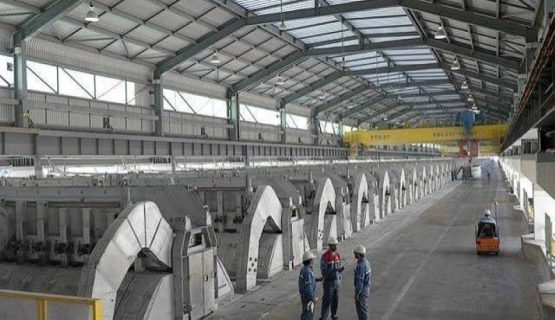
Dandara Solar Power Project to be Developed in Two Phases
The planned 1 GW facility will be delivered in two 500 MW phases, each paired with 100 MWh of battery storage. This phased approach allows the overall development to be divided into separate construction and commissioning packages.
The project is located in Nagaa Hammadi, an industrial area in Qena Governorate. Its proximity to the EgyptAlum complex is also relevant because the development is intended to serve the complex. This will be alongside adding generation capacity to the grid.
The National Bank of Egypt’s planned equity participation also introduces a domestic financial institution into the project company’s ownership structure.
EIB, EBRD and AfDB are expected to play important roles in mobilizing capital for the project. Additionally, their participation reflects the continuing importance of development finance institutions in supporting large-scale renewable energy developments. This is particularly true in markets where projects require substantial upfront investment and long-term financing arrangements. An example of this would be the $6.1 billion renewable energy project by Masdar in Abu Dhabi which is also the first giga-scale facility in the word capable of delivering uninterrupted clean electricity 24 hours a day.
Dandara Advances Egypt’s Renewable Energy and Industrial Development Plans
Dandara solar power project also supports Egypt’s wider ambition to increase renewable energy’s contribution to electricity generation to 42% by 2030. It also complements the country’s efforts to diversify its electricity supply. The project will also help reduce exposure to fossil-fuel costs and attract investment into clean energy infrastructure.
The battery storage also makes additional solar capacity more useful to the electricity system. Solar generation is concentrated during daylight hours, while electricity demand continues into the evening. Integrating storage can help address this mismatch. However, the system’s effectiveness will depend on its power rating, dispatch arrangements and operating strategy.
For Egypt, the project’s industrial offtake model is also particularly significant. A long-term arrangement to supply electricity to a major industrial manufacturer can provide greater revenue visibility for a renewable energy development. This is while giving the industrial consumer a route to more predictable electricity costs and lower-emissions production.
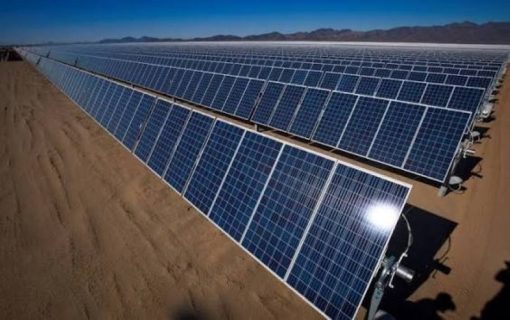
Expected Project Milestones
The next important milestones will be the completion of financing arrangements and confirmation of construction and procurement schedules. This will mark progress towards delivering the two construction phases.
Dandara Solar Power Project Fact Sheet
Project type: Utility-scale solar PV plant with battery energy storage
Location: Nagaa Hammadi, Qena Governorate
Investment: US$650 million
Planned solar capacity: 1,000 MW
Battery storage capacity: 200 MWh
Development structure: Two phases of 500 MW solar capacity and 100 MWh battery storage each
Primary electricity offtaker: Egypt Aluminium Company (EgyptAlum)
Power purchaser arrangement: Long-term power purchase agreement (PPA); the development-bank also identifies a 25-year PPA for the first phase.
Planned domestic equity participant: National Bank of Egypt
Developer: Scatec ASA, Norway
Latest milestone: Preliminary financing agreement – signed Oct 26, 2026
Who is Involved in the Dandara Solar Power Project?
Developer and project sponsor: Scatec ASA
Project company: Dandara Solar Power SAE – wholly owned by Scatec
Financing institutions: European Investment Bank, European Bank for Reconstruction and Development, African Development Bank, and National Bank of Egypt
Industrial offtaker: Egypt Aluminium Company (EgyptAlum)
Grid connection entity: Egyptian Electricity Transmission Company (EETC)
Egypt to Commence the Dandara Solar Project in 2026
Reported November 27, 2025 – The first phase of Norway-based Scatec ASA’s 1-GW Dandara Solar Energy Project in Egypt which is located at the same place a with battery storage, is expected to enter construction stage in the second quarter of 2026.
Dandara will be installed in two identical phases. Each of the phases will incorporate 500 MW of solar photovoltaic (PV) capacity and. There will also be the establishment of a 100-MWh battery energy storage system (BESS) that will be utilised in powering Egypt Aluminium’s operations. Furthermore, according to the project’s Environmental and Social Impact Assessment (ESIA) that was released this week, the works on the projects’s site will commence after all required permits and approvals are secured.
Phase 1 Timeline
The implementation of Phase 1 of the project is expected to take approximately 15 months. This period is anticipated to be between March 2026 and June 2027.
The project will be be located in Qena Governorate, east of the Nagaa Hammadi Industrial Zone. Additionally, the Dandara complex will be operated under a 25-year, US dollar-denominated corporate power purchase agreement (PPA) with Egypt Aluminium (Egyptalum). The output from the renewable energy site is expected to meet a substantial share of the aluminium maker’s electricity demand. Also, it will help it cut its greenhouse gas emissions by up to 30%.
The Dandara Solar PV project is supported by the European Bank for Reconstruction and Development (EBRD), the African Development Bank (AfD) and the European Investment Bank (EIB).

Egypt is one of the leading countries in Africa in renewable energy development in Africa especially the solar projects. The country has quite a number of solar projects developments such as the Obelisk Solar Project, just to mention a few. Egypt’s lies along the sun belt making it a top destination for solar energy investments.
Egypt Moves Forward with Dandara Solar Energy Project
Reported October 7, 2025 – Egypt is moving forward with its green industrial transformation with the “Dandara” Solar Energy Project. This solar energy project is set to power the “Egyptalum” complex with clean energy. Furthermore, the Dandara Solar Energy Project initiative aims to decarbonize industry and enhance Egypt’s export competitiveness. Also, it will solidify Egypt’s role as a renewable energy leader.
Additionally, Ministers of Planning, Economic Development and International Cooperation, and Public Business Sector, alongside Norway’s Ambassador, witnessed the signing of Letters of Intent for the project’s funding. The “Dandara” Solar Energy Project is designed to be the region’s first large-scale industrial decarbonization effort.
Participants in Signing of the Agreement
The agreements were signed between Dandara Solar Energy Company, a subsidiary of Norway’s Scatec ASA, and international finance institutions, including the European Bank for Reconstruction and Development (EBRD), the African Development Bank (AfDB), and the European Investment Bank (EIB). Signatories included Mohamed Amer (Dandara Solar Energy, Scatec ASA), Mark Davis (EBRD), Guido Clary (EIB), and Abdourahmane Diaw (AfDB).

Purpose of Dandara Solar Energy Project
Furthermore, the “Dandara” project will exclusively supply electricity to the Egypt Aluminium (Egyptalum) complex that is located in Nagaa Hammadi which is a subsidiary of the Holding Company for Metallurgical Industries.
Developer of the Dandara Solar Energy Project
Furthermore, Scatec ASA will construct and operate the project for 25 years. The project is expected to reduce Egyptalum’s greenhouse gas emissions by up to 30%. This move is expected to bolster Egyptalum’s competitiveness against the European Carbon Border Adjustment Mechanism (CBAM) which is critical for Egyptian exports to Europe.
Also, Rania Al-Mashat who is the Minister of Planning, Economic Development and International Cooperation, pointed out that more than “$4bn in Financing for the Private Sector from International Finance Institutions to Implement 4.2 GW Renewable Energy Projects under the “NWFE” Program.” She noted the project “pioneers the access of Egyptian exports to the European market. This is by adapting to the European Carbon Border Adjustment Mechanism (CBAM),” and that “NWFE” projects “contribute to enhancing Egypt’s general renewable energy capacity, supporting the stability of the National Electricity Grid, and increasing foreign investment in the sector.”
Part of a Bigger Plan
Also, Al-Mashat elaborated that “Dandara”, Atom Solar Egypt Project, and other renewable energy projects are key projects under the “NWFE” Country Platform. This platform targets a 10 GW increase in Egypt’s renewable energy capacity by the year 2028. She praised the partnership between the government, international finance institutions, and Scatec. Furthermore, since its November 2022 launch, the “NWFE” program has mobilised roughly $4 billion in concessional fumding for private sector renewable energy projects totalling 4.2 GW.

Additionally, Al-Mashat added that “Dandara” will strengthen Egypt’s renewable energy capacity. Furthermore, it supports the aluminium industry’s green transformation by providing clean, cost-competitive energy which aligns with CBAM. She also mentioned that NWFE’s renewable energy projects stabilise the National Electricity Grid; the Ministry of Planning allocated EGP 6.7bn last fiscal year to connect four renewable energy projects, enhancing grid stability during summer.
Significance of the Project
Mohamed Shimi, Minister of the Public Business Sector, referred to the project as “a qualitative leap for the aluminium industry and enhances the global competitiveness of the Egyptian product.” He added that “Reducing operating costs and cutting the carbon emissions are among the main objectives of the solar project. The project aims to support sustainability and export capacity.” Shimi further stated that “The partnership with ‘Scatec’ and international institutions reflects investors’ confidence in the Egyptian economy and solidifies Egypt’s leadership in green industrial transformation.”
Shimi emphasised the project’s alignment with state plans to expand renewable energy and improve resource efficiency. He reiterated the project’s goals of reducing operating costs, increasing production efficiency, and boosting the competitiveness of Egyptian aluminium products, over 50% of which are exported, primarily to the EU.
Also, Shimi affirmed that the partnership with Scatec and international financiers demonstrates foreign investor confidence in Egypt. He concluded that the project is a pioneering model for public-private-international collaboration, positioning Egypt to lead industrial decarbonization in the region and strengthening its role in renewable energy and low-emission industry.
Factsheet
Name: Dandara Solar Energy Project
Location: Nagaa Hammadi, Qena Governorate, Upper Egypt
Purpose: To supply clean electricity exclusively to the Egypt Aluminium (Egyptalum) complex.
Significance: Designed as the region’s first large-scale industrial decarbonization project.
Environmental impact: Expected to reduce Egyptalum’s greenhouse gas emissions by up to 30%.

Leave a Reply