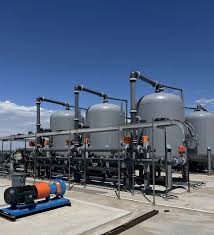
enCore Energy is nearing final authorization to begin uranium extraction at its Upper Spring Creek project in South Texas, where the company has constructed a satellite processing plant and first production wellfield but still needs regulatory clearance before operations can begin.
The Texas Commission on Environmental Quality (TCEQ) has completed the technical review and public notice process for the project’s first Production Area Authorization, known as PAA-1, enCore said on October 27. The company expects the regulator to issue its final authorization by November 13, 2026.
The project could add significant capacity to enCore’s South Texas uranium operations. A TCEQ regulatory summary indicates that Upper Spring Creek is intended to support up to 1 million pounds of yellowcake production annually. That figure describes potential capacity, not actual output or a guarantee that the facility will reach that level.
Even if the production-area authorization arrives on the company’s expected timetable, another operational requirement remains: the project’s waste disposal well is undergoing final testing and TCEQ review. The distinction makes the remaining regulatory steps central to determining when the facility can begin extracting uranium.
Construction is complete, but production still depends on approvals
EnCore submitted the Upper Spring Creek PAA-1 application on May 27, 2025. The application completed administrative review on October 21 that year and then proceeded through technical review involving seven revision cycles.
The TCEQ issued an initial draft permit on August 28, 2026, followed by a final draft permit on September 23. The public comment period closed on October 19, with the company allowing for a grace period for qualifying comments postmarked by October 24.
The final authorization signature is now the next regulatory milestone. EnCore says the expected date represents an accelerated timetable compared with the guidance it provided in its second-quarter 2026 update.
The company’s latest announcement describes the satellite ion-exchange (IX) plant and first production wellfield as constructed, with most of the associated expenditure already incurred. That means the immediate question has shifted from construction progress to the remaining requirements for operating the facility.
However, the production-area authorization and waste disposal well review are separate matters. The latter will handle the bleed stream generated by the in-situ recovery process. EnCore says the well has been constructed and remains in final testing and TCEQ review.
The company has not provided a firm date for that separate approval in its October announcement. As a result, the expected November 13 authorization should not be interpreted as a confirmed date for the start of uranium production.
A potential 1-million-pound annual capacity addition
Upper Spring Creek forms part of enCore’s broader South Texas Uranium Project and is intended to operate alongside other production areas supplying uranium-bearing resin to the company’s Rosita Central Processing Plant.
The regulatory summary’s indication of up to 1 million pounds of annual yellowcake capacity gives the project a more concrete scale than the latest company release alone provides. The figure nevertheless requires careful interpretation: authorized or designed capacity is not the same as annual production, and the amount actually recovered will depend on operating performance and other technical factors.
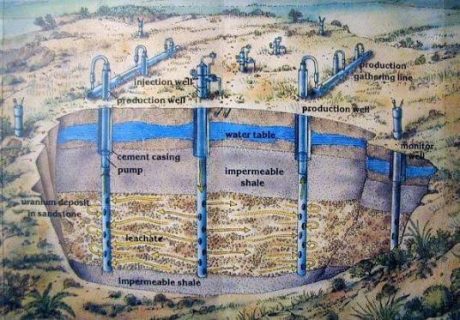
The satellite facility will use in-situ recovery (ISR), a method that extracts uranium from mineralized underground formations without conventional open-pit or underground excavation. The process circulates a solution through the uranium-bearing formation and recovers the uranium for subsequent processing.
At Upper Spring Creek, the company plans to send uranium-loaded resin from the satellite facility to its Rosita Central Processing Plant, where it will be processed into yellowcake, a uranium concentrate used in the nuclear fuel cycle.
The project lies within the historic Clay West uranium district. EnCore acquired it from Signal Equities LLC in December 2020. The mineralized sands occur within the Oakville Formation, typically at depths of 300 to 450 feet below the surface, according to the company’s project disclosure.
The potential 1-million-pound annual capacity is therefore an important indicator of the facility’s intended scale. But a full assessment of its contribution to enCore’s future production requires more than a capacity figure. The company has not quantified in the October announcement how much uranium it expects Upper Spring Creek to produce in its first operating year.
Alta Mesa permits form the next stage of the expansion
Two additional production areas at the Alta Mesa ISR Uranium Project are also moving through regulatory review.
EnCore expects authorization for the PAA-3 Extension by the end of 2026, while it forecasts approval for PAA-8 in early 2027. Both applications remain under TCEQ technical review, and the dates are company projections rather than confirmed regulator decisions.
Together, Upper Spring Creek PAA-1, Alta Mesa PAA-3 Extension and Alta Mesa PAA-8 underpin enCore’s stated plan to expand its South Texas extraction activity into 2027.
The company also points to changes in Texas public notice and hearing procedures that took effect on May 1, 2026. According to enCore, the changes mean the applications will not face the public-hearing process that could otherwise have delayed permitting.
The legal effect of those changes must be distinguished from the status of each application. The company’s announcement does not, by itself, establish every procedural detail or demonstrate that the changes guarantee approval by its projected dates. The applications remain subject to the regulator’s review.
The latest update also leaves open how the three production areas will contribute individually to the company’s future output. Without disclosed production forecasts for each wellfield and confirmation of their operating schedules, the overall 2027 outlook remains a company expectation rather than a quantified production result.
The next milestone is regulatory, not construction
Upper Spring Creek’s progress illustrates the distinction between building a uranium facility and securing the permissions needed to operate it. The plant and initial wellfield are constructed, but the project has not yet received the final PAA-1 authorization described in the latest announcement, and the waste disposal well remains under review.
The November 13 target is therefore an important near-term milestone, but it is not the end of the process if other operational approvals remain outstanding.
For enCore, the immediate test is whether the TCEQ issues the production-area authorization within the expected window and how quickly the company can complete the remaining disposal-well requirements. Those developments will determine whether Upper Spring Creek can move from constructed infrastructure to actual uranium recovery and begin contributing to the company’s South Texas production plans.
Uranium development is one part of a broader shift in U.S. energy infrastructure investment. In Illinois, the Big Muddy Solar project is advancing with a $120 million tax-equity commitment, illustrating how financing is helping move utility-scale renewable energy projects forward.
Upper Spring Creek and Alta Mesa Projects Factsheet
- Company: enCore Energy Corp.
- Primary project: Upper Spring Creek In-Situ Recovery Uranium Project
- Location: South Texas, within the historic Clay West uranium district
- Ownership: 100% owned by enCore Energy
- Latest permitting milestone: Technical review and public notice completed for Upper Spring Creek PAA-1, according to enCore
- Application submitted: May 27, 2025
- Expected final PAA-1 authorization: On or before November 13, 2026
- Existing infrastructure: Satellite ion-exchange plant and first production wellfield constructed, according to enCore
- Potential annual yellowcake capacity: Up to 1 million pounds, according to a TCEQ regulatory summary; this is capacity, not guaranteed production
- Remaining operational requirement: Waste disposal well in final testing and TCEQ review
- Processing route: Uranium-loaded resin transported to the Rosita Central Processing Plant for yellowcake processing
- Related production areas: Alta Mesa PAA-3 Extension and PAA-8
- Expected Alta Mesa permitting: PAA-3 Extension by year-end 2026 and PAA-8 in early 2027, according to enCore
- Broader objective: Expand South Texas uranium extraction activity into 2027

Leave a Reply