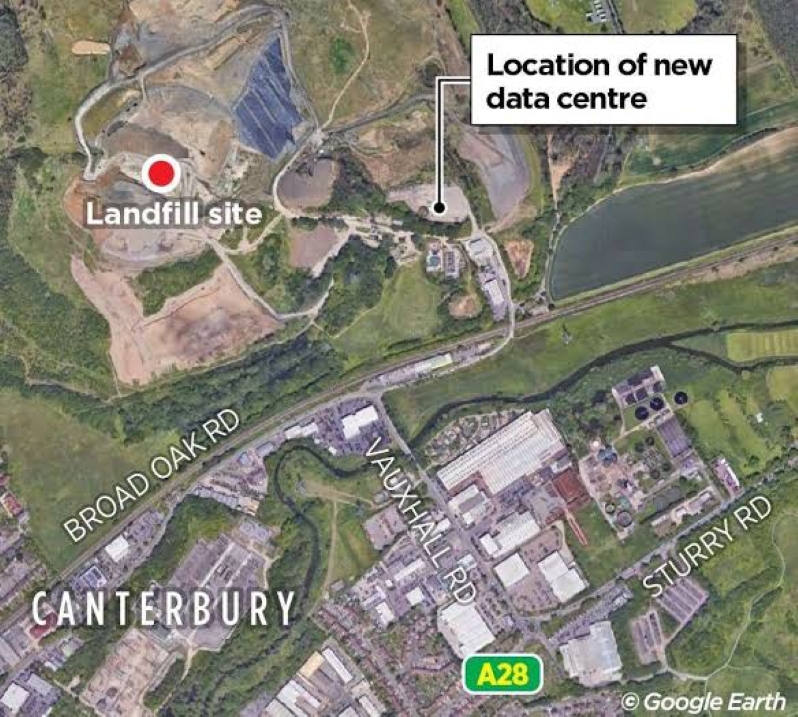
UK technology infrastructure developer Era4 has secured planning permission to build an artificial intelligence (AI) data center beside Shelford Landfill in Canterbury, Kent, with electricity expected to come primarily from a neighboring power plant fueled by captured landfill gas.
Canterbury City Council approved the proposed development at Shelford Farm Estate, off Broad Oak Road, on October 15, 2026, clearing a key planning hurdle for a project that seeks to combine digital infrastructure with energy recovery from waste. The facility will occupy previously used composting land within the wider waste management site operated by Valencia Waste Management.
The development is designed to provide computing infrastructure for AI workloads. It is also designed to reduce reliance on grid electricity. Era4, formerly known as Carbon3.AI, plans to connect the Shelford data center directly to the neighboring Valencia Energy Center through a private-wire electricity connection. Valencia Energy Center generates electricity using methane captured from the landfill.
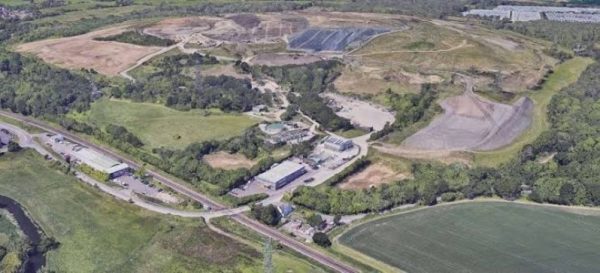
Era4 AI Data Center Project in Canterbury to Repurpose Former Composting Land
The proposed Shelford Data Center will cover 13,000 square feet (1,210 square meters). Planning documents describe a building measuring 30.8 meters wide, 40.9 meters long and 11.7 meters high. Also included in the document are security fencing, parking and other site and engineering infrastructure.
The AI data center will also have rooftop solar panels and a closed-loop liquid cooling system. Additional cooling assistance will also be provided for during warmer weather. The design, according to Era4, is to efficiently manage the facility’s energy and water consumption.
According to the planning proposals, the site will be constructed partly using off-site manufactured modules. This is an approach intended to reduce construction activity and associated traffic at the development site.
Shelford AI Data Centre project will operate within an existing waste management estate. This will allow Era4 to repurpose previously developed land rather than establish the facility on an entirely new greenfield site.
Shelford Landfill Gas to Supply Electricity
An important feature of Era4’s planned data center in Canterbury, Kent is its proposed energy supply. Instead of depending entirely on a conventional electricity grid connection, the data center will receive power through a dedicated connection to the neighboring Valencia Energy Center.
The arrangement will use electricity generated from methane collected at the landfill. Landfill gas typically contains methane produced as organic waste decomposes. Capturing and using the gas for electricity generation will also help manage emissions associated with waste disposal.
Rooftop solar panels will also provide additional source of electricity. However, the facility’s actual renewable electricity share will depend on its operating demand. The output of the energy center and the availability of supplementary power will also factor in.
Era4’ s planning documents also indicate that the facility could consume approximately 140 megawatt-hours of electricity per day. This is when operating at full capacity. The development is expected to draw on the National Grid if the neighboring energy center cannot meet its entire demand.
Water Consumption and Environmental Concerns at Era4 Data Center Project in Canterbury, Kent, UK
Despite receiving planning approval, the proposed Shelford Data Center by Era4 has attracted concerns over its potential environmental impact. Water consumption, cooling requirements and the long-term availability of landfill gas suffice as the main concerns.
South East Water’s planning conditions include a maximum daily water-use limit of 20 cubic meters. Era4 has proposed a closed-loop cooling system. Closed-loop recirculates cooling fluid rather than continuously replacing it. It also gets additional cooling assistance during periods of high outdoor temperatures.
The planning process also involved concerns from local residents. They were worried about resource consumption and the development’s proximity to the landfill. The application was previously deferred in July to allow councilors to visit the site before reconsidering the proposal.
Canterbury City Council subsequently granted permission subject to planning conditions, including requirements relating to the development’s environmental management and operation.
The long-term availability of landfill gas is another consideration. Although the landfill is expected to stop accepting waste in 2036, methane generation can continue for years after a landfill closes. The duration and volume of gas production will nevertheless depend on site-specific conditions.
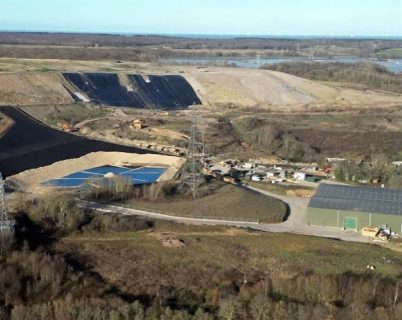
Era4’s Wider AI Infrastructure Strategy
The Canterbury data center development forms part of Era4’s strategy to establish AI computing infrastructure at locations with access to alternative energy sources. The company has also previously outlined plans to deploy computing capacity across a network of sites. This includes facilities associated with landfill gas generation.
The approach could also offer developers an alternative to certain locations. These includes areas with grid capacity constraints or connection delays. Location facing rising cost of new energy infrastructure could complicate data center development, and can thus look at previous landfills as alternatives.
For the UK data center construction sector, projects of this kind create a network of opportunities. They combine building development, electrical infrastructure, specialist cooling systems, renewable energy installations and the repurposing of previously developed industrial land.
The Canterbury data center project also highlights a growing challenge for AI infrastructure developer. Securing sufficient electricity to support increasingly energy-intensive computing workloads is a real challenge for data centers. Especially when consequently addressing environmental concerns and local planning requirements.
With planning permission for Era4’s data center facility in Kent secured, the next steps will include meeting the approval’s conditions. This will then be followed by finalizing of construction arrangements and the confirmation of a development and commissioning schedule. Era4 has not yet established a operational date for the Canterbury data center facility.
Era4 AI Data Center Project in Canterbury, Kent, UK: Fact Sheet
Site operator: Valencia Waste Management
Proposed power supply: A private-wire connection to the Valencia Energy Center
Additional power supply: Rooftop solar panels and grid electricity
Cooling system: Closed-loop liquid cooling, with additional cooling assistance during hotter weather.
Water: Proposed daily water-use limit of 20 m3. Era4’s own estimate is lower, at approximately 8.2 m3 per day.
Site works: Data center building, compound, engineering works, fencing, parking.
Construction method: Use of off-site manufactured modules
Who is involved in the construction of Era’4 data center in Canterbury, Kent?
Era3 (Formerly Carbon3.AI name) – Developer
Valencia Waste Management – Landfill site operator. Operates the wider Shelford waste-management estate where the development is proposed.
Valencia Energy – Landfill gas and electricity infrastructure
Canterbury City Council – Planning authority
South East Water – Water and infrastructure authority
Local stakeholders – Local residents, Hackington Parish Council and CPRE were among the objectors speaking out during the planning process.



Leave a Reply