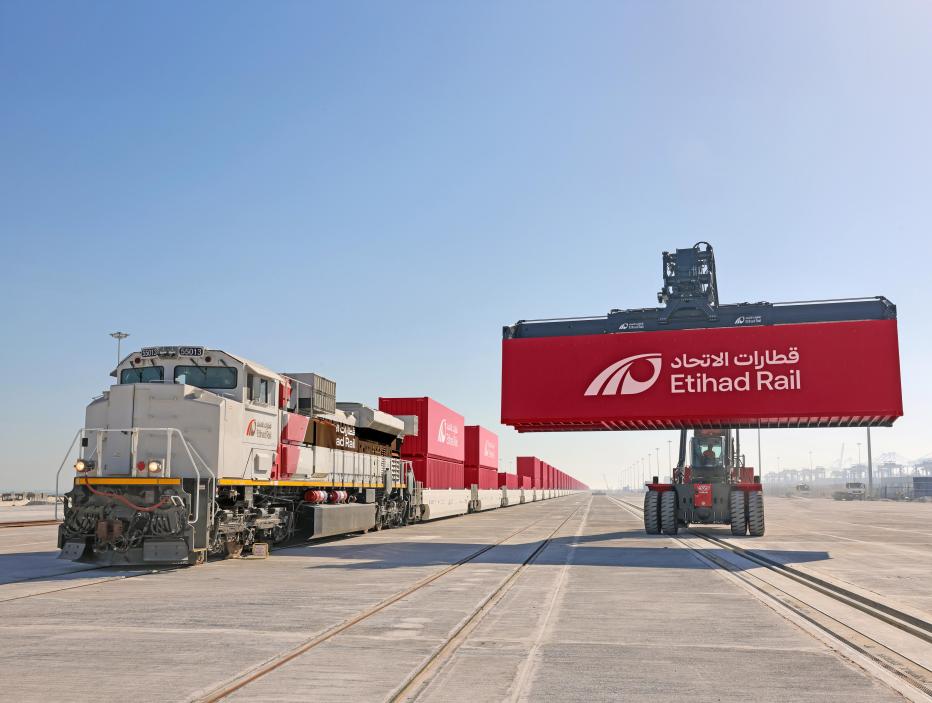
State-owned Etihad Rail has awarded multi-billion-dollar design and build contracts to advance the Abu Dhabi-Dubai high-speed rail project. The contracts also include civil works and station packages of the project which is a high-speed railway (HSR). The Abu Dhabi side of the railway construction contract was awarded to a consortium comprising Abu Dhabi’s National Projects Construction (NPC).
The others include Trojan Tunneling, Turkiye’s Kalyon and Beijing-based China State Construction Engineering Corporation. On the other hand, the Dubai side of the railway was awarded to a consortium led by India’s Larsen & Toubro. The others include Beijing-headquartered China Harbor Engineering Company and local firm Wade Adams.
MEED noted that the whole scheme is worth $8bn-plus. US-based Jacobs is the designer for the NPC group. Conversely, French engineering firm Egis and Singapore’s Surbana Jurong are the designers for the L&T-led consortium.
Other Rail Projects Across the Middle East
Other significant railway projects across the Middle East include the GCC railway project, the longest in the region. Another is the recent development of the Riyadh Metro Line 7 which is advancing in fine style. The Royal Commission for Riyadh City (RCRC) has tendered a project management contract for the $900 million Metro Line 7. The firm has invited bids for companies interested in the role and has allowed firms until March to submit their proposals. The latest development also follows contractors submitting bids on 31 January for a contract to design and build the project. The project involves constructing a metro line linking the Qiddiya entertainment city development and the King Abdullah International Gardens. It will also link the King Salman Park, Misk City and Diriyah Gate.
Outlook on the Abu Dhabi-Dubai High-Speed Rail Project
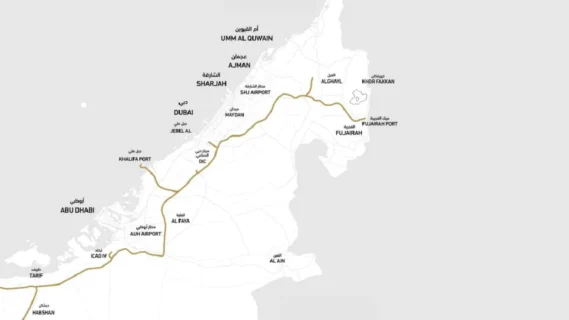
Last month, officials close to the project noted Etihad Rail was preparing to award the contracts for the Abu Dhabi-Dubai high-speed rail project. The design speed of trains running on the UAE’s HSR network will be 350 kilometres an hour (km/h). Furthermore, the operating speed will be 320km/h. The proposed HSR programme will be constructed in four phases, gradually adding further connectivity to other areas within the UAE. The first phase involves constructing a railway line connecting Abu Dhabi and Dubai, which is expected to be operational by 2030.
This accelerated development in the UAE’s rail sector is mirrored in Saudi Arabia, where the Council of Ministers has officially given the green light for the high-speed rail connecting Riyadh to Doha. This 550-kilometer electric railway, a collaborative effort between Saudi Arabia Railways (SAR) and Qatar Rail, is designed to reduce travel time between the two capitals to under three hours, replacing the current 600-kilometer desert highway journey.
Moreover, the second phase will develop an inner-city railway network with 10 stations within the city of Abu Dhabi. The third phase of the railway network involves constructing a connection between Abu Dhabi and Al-Ain. On the other hand, the fourth phase involves developing an inter-emirate connection between Dubai and Sharjah. The 150km first phase of the HSR will also stretch from the Al-Zahiyah area of Abu Dhabi to Al-Jaddaf in Dubai. The project’s civil works have been split into two packages – Abu Dhabi and Dubai – comprising four sections.
The scope of these sections includes:
Phase 1A: Al-Zahiyah to Yas Island (23.5km)
1B: Yas Island to the border of Abu Dhabi/Dubai (64.2km)
1C: Abu Dhabi/Dubai border to Al-Jaddaf (52.1km)
1D: Abu Dhabi airport delta junction and connection with Abu Dhabi airport station (9.2km)
The overall construction package also includes provisions for rolling stock, railway systems and two maintenance depots. The high-speed project will slash journey times between the UAE’s two largest cities and economic centers.
Project Factsheet
- Owner of the project: Etihad Rail (state owned)
- Location: United Arab Emirates (Abu Dhabi-Dubai corridor)
- Project category: High-speed rail (HSR).
- Project value: $8 billion-plus.
- Civil works and stations.
- Speed: 350 km/h
- Operating speed: 320 km/h
- Phase one length: ~150 km
- Phase one path: Al-Zahiyah (Abu Dhabi) into Al-Jaddaf (Dubai).
Abu Dhabi package contractor:
- National Projects Construction (NPC) as the head of Consortium.
- Partners: Trojan tunneling, Kalyon (Turkiye), China state construction engineering corporation.
- Designer: Jacobs (U.S.)
Dubai package contractor:
- Larsen and Toubro (India) Consortium.
- Partners China Harbor Engineering Company, Wade Adams.
- The designers were Egis (France) and Surbana Jurong (Singapore).
Civil works division: There are two major packages (Abu Dhabi and Dubai), four sections.
- Phase 1A – Al-Zahiyah to Yas Island 23.5 km
- Phase 1B: Yas Island to Abu Dhabi / Dubai border – 64.2 km.
- Phase 1C: Abu Dhabi/Dubai border to Al-Jaddaf – 52.1 km.
- Phase 1D: Delta junction Abu Dhabi airport and airport station connection – 9.2 km.
Additional scope:
- Rolling stock
- Railway systems
- Two maintenance depots
Program design: Four stages.
- Phase 1: Abu Dhabi-Dubai HSR (intended to operate in 2030)
- Phase 2: Inner-city rail Abu Dhabi (10 stations)
- Phase 3: Abu Dhabi-Al-Ain connection.
- Phase 4: Dubai- Sharjah inter-emirate connection.
Strategic Impact:
- Reduce travel time
- Boost economies
Leave a Reply