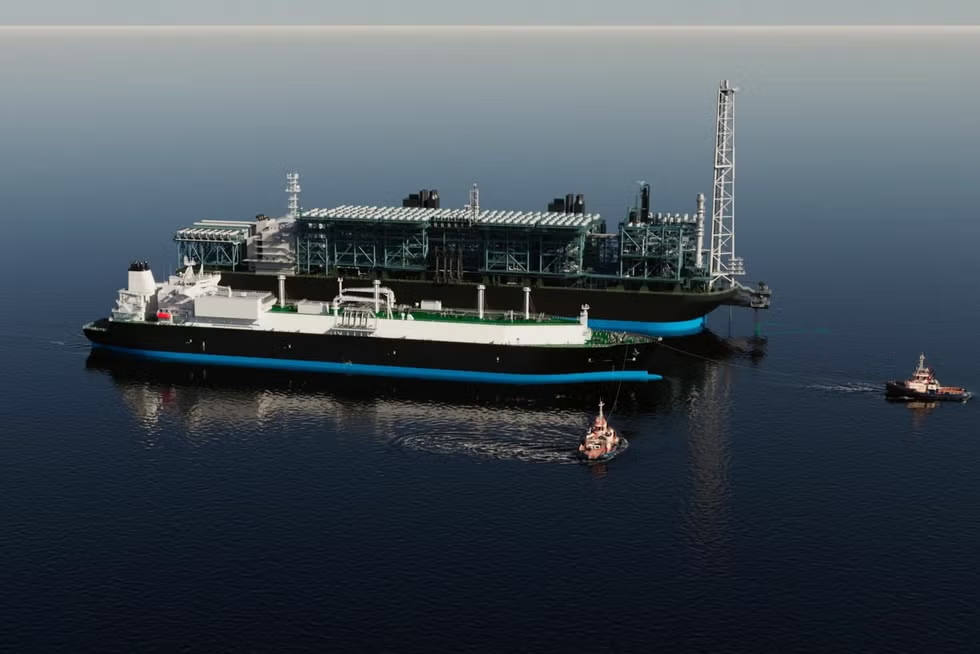
The first U.S. floating LNG facility has reached a $5 billion investment decision. Delfin Midstream‘s FID for Delfin FLNG 1 comes with backing from a consortium led by Global Infrastructure Partners (a BlackRock affiliate). The milestone follows two other major liquefied natural gas facility decisions in Louisiana in recent months, signaling accelerating U.S. LNG expansion.
The Delfin FLNG 1 vessel will have an export capacity of 4.4 million tonnes per year, making it the largest floating liquefaction project globally. The company plans to begin production by 2030, with a planned full development of three vessels totaling 13.2 million tonnes annually.
“Securing FID for our first FLNG vessel is a groundbreaking milestone not only for Delfin, but also for global energy security,” Delfin CEO Dudley Poston said in a statement.
Investors and Sales Agreements
The investment consortium includes Mitsui O.S.K. Lines, the world’s largest operator of LNG carrier vessels; Vitol, an energy trader; and Diameter Capital Partners. The company has secured long-term sales agreements with Vitol, Expand Energy, Centrica, and Gunvor.
Samsung Heavy Industries will design and construct the vessel under a contract valued at approximately $2.9 billion. Black & Veatch is providing topsides engineering and procurement services, while Siemens Energy will supply gas turbine packages.
The facility will be located approximately 40 nautical miles off the Louisiana coast in the Gulf of America. All necessary permits and licenses have been secured, the company said.
Growing U.S. LNG Competition
Delfin’s investment decision comes as major liquefaction projects advance across Louisiana. Venture Global received $8.6 billion in financial backing in March for the second phase of its Calcasieu Pass development. In May, Caturus announced a $9.75 billion final investment decision for Commonwealth LNG, also in southwest Louisiana.
The expansion reflects growing global demand for liquefied natural gas, particularly from Europe and Asia seeking alternatives to Russian supplies.
Questions About Cost and Timeline
While company executives touted the project’s “low-cost” and “cost-competitive” advantages, no specific production cost data was disclosed. Investors and analysts will need more detailed economics as the project advances to assess how Delfin’s floating facility compares to land-based U.S. liquefaction plants and competing international suppliers in Australia and Qatar.
The 2030 production target represents a compressed timeline for megaprojects of this scale. Malaysia’s PETRONAS Prelude FLNG, previously the world’s largest floating liquefaction facility, experienced significant construction delays and cost overruns before achieving first LNG in 2017. Shell’s Barzan LNG project in Qatar faced delays of roughly three years.
Floating liquefaction facilities require specialized shipyard capacity and complex integration of vessel and production systems. Supply chain disruptions—whether in equipment procurement, steel availability, or global shipping—could push the timeline beyond 2030.
For Louisiana economic development officials planning workforce and infrastructure investments, the timeline uncertainty presents planning challenges. Job creation numbers and the broader economic impact on the state remain to be detailed.
Strategic Implications
The investment reflects U.S. strategic positioning in global energy markets. Europe’s energy security concerns following Russian sanctions and rising gas demand across allied nations have increased demand for reliable non-Russian LNG supplies.
Delfin’s floating approach differs from traditional land-based liquefaction plants. Floating facilities can be deployed faster and with fewer onshore infrastructure requirements, though they carry different engineering and operational challenges.
The company said it plans to advance final investment decisions for vessels two and three during the remainder of 2026.
First U.S. Floating LNG Facility Project Factsheet
Project Overview
Project Name: Delfin LNG (Floating Liquefied Natural Gas)
Status: Final Investment Decision (FID) approved
Announcement Date: June 2026
Location: Louisiana (onshore) + Gulf of America (offshore, 40 nautical miles from Louisiana coast)
First Vessel: Delfin FLNG 1
Capacity & Timeline
Nameplate Capacity (FLNG 1): 4.4 million tonnes LNG per year
Full Project Capacity (3 vessels planned): 13.2 million tonnes per year
Target Production Start: 2030
Global Status: Largest FLNG project globally; First floating liquefaction facility in the U.S.
Investment & Financing
FID Investment: $5 billion
Lead Investor: Global Infrastructure Partners (GIP, BlackRock affiliate)
Investor Consortium:
- Mitsui O.S.K. Lines (MOL) — World’s largest LNG carrier fleet
- Vitol — Energy and commodities trader
- Diameter Capital Partners — Alternative credit manager
Long-term Sales Agreements
- Vitol
- Expand Energy
- Centrica
- Gunvor
Construction Partners
Vessel Design & Construction: Samsung Heavy Industries (contract value: ~$2.9 billion)
Topsides Engineering & Procurement: Black & Veatch
Gas Turbine Packages: Siemens Energy
Project Development: Delfin
Key Dates
- October 2025: Letter of Award signed with Samsung
- January 2026: Award extended
- June 2026: FID approved
- 2030: First LNG production targeted
- 2026 (remainder): Company advancing FIDs for vessels 2 and 3
Regulatory Status
- All necessary permits and licenses secured
- Ready to begin construction
Competitive Context (2026)
Other major U.S. LNG FIDs in 2026:
- Venture Global (Calcasieu Pass 2): $8.6 billion FID (March 2026)
- Commonwealth LNG (Caturus): $9.75 billion FID (May 2026)
Key Specifications
Vessel Type: Floating liquefaction facility (offshore)
Location Offshore: ~74 kilometers from Louisiana coast
Technology: Integrated vessel + liquefaction production system
Production Method: Floating (vs. land-based or pipeline-connected)
Strategic Importance
- First U.S. FLNG — Demonstrates U.S. technological capability
- Supports U.S. energy security and geopolitical positioning
- Aimed at global LNG market (Europe, Asia-Pacific, allied nations)
- Part of broader U.S. LNG export expansion



Leave a Reply