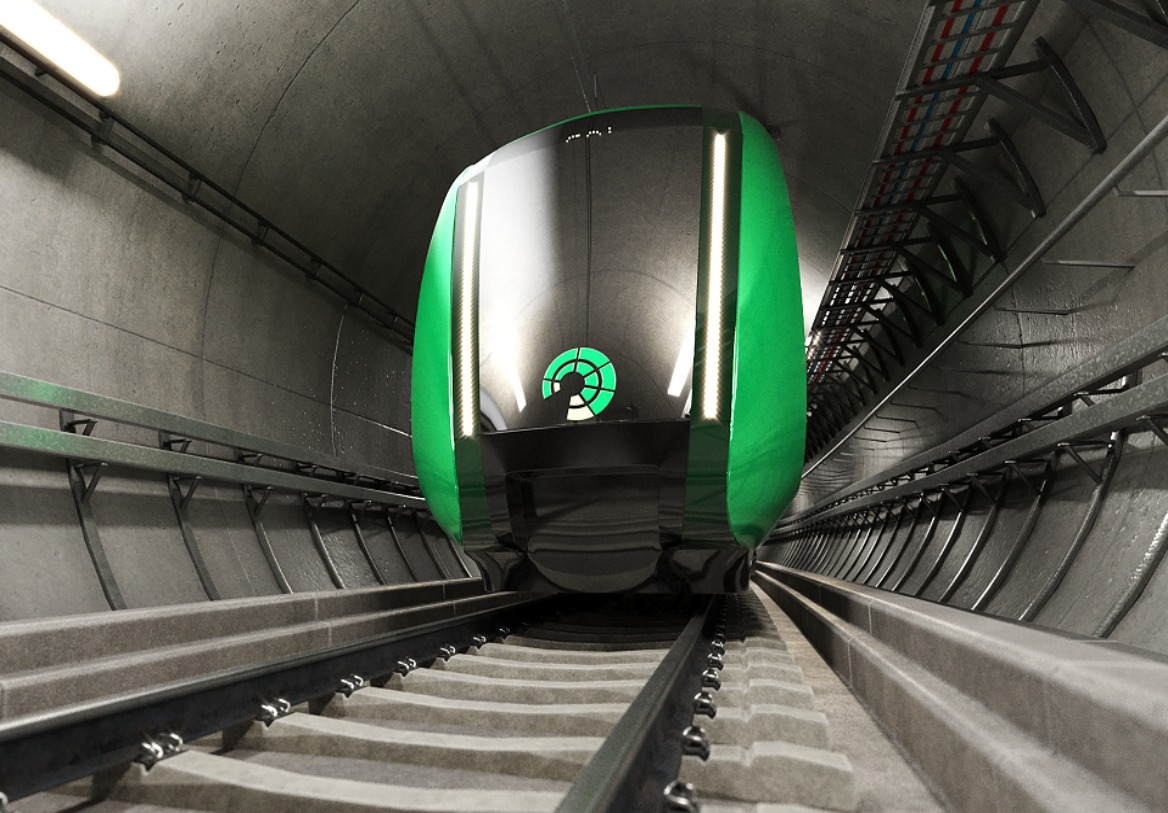
The Melbourne Suburban Rail Loop East project is at a pivotal stage as major construction, including power infrastructure and tunneling preparation, proceeds while Victoria’s new government reviews the project’s future. The 26km underground corridor linking Cheltenham and Box Hill forms the first stage of a planned 90km orbital rail network. Work is progressing across tunneling preparation, station development, and the installation of three Bulk Power Supply Points (BPSPs) required for construction and future operations, even as political scrutiny over the project’s cost and viability has intensified.
The Melbourne Suburban Rail Loop East power infrastructure program continues to move forward even as the project’s long-term outlook is under review by Victoria’s new administration. Engineering consultants WSP and Beon Energy Solutions continue detailed design work on the three Bulk Power Supply Points (BPSPs) that will initially supply electricity to tunnel boring machines and later power trains, signaling, stations and communications along the corridor.
Construction activity is expanding across the 26km alignment between Cheltenham and Box Hill. Two 500-tonne tunnel boring machines have been lowered into a launch chamber at Burwood, with tunneling toward Glen Waverley expected to begin around September 2026. A second launch site is being excavated at Burwood, where two further machines are scheduled to launch in 2027 to tunnel north toward Box Hill. More than 4,000 people are now reported to be working on SRL East.
The tunneling works have also drawn new energy-supply arrangements. Yurringa Energy, Australia’s first Indigenous-owned energy retailer, has been contracted to supply 100% renewable electricity to the four northern-section machines that will excavate the twin tunnels between Glen Waverley and Box Hill.
Melbourne Suburban Rail Loop: Government review and political uncertainty
The most significant development since mid-2026 has been a change in political leadership and a re-examination of the project’s future. Jacinta Allan resigned as Victorian premier and Ben Carroll was sworn in on 28 July 2026. Carroll, widely reported to be an internal critic of the SRL, has declined to rule out a review of the project or the redirection of funding earmarked for it. On 4 August he announced a slimmed-down cabinet that abolished both the standalone Suburban Rail Loop portfolio and the transport infrastructure portfolio.
Ratings agencies S&P and Moody’s have publicly cautioned the new premier against spending pressures and against continuing the project without re-evaluating its costs. The state opposition, led by Jess Wilson, has pledged to “pause and review” the SRL if it wins the November state election. These factors have placed the project’s delivery schedule and the award of remaining station contracts under question.
Melbourne Suburban Rail Loop: Costs, cancellation math and delays
Independent costings have sharpened the debate over the project’s economics. A Parliamentary Budget Office report found that cancelling the project now would improve Victoria’s budget position by $5.8 billion out to 2030 and by $21 billion over a decade, but would incur roughly $1.8bn in contract termination fees. The SRL East stage has been estimated at about $34.5 billion.
The project has also encountered site-specific difficulties. Asbestos and contaminated soil at the Clarinda and Heatherton sites have caused construction delays and prompted cost disputes between contractors and the Suburban Rail Loop Authority. None of the contaminated material is reported to pose a danger to the community or workers, but stricter handling requirements have added time and expense.
Funding and contract milestones
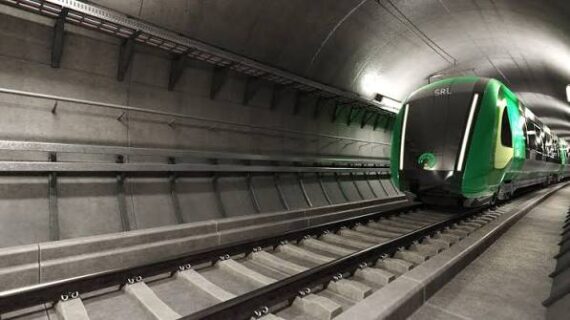
Federal funding for the SRL now totals more than $6 billion, including $3.8 billion committed in the May 2026 federal budget, updating earlier figures of about $3.9 billion. The TransitLinX Alliance comprising Alstom, John Holland, KBR, WSP and RATP Dev has formally secured the $8.8 billion Linewide contract covering trains, signaling, tunnel fit-out and a 15-year operations and maintenance agreement. One station construction package (Glen Waverley, Burwood and Box Hill) has been awarded to the Place Alliance of John Holland, Arup and KBR, while a second package (Cheltenham, Clayton and Monash) remains pending as the premier weighs options.
The SRL’s future is being weighed against another major transport investment, the Melbourne Airport Rail project. New Premier Ben Carroll has declared airport rail the state’s highest transport priority, and early construction is underway on the Sunshine corridor, even as its estimated cost has climbed past $13bn. Officials maintain both projects remain strategically important, though the sequencing of delivery may change to reduce pressure on public finances and construction capacity. Recent polling indicates almost 70 percent of Victorians support building the airport link ahead of the Suburban Rail Loop.
SRL East construction commenced in 2022, with trains currently scheduled to begin operations in 2035, subject to the outcome of the government’s review and the November state election.
Suburban Rail Loop East power infrastructure works continue in 2026
The project’s power infrastructure package remains a critical component of the broader rail development. Engineering consultants WSP and Beon Energy Solutions continue supporting detailed designs for three Bulk Power Supply Points required to operate the future rail network safely and reliably.
The substations will initially provide electricity for tunnel boring machines during construction activities. Later, the facilities will supply operational power for trains, signaling systems, stations, and communications infrastructure along the SRL East corridor.
Construction crews have also intensified tunneling preparations during 2026. Two tunnel boring machines recently arrived in Melbourne ahead of planned excavation works later this year. Contractors are currently assembling the machines at the Burwood construction site while installing supporting conveyor systems and electrical connections.
Meanwhile, Infrastructure Australia restored the Suburban Rail Loop to its national priority infrastructure list earlier this year after reviewing updated project assessments. The move reinforced government backing for the rail development despite ongoing political debate regarding overall project costs and funding structures.
TransitLinX Alliance also secured a major systems contract covering trains, signaling, communications, and maintenance infrastructure for the eastern section of the project. The consortium includes Alstom, John Holland, KBR, WSP, and RATP Dev.
Melbourne rail expansion aligns with broader transport infrastructure growth
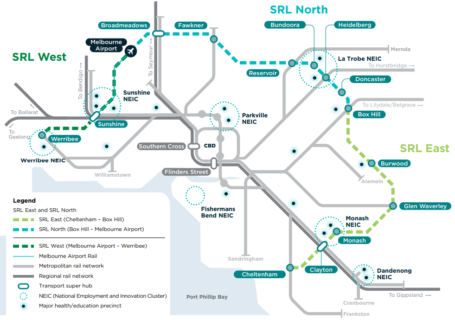
The Suburban Rail Loop East project continues supporting wider urban development objectives across Melbourne. Government projections indicate the corridor could unlock tens of thousands of new homes while improving access to employment, healthcare, and education precincts.
Federal and Victorian governments recently announced additional funding commitments bringing total Commonwealth support for SRL East to approximately $3.9bn equivalent. Officials stated the investment will help accelerate delivery of rail infrastructure and associated precinct developments.
The project also aligns with Victoria’s broader investment in rail-based transport infrastructure. Alongside the Suburban Rail Loop, the Melbourne Intermodal Terminal project in Somerton is expanding freight rail capacity and reducing truck congestion across the metropolitan area. Together, both projects demonstrate growing emphasis on rail connectivity for passenger and freight movement throughout Victoria.
Construction on SRL East officially commenced in 2022, with trains expected to begin operating by 2035. Once completed, the underground rail corridor will include six new stations integrated into Melbourne’s existing public transport system.
Also Read: Rookwood Weir Triumph: Australia’s Water Marvel Since WWII
Empowering Melbourne’s Suburban Rail Loop: WSP and BEONs visionary design, and innovation.
To discuss the change we will use the BPSPs. They are extremely vital as located next to Burwood Station in The Southern Stabling Yards and Monash construction substation. They are the silent warriors that drive the huge tunnel boring machines in the trenches. After the dust is settled, the guardians of the Burwood and Southern Stabling Yard BPSP’s can be identified.
This will ensure that they supply electric power accordingly to run the trains, stations and communication systems of SRL without interruptions.In terms of design, WSP is superb and covers such elements as complex electrical system, structures, mechanical, hydraulic and fire protection engineering. Furthermore, Joe Ramsbworth, WSP’s Senior Project Manager has that air of confidence about him. Saying, ”We can’t wait to use our technological might on this landmark Victorian job, unifying local communities”.During its expansion period, Melbourne’s SRL is creating better public transport options that help ease traffic, accessibility to jobs amongst other opportunities.
To add onto this, the commencement of SRL East started groundbreaking during June 2022, promising up to 8000 jobs in total. By then, we anticipate hearing the rhythmic sound of trains on the tracks. As part of the SRL East project, WSP eagerly looks forward to enhancing Melbourne’s urban music’s rhythm.
The company states its motto as follows: “At WSP, we thrive on transforming rail networks, evolving technology, and meeting client and societal demands. We create and maintain these values at the highest levels of safety.”
The wheels of progress turn as Melbourne grows into one of Australia’s leading metropolis through innovation and infrastructure synergy. In addition, WSP stands waiting in line to be part of the upcoming urban symphony. They enable Melbourne’s path to continue toward greatness.
Project Fact Sheet
Project name: Suburban Rail Loop East (SRL East)
Location: Melbourne, Victoria, Australia
Project type: Underground metro rail infrastructure
Total corridor length: 26 kilometers
Overall SRL network length: 90 kilometers
Estimated project value: $22 billion equivalent (SRL East); first-stage cost estimated at about $34.5 billion
Project status: Under construction; delivery schedule under government review
Construction commencement: June 2022
Expected completion: 2035 (subject to review)
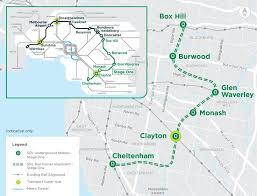
Main route: Cheltenham to Box Hill
Number of underground stations: Six (Cheltenham, Clayton, Monash, Glen Waverley, Burwood, Box Hill)
Power infrastructure scope: Three Bulk Power Supply Points (BPSPs)
Major infrastructure: Twin tunnels, substations, rail systems, signaling, maintenance facilities
Tunnel boring machine deployment: First two TBMs at Burwood; tunnelling toward Glen Waverley expected from ~September 2026
Federal funding commitment: More than $6bn (including $3.8bn in May 2026 federal budget)
Primary objective: Improve suburban connectivity and reduce congestion
Strategic benefit: Enables orbital rail travel outside Melbourne CBD
Related infrastructure link: Melbourne Airport Rail project
Project Team
Project owner: Suburban Rail Loop Authority (SRLA)
Lead government stakeholder: Victorian Government
Federal funding partner: Australian Government
Power infrastructure design consultant: WSP Australia
Power infrastructure engineering partner: Beon Energy Solutions
Rail systems consortium: TransitLinX Alliance (Alstom, John Holland, KBR, WSP, RATP Dev)
Station package (Glen Waverley–Box Hill): Place Alliance (John Holland, Arup, KBR)
Tunnel contractor consortium: Terra Verde Joint Venture (Webuild, GS Engineering & Construction, Bouygues Construction Australia)
Northern-section renewable power supplier: Yurringa Energy
Tunneling equipment supplier: CREG
Freight network coordination: Australian Rail Track Corporation (ARTC)

Leave a Reply