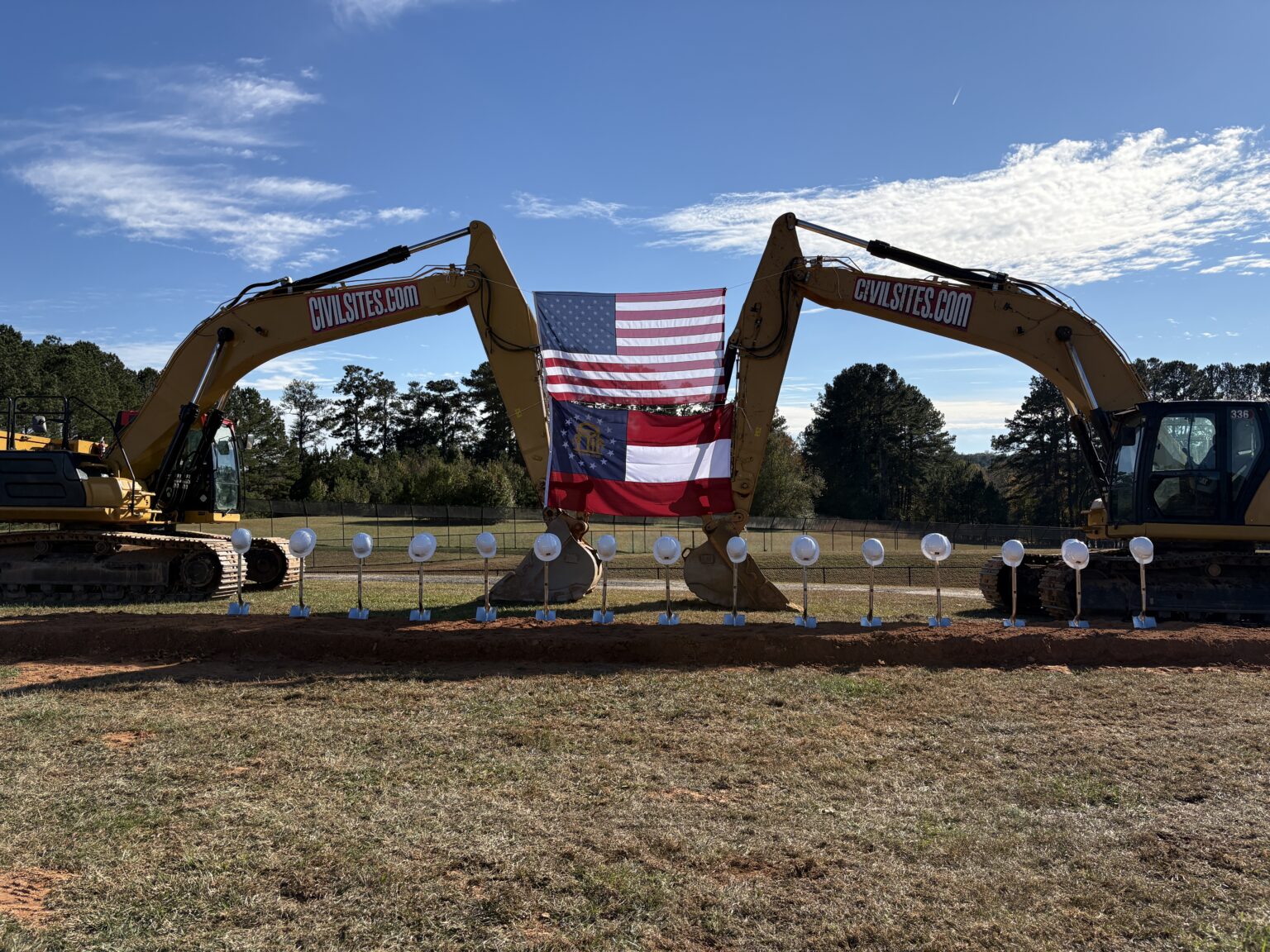
Georgia has broken ground on a $409 million psychiatric hospital in DeKalb County, beginning construction of a 300-bed facility designed to expand court-ordered mental health treatment and address a growing backlog of people awaiting psychiatric services.
The Georgia Department of Behavioral Health and Developmental Disabilities (DBHDD) held the groundbreaking ceremony on November 16, 2026, at the Georgia Regional Hospital-Atlanta campus. The project represents Georgia’s first new state psychiatric hospital construction in more than 50 years and is expected to open in 2029.
The state allocated $409 million for the facility’s design and construction, with funding approved by Governor Brian Kemp and the Georgia General Assembly. The hospital will primarily serve people involved in the criminal justice system who require court-ordered psychiatric evaluations, treatment or competency restoration.
More than 860 people were waiting for forensic mental health services at the time of the groundbreaking, according to state officials.
New hospital to expand Georgia’s forensic psychiatric capacity
The new hospital will provide inpatient treatment for people who enter the criminal justice system with serious mental health conditions and require specialized psychiatric services.
Its patients will include defendants whom courts have found unable to understand criminal proceedings or assist their attorneys. These individuals may require competency restoration treatment to help them regain the ability to participate in their defense.
The facility will also accommodate people found not guilty by reason of insanity who require inpatient psychiatric treatment.
The development addresses pressure on Georgia’s existing state hospitals and county jails, where defendants can remain for extended periods while awaiting psychiatric evaluations or hospital placement.
DBHDD received more than 2,500 adult court orders for competency evaluations in fiscal year 2026. More than 75% of Georgia’s existing 1,000 state hospital beds are already designated for people involved in the criminal justice system.
The additional 300 beds will expand the state’s capacity to provide court-ordered treatment while reducing pressure on local jails, courts and existing psychiatric facilities.
$409M construction budget excludes future operating costs
Although Georgia has committed $409 million to design and build the hospital, the construction allocation does not represent the full cost of bringing the facility into operation.
DBHDD Commissioner Kevin Tanner has indicated that the state will need additional funding for furniture, fixtures and equipment. Staffing will also require substantial investment.
State lawmakers have emphasized the importance of continuing to fund the project after construction, particularly when recruiting and retaining clinical personnel.
The hospital will require psychiatrists, nurses, forensic psychologists and other healthcare professionals to operate its 300 beds. Georgia’s existing psychiatric system has faced competition from private healthcare employers, contributing to staffing shortages and limiting the number of beds available for treatment.
Consequently, the hospital’s eventual capacity will depend not only on its physical size but also on the state’s ability to finance and maintain its clinical workforce.
Hospital construction coincides with 2029 mental health deadline
The development also comes as Georgia works to meet a November 2029 deadline under an agreement involving DBHDD, the Georgia Advocacy Office and the Southern Center for Human Rights.
The agreement requires the department to complete competency evaluations within 30 days of receiving a court order and admit individuals awaiting competency restoration services to treatment programs within 30 days of receiving the relevant court order.
The new hospital is expected to open in 2029, placing its construction schedule close to the deadline for reducing forensic mental health waiting times.
However, adding 300 beds will not automatically eliminate the backlog. The number of patients the facility can serve will depend on staffing, treatment requirements, lengths of stay and continuing demand for forensic services.
The state has also expanded its use of smaller facilities. In January 2025, Georgia opened a standalone jail restoration center, while lawmakers approved another $20.7 million investment for a 40-bed forensic restoration facility at East Central Regional Hospital in Augusta. Construction on the Augusta facility began in October 2026.
These developments are intended to provide treatment closer to county jails for eligible individuals who do not require admission to a state psychiatric hospital.
DeKalb County seeks greater transparency
The hospital’s development has also raised questions about neighborhood communication, security and the facility’s relationship with surrounding communities.
Following the groundbreaking, DeKalb County District 3 Commissioner Nicole Massiah said she had learned about the project only after the ceremony.
Massiah requested more information from DBHDD about security arrangements, hospital operations and potential effects on nearby neighborhoods. She also called for greater opportunities for residents to participate in discussions about the development.
The concerns add a local dimension to a project primarily presented as a statewide response to the shortage of forensic psychiatric beds.
Community-based treatment remains part of Georgia’s strategy
The hospital represents an expansion of institutional psychiatric capacity, but Georgia continues to invest in community-based behavioral healthcare.
Since 2019, the state has directed approximately $1 billion in operating funds toward behavioral health and developmental disabilities services, including 988 access, mobile crisis teams and local crisis centers.
Disability advocates have supported efforts to move people with serious mental health conditions out of county jails while emphasizing the importance of preventing unnecessary institutionalization.
They argue that community-based treatment, housing support, crisis intervention and early mental health services remain necessary to reduce the number of people entering the criminal justice system because of untreated conditions.
DBHDD has explained that the new hospital addresses the separate need to provide inpatient care when courts specifically order psychiatric evaluation or treatment.
Georgia’s investment also reflects a wider expansion of healthcare infrastructure across the United States. In Utah, for example, Intermountain Health has started construction of a new 521,000-square-foot LDS Hospital in downtown Salt Lake City, combining expanded clinical capacity with a major redevelopment of a former Sears property. The two developments illustrate different approaches to meeting changing healthcare needs through large-scale hospital construction.
The DeKalb County hospital will form part of Georgia’s broader effort to expand forensic treatment capacity while continuing to develop community-based behavioral health services.

New Georgia Forensic Psychiatric Hospital: Project factsheet
- Investment: $409 million
- Location: Georgia Regional Hospital-Atlanta campus, DeKalb County, Georgia
- Owner: State of Georgia
- Project agency: Georgia Department of Behavioral Health and Developmental Disabilities
- Groundbreaking: November 16, 2026
- Planned capacity: 300 inpatient beds
- Expected opening: 2029
- Primary purpose: Court-ordered psychiatric evaluations, treatment and competency restoration
- Reported forensic services backlog: More than 860 people
- Additional development: $20.7 million, 40-bed forensic restoration facility in Augusta




Leave a Reply