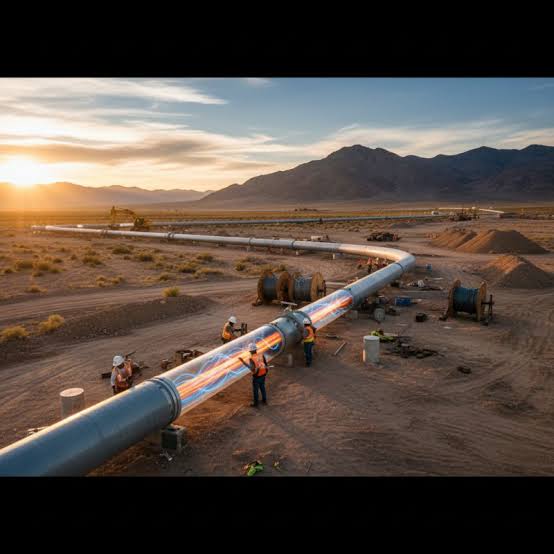
Great Basin 2028 expansion has entered federal environmental review for a major natural gas pipeline construction program across northern Nevada. The $2.3 billion project would build approximately 195 miles of new 42-inch pipeline.
It would also add lateral pipelines, compressor infrastructure and new gas delivery facilities. The project aims to strengthen transportation capacity as energy demand grows across northern Nevada and surrounding markets.
Great Basin 2028 Expansion advances environmental review
The Federal Energy Regulatory Commission has started its pre-filing environmental review of the planned expansion. However, Great Basin Gas Transmission has not yet submitted its formal project application.
FERC opened the process to identify environmental issues before the formal application reaches the Commission. The process also allows agencies, communities and other stakeholders to raise concerns early.
The planned pipeline would cross Churchill, Humboldt, Lyon, Pershing, Storey and Washoe counties. Meanwhile, approximately 15 miles of new 24-inch lateral pipelines would support the mainline system.
The construction programme also includes the new Jungo Road Compressor Station in Humboldt County. Additionally, Great Basin plans a new receipt point near its existing Opal Valley Receipt Point.
New delivery points, meter stations and pressure limiting stations would complete the associated infrastructure. The project would therefore create a broader transmission network across northern Nevada.
Great Basin 2028 Expansion targets major capacity growth
The project has secured binding precedent agreements representing approximately 1 billion cubic feet per day. Stronger demand prompted Great Basin to increase the planned pipeline diameter from 42 inches to 48 inches.
The revised design increased estimated capital investment from $1.7 billion to approximately $2.3 billion. Great Basin expects the expanded system to accommodate future demand through additional compression.
The April 2026 open season also attracted expressions of interest totaling approximately 2.5 billion cubic feet daily. Those requests covered potential service between 2028 and 2035.
Construction would also retire approximately 142 miles of existing 8-inch and 16-inch pipelines. Most of those older facilities date from the 1960s, while existing Rye Patch and Lovelock compressor stations would also be abandoned.
The expansion also reflects a broader wave of U.S. natural gas transmission investment, with the Texas Eastern Line 31 pipeline expansion in Mississippi showing how FERC environmental reviews are shaping new pipeline construction projects across different regional markets.
Environmental assessment will shape construction planning
FERC estimates construction and abandonment activities could disturb approximately 4,500 acres. However, Great Basin expects to retain about 1,500 acres for permanent facilities.
Most new pipeline facilities would follow existing pipeline, utility and road rights-of-way. This approach could reduce additional land fragmentation during construction.
The environmental review will examine water resources, wetlands, wildlife and threatened species. It will also assess cultural resources, land use, air quality, noise and construction safety.
FERC has highlighted several issues requiring particular attention during the review. These include public land crossings, recreational areas and the California National Historic Trail.
Waterbody crossings will also receive scrutiny, including crossings of the Humboldt River and nearby canals. FERC will further examine potential impacts from new aboveground facilities.
The Commission will evaluate alternatives and recommend measures that could reduce environmental impacts. Meanwhile, federal and state agencies will participate in the preparation of the environmental document.
The Bureau of Land Management has already indicated its intention to participate as a cooperating agency. The Bureau of Reclamation has expressed interest in historic-property consultation.
Great Basin expects the expansion to enter service during the fourth quarter of 2028. However, the project still requires formal FERC approval before construction can proceed.
Project Fact Sheet
Name: Great Basin 2028 Expansion Project.
Type: Natural gas transmission pipeline expansion and associated infrastructure construction.
Estimated investment: Approximately $2.3 billion.
Main pipeline: Approximately 195 miles of planned 42-inch pipeline in the FERC pre-filing scope.
Updated design: Great Basin has moved toward a 48-inch design to accommodate stronger demand.
Lateral pipelines: Approximately 15 miles of new 24-inch pipelines.
Compressor station: New Jungo Road Compressor Station in Humboldt County.
Existing infrastructure: Approximately 142 miles of older pipeline planned for abandonment.
Construction footprint: Approximately 4,500 acres temporarily affected by construction and abandonment.
Permanent footprint: Approximately 1,500 acres expected to remain in facility use.
Capacity: Approximately 1 billion cubic feet per day of contracted demand.
Target completion: Fourth quarter of 2028.
Regulatory status: Pre-filing environmental review; formal FERC application not yet filed.
Project Team
Developer: Great Basin Gas Transmission Company.
Parent company: Southwest Gas Holdings.
Environmental review authority: Federal Energy Regulatory Commission.
Cooperating agency: U.S. Bureau of Land Management.
Historic-property consultation party: U.S. Bureau of Reclamation.
Environmental review participants: Federal, state and local agencies, Native American tribes and other stakeholders.
Regulatory framework: Federal Energy Regulatory Commission under the National Environmental Policy Act.
Construction stakeholders: Great Basin, affected landowners, agencies and communities across six Nevada counties.

Leave a Reply