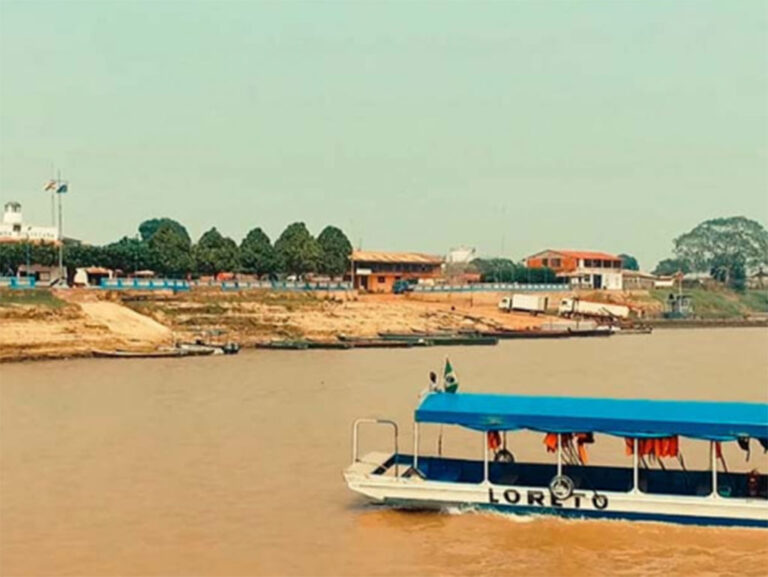
The Guayamerín–Guajará-Mirim bridge project remains a key infrastructure initiative aimed at improving cross-border connectivity between Bolivia and Brazil. The project focuses on constructing a new crossing over the Mamoré River, linking the towns of Guayaramerín and Guajará-Mirim. It forms part of broader efforts to enhance regional trade routes and reduce reliance on ferry transport across the border.
Recent developments indicate that the project has moved beyond initial discussions into early execution stages. Construction officially commenced following bilateral agreements between Bolivia and Brazil, with both governments reaffirming their commitment to completing the long-anticipated link. The bridge is expected to span approximately 1,200 meters and significantly improve transport efficiency in the region.
Initially, the project underwent several technical evaluations and bidding processes to determine feasibility and financing structures. Earlier plans highlighted Brazil’s role in funding the project, with cost estimates ranging between $52 million and $75 million depending on design specifications and scope adjustments.
Construction progress reflects growing regional integration focus
Construction of the Guayamerín–Guajará-Mirim bridge project signals a shift from planning to implementation. Authorities have emphasized the importance of the bridge in strengthening economic ties between the two nations. The project replaces an existing ferry system, which has long limited efficient movement of goods and passengers.
Moreover, the bridge supports Bolivia’s strategic objective of improving access to international markets. As a landlocked country, enhanced connectivity to Brazil’s transport networks is critical for trade expansion. Consequently, the project plays a central role in regional logistics development.
Engineering design supports navigation and cross-border mobility
The Guayamerín–Guajará-Mirim bridge project incorporates a cable-stayed design to ensure navigability along the Mamoré River. Engineers have planned adequate clearance to allow vessel passage without disruption. Additionally, the structure includes access roads and border facilities to streamline cross-border movement.
Furthermore, the design reflects both functional and economic considerations. The bridge accommodates vehicular traffic while supporting long-term infrastructure resilience. Therefore, it contributes to both immediate mobility improvements and future regional development goals.
Meanwhile, broader infrastructure investments across Latin America highlight a shared focus on improving connectivity and logistics efficiency. For instance, the $2 billion Fourth Bridge Panama Canal project is advancing with six lanes and metro integration to ease congestion and enhance trade flows. This parallel development underscores the increasing importance of strategic crossings in supporting economic growth across the region.
Also read: Design for the Cape Coral Bridge Replacement Project confirmed
The purpose of that meeting, as per the Vice Minister for Foreign Trade and Integration of Bolivia, Benjamin Blanco, was to highlight the needed specifications for the Guayamerin-Guajara Mirin binational bridge construction.
Currently, the Bolivian and Brazilian governments are in the process of exchanging technical information. This comes after Brazil requested the Bolivian side’s opinion. The request had been sent according to the procedures that correspond with this kind of task.
The Guayamerin-Guajara Mirin binational bridge construction bidding process
It is said that the bidding must be approved by the mixed commission of Brazil and Bolivia. The bidding process will be convened soon after the technical project has been approved.
Benjamin Blanco also claimed that it is a historical debt that was established in the 1903 Petropolis Treaty. It provides for a 1200-meter bridge at a cost of $52 million, with expenses handled by Brazil. It is said that the country could guarantee up to $70 million for the Guayamerin-Guajara Mirin binational bridge project.
According to Blanco, they have seen the entire predisposition on the Brazilian government’s part to reach mutually beneficial agreements for the Guayamerin-Guajara Mirin binational bridge construction in order to reduce the time that would be taken to complete the project. Their aim is to have a bridge that will satisfy the demands of the people living in Beni and the Brazilian population.

Project Fact Sheet
Project Name: Guayamerín–Guajará-Mirim Binational Bridge Project
Location: Mamoré River, Bolivia–Brazil border
Estimated Cost: $52 million – $75.5 million
Project Type: Binational bridge infrastructure
Scope:
- Construction of approximately 1.2 km bridge
- Connection between Guayaramerín (Bolivia) and Guajará-Mirim (Brazil)
- Development of access roads and border facilities
Key Features:
- Cable-stayed bridge design
- Navigation clearance for river traffic
- Replacement of ferry transport system
- Integration with regional road networks
Current Status (2026): Construction initiated following bilateral agreements, with execution expected over a multi-year timeline
Objectives:
- Improve cross-border connectivity
- Enhance trade and logistics efficiency
- Support regional economic integration
Economic Impact:
- Improved export routes for Bolivia
- Increased trade between Bolivia and Brazil
- Development of surrounding regions
Project Team
Project Owners:
- Government of Bolivia
- Government of Brazil
Lead Authorities:
- Bolivia Ministry of Public Works
- Brazil Ministry of Transport
Funding: Primarily financed by the Government of Brazil
Engineering & Design:
- Binational technical teams coordinating design specifications
- Specialists in bridge and transport infrastructure
Construction Contractors: To be executed by selected contractors following international bidding processes
Project Management:
- Joint Bolivia–Brazil coordination committees
- Oversight through binational infrastructure agreements
Key Stakeholders:
- Local governments of Beni (Bolivia) and Rondônia (Brazil)
- Cross-border trade authorities
- Regional transport and logistics agencies
Regulatory Oversight: Binational commissions ensuring compliance with engineering, environmental, and operational standards




Leave a Reply