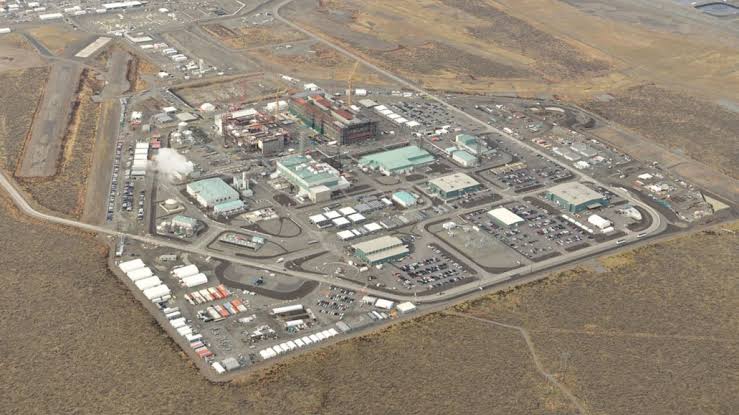
The Hanford clean energy hub could transform thousands of acres of former nuclear weapons production land in Washington State into an advanced industrial and energy development campus. The US Department of Energy (DOE) has invited private investors to develop computing infrastructure, critical materials processing facilities, advanced manufacturing plants and energy generation projects.
The opportunity covers land within the historic Hanford Site, which supported America’s nuclear weapons program during the Cold War. Through its American Energy Hubs initiative, DOE intends to repurpose underutilized federal properties for industrial development, technological innovation and energy production. However, the government has not selected developers or announced a construction budget. The opportunity therefore represents a private-sector development solicitation rather than an awarded construction contract.
DOE’s Office of Environmental Management (DOE-EM) issued Request for Offer DE-RFO-0000026 on November 6, 2026. The solicitation invites qualified companies to negotiate long-term leases or easements covering available federal land. Although the announcement describes an opportunity involving up to 3,700 acres, the solicitation identifies two principal parcels totaling 3,125 acres. Tract 1 covers 1,876 acres, while Tract 2 contains another 1,249 acres. DOE identifies the first parcel as available and the second as potentially available.
Hanford Clean Energy Hub Targets Advanced Industrial Construction
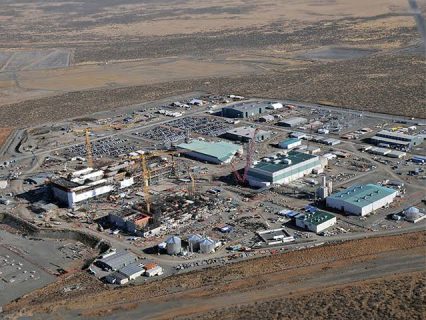
The proposed development occupies the 600 Area of the Hanford Site near Richland, southeastern Washington. Both identified parcels lie alongside the Columbia River, providing a strategic location for industrial infrastructure.
DOE is considering four development configurations. These include integrated advanced manufacturing, critical materials processing and computing facilities. Other options involve standalone advanced computing, manufacturing or energy infrastructure developments.
The proposed construction could include specialized computing buildings, data centers, cooling systems and materials processing facilities. Developers may also install electricity generation, transmission and storage infrastructure. Furthermore, applicants can propose developments across individual parcels or multiple sections.
The opportunity also creates potential synergies with the neighboring Cascade Advanced Energy Facility. Amazon, X-energy and Energy Northwest are developing that separate nuclear energy project. Their plans include deploying up to 12 Xe-100 high-temperature gas-cooled small modular reactors.
The proximity could attract energy-intensive manufacturing and computing operators. However, DOE has not guaranteed electricity supply from the neighboring nuclear development.
Hanford Clean Energy Hub Requires Dedicated Power Infrastructure
Electricity supply forms a central requirement for prospective developers. DOE requires applicants to follow a build, bring or buy electricity arrangement. Consequently, developers must establish sufficient new generation resources before commissioning their other facilities.
Companies can construct dedicated generation facilities, import electricity or purchase guaranteed commercial power reserves. They must also finance the necessary grid connections and electricity delivery upgrades.
This requirement aligns with the Ratepayer Protection Pledge published on March 4, 2026. The policy seeks to prevent large industrial and computing developments from increasing electricity costs for surrounding communities.
Additionally, applicants must demonstrate adequate financing for planning, engineering, permitting, construction and operations. Their proposals must include implementation schedules, infrastructure requirements and eventual decommissioning arrangements.
Hanford’s industrial redevelopment also faces important environmental considerations. The site produced approximately two-thirds of the plutonium used in American nuclear warheads between 1943 and 1989. Production ended in 1989, leaving extensive radioactive and chemical contamination requiring long-term remediation.
DOE, the Environmental Protection Agency and Washington State Department of Ecology oversee the cleanup program. Therefore, prospective developers must demonstrate compliance with environmental requirements and applicable permitting procedures.
Hanford Clean Energy Hub Advances Private Investment Opportunities
The latest solicitation follows an earlier redevelopment agreement involving General Matter. In February 2026, the company secured a lease for Hanford’s 190,000-square-foot Fuels and Materials Examination Facility.
The company plans to use the previously dormant facility for advanced nuclear fuel processing technologies. The building had remained unused since 1993. This agreement demonstrates the potential for repurposing existing Hanford infrastructure alongside new construction.
DOE will evaluate proposals based on technical capability, financial strength, environmental compliance and development suitability. Applicants must also demonstrate meaningful engagement with local municipalities and Native American tribes.
The solicitation established November 20, 2026, as the deadline for questions. DOE scheduled a virtual industry engagement event for December 9, 2026. Final offers are due January 29, 2027, at 4pm Eastern Standard Time.
Successful applicants will finance, construct, own and operate their proposed facilities. They will also assume responsibility for decommissioning and restoring the leased properties.
The total construction investment remains undetermined because developers must submit their individual financing and development proposals. Consequently, the scale of Hanford’s industrial transformation will depend on the projects DOE ultimately selects.
Washington’s proposed clean energy hub would add a new dimension to the state’s renewable energy and infrastructure pipeline, following earlier plans for utility-scale solar development. One such proposal was the Black Rock Solar Project, a 94MW photovoltaic facility planned for a 1,060-acre site in eastern Yakima County. Developed by BayWa r.e. Solar Projects LLC, the project received conditional use approval in 2022, with construction initially expected to begin in spring 2023.
Project Fact Sheet
Name: Hanford Clean Energy Hub Development.
Location: Hanford Site, near Richland, Washington State, USA.
Development program: American Energy Hubs.
Owner: US Department of Energy.
Total acreage reported: Up to 3,700 acres.
Specifically identified acreage in DOE solicitation: Approximately 3,125 acres.
Tract 1: 1,876 acres, currently available.
Tract 2: 1,249 acres, potentially available.
Site designation: Hanford 600 Area.
Nearby waterway: Columbia River.
Project classification: Industrial, energy and advanced technology infrastructure development.
Proposed facilities: Data centers, computing infrastructure, critical materials processing plants and advanced manufacturing facilities.
Supporting infrastructure: Electricity generation, transmission, storage, cooling systems and utility connections.
Electricity arrangement: Build, bring or buy.
Procurement reference: DE-RFO-0000026.
Solicitation issuing authority: DOE Office of Environmental Management.
Solicitation publication: November 6, 2026.
Questions deadline: November 20, 2026.
Industry engagement: December 9, 2026.
Proposal submission deadline: January 29, 2027.
Project Team
Owner and land administrator: US Department of Energy (DOE).
Program administrator: DOE Office of Environmental Management (DOE-EM).
Solicitation management: DOE Hanford Field Office.
Environmental oversight: US Environmental Protection Agency (EPA).
State environmental regulator: Washington State Department of Ecology.
Regional economic development stakeholder: Tri-City Development Council (TRIDEC).


Leave a Reply