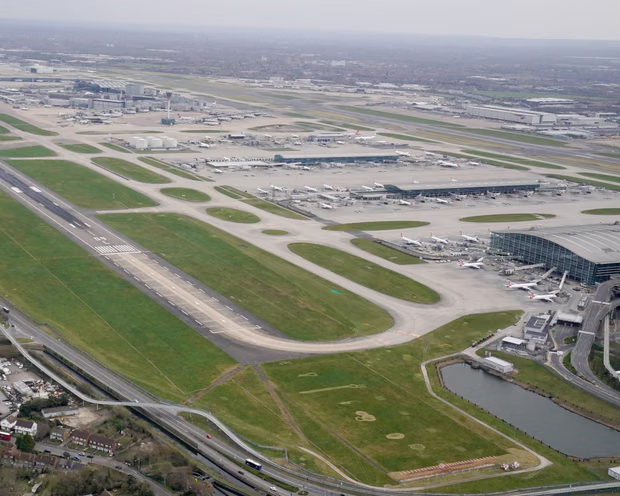
Heathrow third runway construction plans have entered a new phase after the UK aviation regulator pushed for rival developers to compete for the multibillion-dollar expansion scheme. The proposal could reshape one of Europe’s largest infrastructure projects because regulators want stronger cost controls, greater competition, and better value for airlines and passengers. The development follows mounting criticism over Heathrow’s rising expansion budget and growing concerns about future passenger charges.
The UK Civil Aviation Authority (CAA) announced that Heathrow Airport may need to open the third runway procurement process to competing firms. Consequently, independent developers could bid to design, build, and operate new airport facilities under alternative delivery models. Regulators believe competition could reduce construction costs while improving operational efficiency across the airport’s long-delayed expansion programme.
Heathrow’s wider investment programme carries an estimated value of £49bn, equivalent to nearly $67 billion. Meanwhile, the runway component alone could cost about £30 billion to £33 billion, or roughly $41 billion to $45 billion. Heathrow aims to submit its planning application by 2029 and open the runway by 2035.
Heathrow Third Runway Construction Project Draws Competing Expansion Models
The CAA shortlisted four regulatory approaches for the airport expansion. One proposal would allow another company to develop the third runway and terminal infrastructure independently from Heathrow Airport Holdings. The regulator also suggested a more radical model where separate operators could manage standalone terminals, similar to arrangements at New York’s JFK Airport.
The decision has revived interest in the Heathrow West proposal from the Arora Group. The alternative scheme includes a shorter 2.8km runway and a new Terminal 6. Supporters claim the revised design would lower construction costs and reduce disruption around the busy M25 motorway corridor.
Furthermore, airlines including British Airways owner International Airlines Group (IAG) and Virgin Atlantic continue supporting reforms that could reduce airport charges. Carriers argue Heathrow already ranks among Europe’s most expensive airports. Therefore, they want tighter financial oversight before construction begins.
Heathrow Airport Holdings, however, insists a single operator should control all terminals and runway assets. Airport executives believe one integrated system would simplify operations and improve long-term delivery. Nevertheless, regulators continue examining alternative structures before making a final decision later this year.
Heathrow Third Runway Construction Project Faces Cost and Delivery Pressure
The expansion programme remains politically sensitive because the project would require major engineering works around western London. Heathrow’s preferred design includes relocating sections of the M25 motorway, constructing new tunnels, and building a 3,500-metre runway northwest of the existing airport.
At the same time, environmental groups continue opposing the project over carbon emissions, aircraft noise, and local community disruption. Despite those concerns, the UK government still supports airport expansion because ministers view Heathrow as critical national infrastructure. Chancellor Rachel Reeves recently reaffirmed support for the runway programme and wider aviation growth strategy.
The regulator recently approved Heathrow’s request to recover up to £320 million in early expansion costs linked to planning and design activities. Additionally, the Arora Group secured approval to recover some preliminary costs tied to its competing proposal.
Industry observers now expect the competition debate to influence procurement strategies, financing structures, and construction timelines across the entire project. Consequently, the Heathrow third runway construction programme could become a test case for future privately financed infrastructure developments in the UK aviation sector.
The project is increasingly being shaped by wider UK aviation procurement trends, particularly those demonstrated in regional airport developments. In this context, the recent progress on the Birmingham Airport expansion strengthens the argument for competitive delivery models across major infrastructure schemes. As highlighted in the broader UK aviation pipeline, the move toward open bidding and alternative contractor participation at Heathrow mirrors the approach seen in the Birmingham project, where structured procurement was prioritized to improve efficiency and cost control.
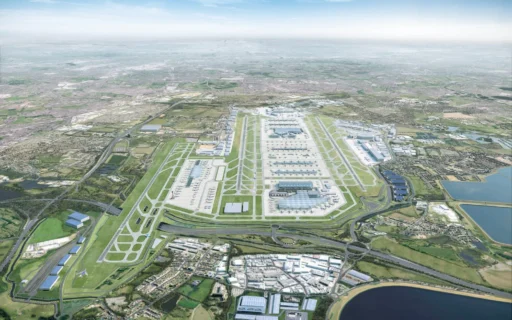
Project Fact Sheet
Project: Heathrow third runway construction project
Location: Heathrow Airport, West London, United Kingdom
Estimated total investment: Approximately $67 billion
Estimated runway expansion cost: Between $41 billion and $45 billion
Project scope:
- Third runway construction
- New passenger terminal development
- M25 motorway diversion works
- Tunnel and bridge infrastructure
- Airfield and taxiway upgrades
- Utilities and supporting airport infrastructure
Proposed runway length: Approximately 3,500 metres under Heathrow’s preferred scheme
Alternative proposal: 2.8km runway under Heathrow West plan
Planned application submission: 2029
Expected operational date: 2035
Funding model: Privately financed infrastructure investment
Regulatory authority: UK Civil Aviation Authority (CAA)
Main issue under review:
- Competitive delivery model
- Cost control measures
- Passenger fee impacts
- Terminal ownership structure
Key stakeholders:
- Heathrow Airport Holdings
- UK Government
- Airlines operating at Heathrow
- Competing infrastructure developers
Consultation period for regulatory proposals: Until June 2026
Project Team
Project owner: Heathrow Airport Holdings
Regulator: Civil Aviation Authority
Government oversight:
Alternative developer consortium:
- Arora Group
Airline stakeholders:
- International Airlines Group
- Virgin Atlantic
- British Airways
Engineering and infrastructure partners linked to rival proposal: Bechtel
Existing Heathrow investors:
- Ardian
- Qatar sovereign wealth interests
- Saudi sovereign wealth interests
- Singapore sovereign wealth interests




Leave a Reply