
Google’s landmark agreement with Kairos Power to secure up to 500 MW of nuclear power for its growing AI and cloud operations in the US continues to gain momentum after Kairos officially broke ground on the Hermes 2 Reactors Demonstration Plant in Oak Ridge, Tennessee in April 2026. The project marks the first commercial-scale deployment under Google’s October 2024 multi-reactor agreement with Kairos and represents an important transition into project execution.
Once operational, Hermes 2 will supply up to 50 MW of carbon-free electricity to the Tennessee Valley Authority (TVA) grid, helping power Google data centers in Tennessee and Alabama while serving as the first operational step toward the broader 500 MW fleet targeted through 2035. Additionally, as Google’s $10 billion nuclear energy program is advancing in Tennessee, other similar developments continue to take shape in the US, including a hybrid nuclear-gas power plant by Blue Energy and GE Vernova in Texas.
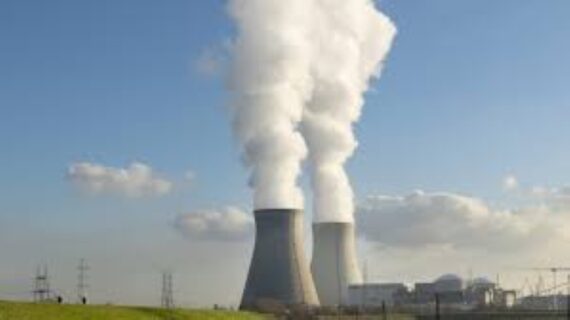
Fact Sheet for Google-Kairos Advanced Nuclear Deployment Program
Offtaker: Google
Developer: Kairos Power
Utility Partner: Tennessee Valley Authority
Project Type: Advanced Small Modular Reactor (SMR) Fleet
Technology: Fluoride Salt-Cooled High-Temperature Reactor (KP-FHR)
Initial Deployment Location: Oak Ridge, Tennessee
Initial Deployment Site: Hermes 2 Demonstration Plant
Hermes 2 Capacity: Up to 50 MW
Total Planned Fleet Capacity: Up to 500 MW
Agreement Signed: October 2024
Commercial Structure: Multi-plant nuclear power agreement
First Reactor Target: 2030
Fleet Rollout Period: 2030-2035
Current Status: Demonstration phase underway
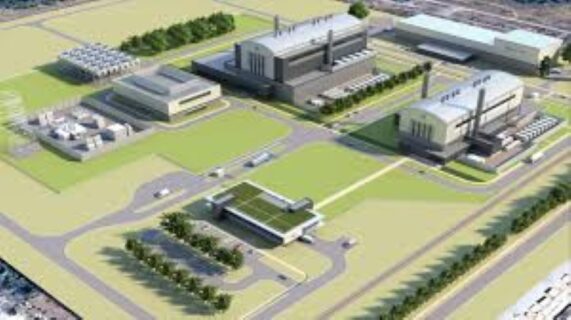
Development Timeline
October 2024
- Google signs first-of-its-kind corporate agreement with Kairos Power for multiple SMRs totaling up to 500 MW.
May 2025
- Kairos progresses nuclear construction activities for Hermes demonstration program in Tennessee.
August 2025
- Google, Kairos, and TVA announce power pathway collaboration for supplying Google regional data centers.
January 2026
- US Department of Energy confirms HALEU fuel support for Hermes demonstration reactor.
April 17, 2026
- Kairos breaks ground on Hermes 2 Demonstration Plant in Oak Ridge, Tennessee – the first commercial-scale project under Google agreement.
2030
- Hermes 2 expected online.
2030-2035
- Additional Kairos reactor deployments planned to scale toward 500 MW total capacity.
Developers and Stakeholders Involved in the Project
Corporate Offtaker: Google
Reactor Developer: Kairos Power
Grid and Utility Partner: Tennessee Valley Authority (TVA)
Nuclear Regulator: U.S. Nuclear Regulatory Commission (NRC)
Federal Stakeholder: U.S. Department of Energy
Google’s $10 Billion Nuclear Reactors Project with Kairos Power
Reported October 17, 2024 – Google’s nuclear reactors project maintains its ambitions in using nuclear energy as it inks an agreement with Kairos Power to make this feasible. The technological company seeks to use small nuclear reactors to generate the vast amounts of energy required to power its AI data centers. Furthermore, the company notes that its agreement with Kairos Power will ensure the viability of this project soon. The scope of implementation is expected in this decade and more brought online by 2035. The companies did not provide any details about where the plants will be located.
However, based on an approximation, it is expected that the cost of the entire project may surmount to $10 billion. Technology firms are increasingly turning to nuclear sources as an alternative option. One of the reasons is the vast amounts of energy needed to supply the electricity used by the huge data centers that drive AI. “The grid needs new electricity sources to support AI technologies,” said Michael Terrell, senior director for energy and climate at Google.
Significance of Google’s Nuclear Reactors Project
Once implemented, Google’s nuclear reactors project is expected to have unprecedented benefits that will advance technology. “This agreement helps accelerate a new technology to meet energy needs cleanly and reliably. It also unlocks the full potential of AI for everyone,” said Kairos executive Jeff Olsen. Furthermore, Olsen noted that, “The deal with Google is important to accelerate the commercialization of advanced nuclear energy by demonstrating the technical and market viability of a solution critical to decarbonizing power grids.”

The plans still have to be approved by the US Nuclear Regulatory Commission. Furthermore, local agencies also have to assert is viability before they are allowed to proceed. The project also cements the role of Kairos as a nuclear energy company in the U.S. Last year, US regulators gave the company the first permit in fifty years to build a new type of nuclear reactor. In July, the company started construction of a demonstration reactor in Tennessee. Moreover, Google’s ambitious project enables it to leverage more eco-friendly sources of energy to power its AI centers.
Also read: How is Intel’s $20B Ohio One Chip Plant: On Track or Derailed?
Perception Regarding the Multi-Billion-Dollar Project
Many see Google’s nuclear reactors project as a step towards the right direction, which many should follow. According to statistics from Wall Street banking Giant Goldman Sachs, global energy consumption by data centers is expected to more than double by the end of the decade. The use of nuclear energy is essential to power this power hungry stations without overburdening the country’s grid. “These data centres are equipped with specialised hardware… that require lots of power, that generate lots of heat,” noted John Moore, Industry Editor for the TechTarget website.

Commendably, the US has shown ambition in supporting efforts to go nuclear. At a United Nations Climate Change Conference last year, the US made a commendable feat. It joined a group of countries that want to triple their nuclear energy capacity by 2050. This is part of the efforts to move away from fossil fuels. However, critics say nuclear power is not risk-free and produces long-lasting radioactive waste. Regardless, many are optimistic that Google’s nuclear reactors project in powering its AI centers is the right step.
Also read: Google’s US$850 million Uruguay data center investment
Also read: US-based Amazon Goes Nuclear as it Acquires $650M Atomic Data Centers from Cumulus Data


Leave a Reply