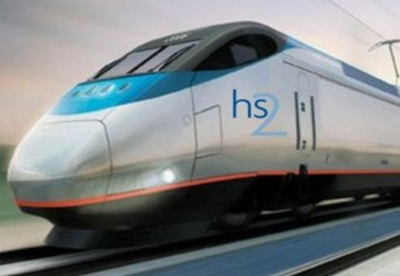
HS2 construction cost pressures have intensified after the UK government confirmed the railway could now require up to £102.7 billion to complete. The revised estimate marks another major escalation for Britain’s flagship high-speed rail project. Additionally, officials warned that full operations between London Euston and Birmingham may not begin until between 2040 and 2043. The latest update also revealed slower train speeds, revised delivery schedules, and a broad restructuring programme aimed at stabilizing construction spending and project management.
Transport Secretary Heidi Alexander presented the updated figures to Parliament on May 19, 2026. She said the revised budget ranges between £87.7 billion and £102.7 billion in 2025 prices. Meanwhile, the first passenger services between Old Oak Common and Birmingham Curzon Street may only start between 2036 and 2039.
The latest review followed an extensive “reset” programme led by HS2 Ltd chief executive Mark Wild. The review examined construction sequencing, contract controls, and long-term delivery risks across the railway network.
HS2 Construction Cost Reset Targets Delivery Efficiency
The government stated that construction inefficiencies, poor commercial management, and earlier scope decisions significantly increased costs. Officials also blamed previous assumptions around engineering complexity and delivery schedules. Furthermore, inflation added additional pressure to the project budget.
To reduce future expenditure, HS2 trains will now operate at 320 km/h instead of 360 km/h. According to the Department for Transport, the reduced speed could save nearly £2.5 billion during delivery and testing.
The government also confirmed that construction works remain at least four years behind the original programme schedule. Testing and commissioning periods were reportedly underestimated by another three years. Consequently, the railway’s final completion timeline continues to move further into the next decade.
Despite rising costs, ministers rejected proposals to cancel the project entirely. Internal reviews showed that decommissioning completed works could cost approximately £58bn while delivering limited transport benefits. Therefore, the government concluded that completing the railway remains the more practical option.
HS2 Construction Cost Increase Reshapes UK Infrastructure Planning
The revised HS2 construction cost has intensified debate around major infrastructure delivery in the UK. Originally announced in 2012 with an estimated budget of about £32bn, the railway has since undergone several redesigns and route reductions. The eastern leg to Leeds and the extension to Manchester were previously cancelled to contain expenditure.
Even so, government officials argued that HS2 remains essential for improving long-term rail capacity. The line will eventually connect Birmingham with existing West Coast Main Line infrastructure at Handsacre Junction. Additionally, the railway aims to reduce congestion on conventional passenger and freight corridors.
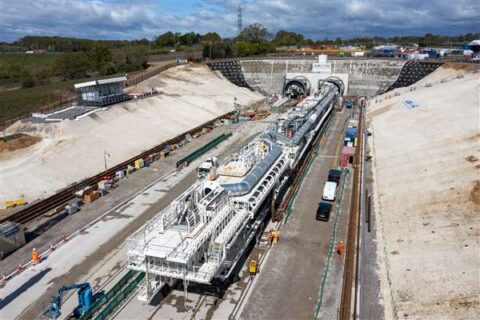
Construction activity currently continues across tunnels, viaducts, stations, and rail systems. However, uncertainty still surrounds the redevelopment of London Euston station, where private financing options remain under consideration.
Industry observers also noted that HS2 has become one of the world’s most expensive rail infrastructure schemes. Public criticism intensified after new delivery targets extended completion dates by more than a decade beyond the original programme.
Nevertheless, the government maintains that the reset programme will improve procurement oversight, strengthen contractor accountability, and restore delivery discipline. HS2 Ltd has already introduced new commercial management roles to monitor claims, payment applications, and contract changes more closely.
HS2 construction cost escalation continues to reshape the UK’s rail infrastructure strategy as the megaproject undergoes cost realignment, schedule revisions, and delivery optimization across its core routes. As the programme remains under restructuring, attention is increasingly shifting toward complementary regional rail investments that support wider national connectivity goals and network capacity improvements alongside HS2’s long-term corridor development. This aligns with parallel rail expansion efforts such as the Mid Cornwall Metro scheme, which was approved as part of the UK’s broader transport upgrade agenda.
Project Fact Sheet
Project: HS2
Type: High-speed railway infrastructure project
Location: United Kingdom
Main corridor: London to Birmingham
Revised project cost: £87.7 billion–£102.7 billion
Original estimated cost: Approximately £32 billion
Current phase: Construction and programme reset
Expected first operations: 2036–2039
Expected full completion: 2040–2043
Maximum train speed revised to: 320 km/h
Previous planned speed: 360 km/h
Main stations: London Euston, Old Oak Common, Birmingham Curzon Street
Key connection point: Handsacre Junction
Funding source: UK government public infrastructure funding
Key infrastructure elements:
- Tunnels
- Viaducts
- Rail systems
- Stations
- Track infrastructure
Main objective:
- Increase rail capacity
- Reduce congestion
- Improve intercity connectivity
- Support freight movement
Project Team
Client: Department for Transport
Project Delivery Company: HS2 Ltd
Government oversight:
- UK Treasury
- UK Parliament
- Department for Transport
Key executive leadership:
- Mark Wild — Chief Executive Officer, HS2 Ltd
- Heidi Alexander — UK Transport Secretary
Main construction contractors and partners:
- Balfour Beatty
- VINCI
- Skanska
- Costain
- Bouygues Construction
- SYSTRA
- Mace
- Arup
- Hitachi Rail
- Alstom
Key project components under delivery:
- Tunneling works
- Station construction
- Rail systems installation
- Civil engineering structures
- Testing and commissioning systems




Leave a Reply