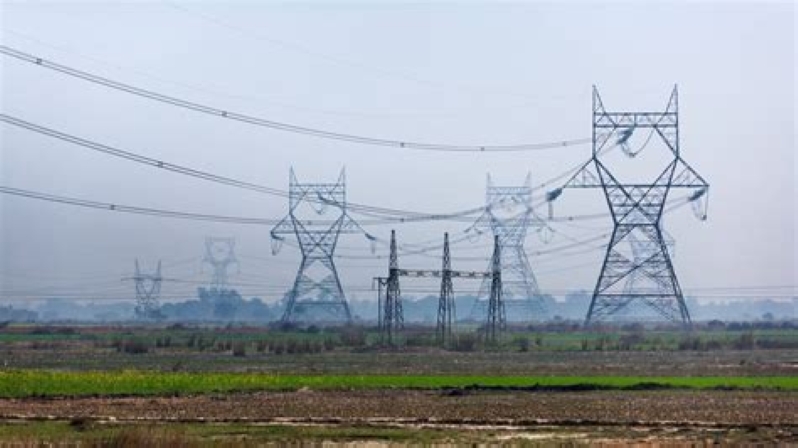
India has approved a major $7.34 billion (₹68,800 crore) high-capacity electricity transmission corridor project designed to transport renewable power from the country’s western generation hubs to rapidly growing industrial and urban demand centers in eastern India.
The proposed 1,150-kilovolt (kV) transmission network is expected to become India’s highest-voltage power transmission system. It will significantly expand the country’s capacity to move electricity over long distances. The high-capacity electricity transmission project is estimated to take six years to complete.
India’s national transmission panel approved the project with an aim to strengthen the country’s electricity infrastructure as renewable energy generation continues to expand.
What is India’s $7.34 Billion High-Capacity Power Corridor Project?
The high-capacity power corridor is a proposed long-distance electricity transmission infrastructure project intended to improve the movement of renewable electricity between India’s western energy-producing regions and eastern industrial and urban centers.
The project comes as India accelerates investments in solar, wind and battery energy storage infrastructure. This is while seeking to reduce dependence on fossil-fuel-based electricity generation.
Western India, particularly Rajasthan, has emerged as an important renewable energy development region. This has been supported by large-scale solar installations. Consequently, much of the electricity generated in these locations must be transported to other parts of the country where industrial activity and electricity consumption are increasing.
The proposed transmission corridor is intended to address this geographical mismatch between renewable electricity generation and demand.
At the center of the project is a 1,150kV transmission system. This also represents a substantial technological advancement in India’s existing 765kV high-voltage transmission infrastructure.
The higher-voltage network is expected to transport significantly larger volumes of electricity. It will also require fewer transmission corridors and less land than conventional alternatives. It is also expected to reduce transmission losses and improve the efficiency of long-distance electricity delivery.
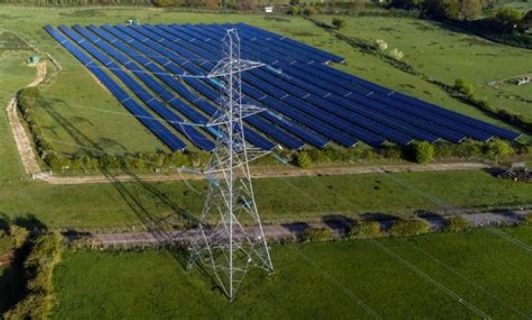
First Phase to Connect Chhattisgarh, Odisha and West Bengal
The initial phase of the high power transmission corridor in India will connect Chhattisgarh, Odisha and West Bengal. This will link eastern India’s electricity demand centers with renewable power transmission infrastructure originating in Rajasthan.
Specifically, the proposed network will connect with a 6,000MW high-voltage transmission system carrying renewable electricity from the Bhadla solar region in Rajasthan. The new project will also fit, in part, as part of the the planned 6,000MW HVDC Green Power Corridor by Adani Energy in India.
Bhadla is one of India’s major solar power development locations. This makes it an important source of renewable electricity for the country’s expanding transmission network.
Additionally, the connection is expected to strengthen the delivery of solar-generated electricity to eastern states. This will be more particular to Odisha, where industrial demand is an important driver of electricity consumption.
The inclusion of Chhattisgarh and West Bengal in the first phase also highlights the wider regional importance of the proposed corridor in strengthening electricity transmission. This inclusion will also support economic activity across eastern India.
Why India Needs a 1,150kV Electricity Transmission Network
India’s renewable energy expansion has created an increasing need for electricity transmission infrastructure capable of transporting large volumes of power across considerable distances.
India is also targeting 500GW of non-fossil fuel-based power generation capacity by 2030, compared with more than 300GW currently installed.
However, expanding generation capacity alone will not guarantee reliable electricity supply. Transmission infrastructure must also develop at a comparable pace. This is to ensure that electricity generated in renewable energy-rich regions can reach consumers elsewhere.
Existing 765kV transmission lines could also require additional transmission corridors and land acquisition to accommodate substantially higher electricity flows.
The proposed 1,150kV network offers an alternative by increasing the amount of electricity that can be transported through individual transmission corridors.
This could reduce the amount of land required for new transmission infrastructure while helping minimize electricity losses over long distances.
The project will therefore play an important role in addressing transmission constraints as India increases its renewable energy generation capacity.
Project Cost and Expected Construction Timeline
The proposed power transmission corridor in India is estimated to cost approximately ₹68,800 crore (US$7.34 billion), making it one of the country’s major planned investments in electricity transmission infrastructure.
The project is expected to take approximately six years to complete. However, a detailed construction commencement date, individual contract packages and commissioning schedule have not yet been made public.
The approval is expected to pave the way for further project development, including detailed engineering, transmission infrastructure planning, procurement and eventual construction.
Additionally, given the scale of the proposed 1,150kV system, implementation will require specialized high-voltage transmission engineering. It will also need advanced electrical equipment, substations and grid infrastructure.
What the Project Means for India’s Renewable Energy Construction Market
The proposed corridor represents a significant infrastructure investment in the supporting systems required to make large-scale renewable energy development commercially and technically viable.
India’s renewable energy expansion has increasingly highlighted the importance of transmission infrastructure. Solar and wind farms can generate substantial volumes of electricity, but inadequate grid capacity can prevent that electricity from reaching consumers.
The challenge is particularly important in regions where renewable generation is concentrated far from major industrial and urban electricity markets.
By connecting Rajasthan’s renewable energy generation infrastructure with eastern demand centers, the proposed corridor could improve the utilization of existing and future renewable energy installations.
It could also reduce pressure on existing transmission networks and limit the need to develop multiple conventional transmission corridors to accommodate rising electricity flows.
For the construction industry, the development presents potential opportunities across:
- Transmission lines: Engineering and construction of ultra-high-voltage transmission infrastructure.
- Substations: Development and upgrading of high-voltage substations and associated electrical facilities.
- Electrical equipment: Manufacturing and supply of transformers, switchgear, conductors, insulators and protection systems.
- Engineering and consultancy: Route planning, feasibility studies, detailed engineering and project management.
- Civil engineering: Foundations, access roads, tower installation and associated infrastructure works.
- Grid integration: Development of systems for managing electricity flows and integrating renewable generation into the national grid.
India’s Broader Investment in Renewable Energy Transmission Infrastructure
The proposed 1,150kV corridor is part of a wider infrastructure challenge facing India’s electricity sector: ensuring that transmission and storage capacity keep pace with renewable energy generation.
In October 2026, the Indian government approved the Green Energy Corridor Phase-3 (GEC-III) scheme, with a total investment outlay of ₹1.864 trillion (US$19.9 billion).
The program aims to facilitate the evacuation of up to 135GW of renewable energy across Indian states and union territories.
It also includes ₹1.364 trillion for intra-state transmission infrastructure and ₹500 billion for deploying 50GWh of battery energy storage systems.
The scheme is targeted for completion by financial year 2032-33 and is intended to address renewable energy intermittency, transmission congestion and electricity curtailment.

Although GEC-III and the newly approved 1,150kV corridor are separate infrastructure initiatives, both demonstrate the government’s increasing focus on strengthening electricity transmission alongside renewable energy generation.
Together, these investments could support India’s ambition to expand non-fossil electricity generation while improving the reliability and geographical distribution of power.
What Next for the $7.34 Billion Power Corridor Project in India?
The immediate priority will be translating the transmission panel’s approval into a detailed project implementation framework.
This is expected to involve further technical planning, engineering assessments, transmission route development and the identification of procurement and construction requirements.
The first phase, connecting Chhattisgarh, Odisha and West Bengal with the 6,000MW transmission system originating from Rajasthan’s Bhadla solar region, will be particularly important in establishing the corridor’s initial operational configuration.
The identification of the project’s implementing agency, EPC contractors, equipment suppliers and financing arrangements will also be important milestones to watch.
Nevertheless, the six-year implementation outlook suggests a substantial pipeline of potential transmission infrastructure construction and engineering work.
For India’s renewable energy industry, the project’s significance extends beyond the construction of new power lines. It addresses one of the fundamental requirements for scaling up clean electricity. It will be the ability to transport power efficiently from where it is generated to where it is needed.
India High-Capacity Power Corridor Project Fact Sheet
Project name: India 1,150kV High-Capacity Electricity Transmission Corridor
Estimated project cost: ₹68,800 crore (US$7.34 billion)
Transmission voltage: 1,150kV
Existing transmission benchmark: 765kV
Approving authority: India’s national transmission panel
Estimated construction period: Six years
First-phase states: Chhattisgarh, Odisha and West Bengal
Renewable energy source: Solar and other renewable generation in western India
Key generation hub: Bhadla solar region, Rajasthan
Associated transmission capacity: 6,000MW
Main objective: Transport renewable electricity from western generation hubs to eastern industrial and urban demand centers.
Expected benefits: Increased transmission capacity and reduced transmission losses. Also expected are improved land-use efficiency and stronger renewable energy integration.
Project status: Approved. Construction details remain to be established publicly.
India High-Capacity Power Corridor Project Stakeholders
- Government of India – National electricity infrastructure and energy policy.
- India’s national transmission panel – Transmission project approval.
- Central Electricity Authority (CEA) – National electricity planning and technical oversight.
- Power Grid Corporation of India Limited (POWERGRID) – Major national transmission infrastructure and grid development organization.
- Government of Rajasthan – Host state for the Bhadla solar generation hub.
- Government of Chhattisgarh – State covered by the first phase.
- Government of Odisha – State covered by the first phase. Also an important industrial electricity demand center.
- Government of West Bengal – State covered by the first phase.



Leave a Reply