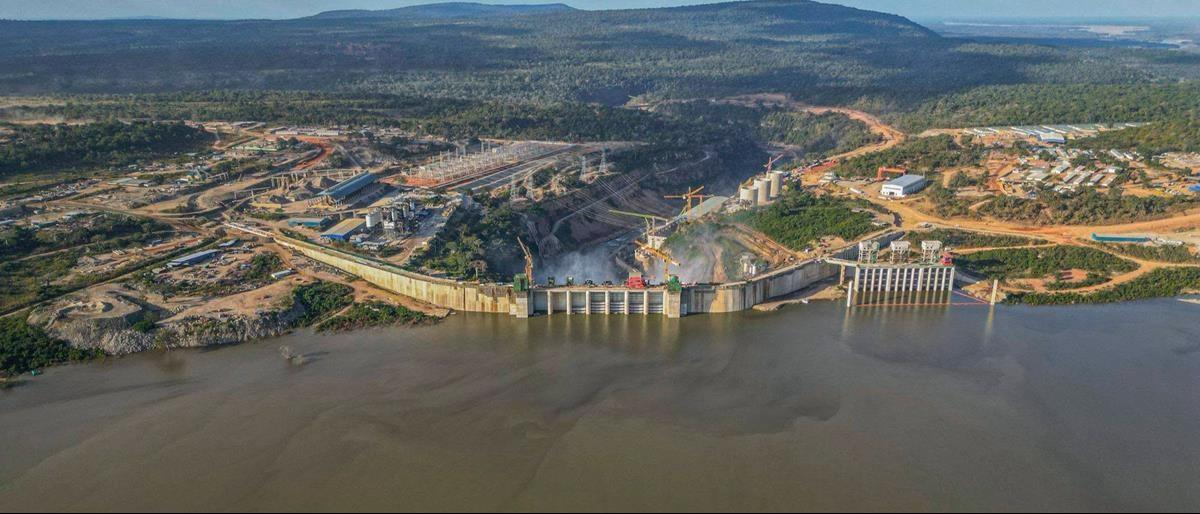
Tanzania’s President Samia Suluhu Hassan officially commissioned the Julius Nyerere Hydropower Project in Rufiji District, Coast Region, on Saturday, 22 August 2026.
The hydropower project was constructed on the Rufiji River and the extends across the Coast and Morogoro regions which account for around 60 percent and 40 percent of its area respectively. Also, the Tanzanian government fully funded the project at a cost of 7.45 trillion Tanzanian shillings.
Developers
An Egyptian consortium consisting of the Arab Contractors Company and Elsewedy Electric implemented the project under a $2.9 billion engineering, procurement and construction contract. This contract was signed in December 2018.
Furthermore, the consortium built the main dam, four auxiliary dams, the hydropower station and its nine turbines, water tunnels, spillways, bridges, access roads, a grid-connection station and 400-kilovolt transmission lines.
Employment
The project employed 1,961 workers. Most of the workers were Tanzanians and were involved the operation of 525 pieces of construction equipment. Moreover, the Egyptian officials have described it as one of the largest infrastructure projects undertaken by Egyptian companies in Africa and a major example of cooperation between Cairo and Dar es Salaam.
Timeline
Construction began in June 2019 and was completed in March 2025 under the supervision of the Tanzania Electric Supply Company and the Ministry of Energy. The main concrete dam extends for over one kilometre. On the other hand, the reservoir can store about 34 billion cubic metres of water. Each of the plant’s nine turbines has a capacity of 235 megawatts. They produce a combined installed capacity of 2,115 megawatts. All the nine turbines have been operational since 2025.
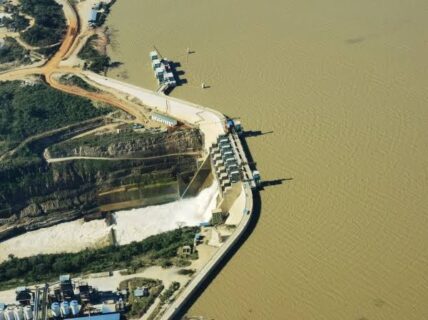
Tanzania’s Overall Installed Electricity-Generation Capacity
The project raised Tanzania’s total installed electricity-generation capacity to 4,646 megawatts. Additionally, it supplied about 44.9 percent of the electricity generated on the national grid during the 12 months ending on 31 May 2026, according to Tanzanian Energy Minister Deogratius Ndejembi. The electricity generated by the station enters Tanzania’s national grid through 400-kilovolt transmission infrastructure.
Significance of the Project
Tanzania constructed the plant to strengthen national energy security and reduce electricity shortages. Also, the plant was intended to support industrialisation, investment and employment. Its generating capacity has helped ease the power rationing that previously affected households and businesses. Furthermore, it while gives manufacturers greater certainty when planning production and expansion. Also, the project supports flood regulation, irrigation, agriculture and fishing in the Rufiji Basin and improves the year-round availability of water.
Lastly, the project has led to a increase in supply in Coast Region from 118 megawatts in 2022 to 356 megawatts by July 2026. The region now has over 1,600 industrial facilities, with improved electricity supply and transport infrastructure contributing to the expansion of manufacturing and other economic activities.
With Tanzania leading as an example in East Africa, other countries such as Uganda also seek to develop hydropower projects to boost their electricity-generation capacity.
Julius Nyerere Hydropower Project (JNHPP): Factsheet
Project Name: Julius Nyerere Hydropower Project (JNHPP) (formerly Stiegler’s Gorge Project)
Location: Rufiji River, Stiegler’s Gorge (Coast & Morogoro Regions, Tanzania)
Owner / Supervisor: Government of Tanzania (TANESCO & Ministry of Energy)
EPC Contractor: Egyptian Consortium (Arab Contractors & Elsewedy Electric) |
Contract Value and Funding: TSh 7.45 Trillion ($2.9 Billion USD), 100% Tanzanian Government financed
Construction Period: June 2019 – March 2025 (Official Commissioning: August 22, 2026)
Key Technical Specifications
- Dam Type and Structure: Roller-Compacted Concrete (RCC) gravity dam
- Crest Length: 1,025 meters (1.025 km)
- Dam Height: 131–134 meters
- Auxiliary Structures: 4 saddle/auxiliary dams
- Reservoir Capacity: 34 Billion cubic meters (m3)
Power Generation:
- Installed Capacity: 2,115 MW
- Turbines: 9 Vertical Francis Turbines (235 MW each)
- Estimated Annual Output: 5,920 GWh
- Grid Connection Infrastructure: 400 kV high-voltage transmission lines & grid-connection substation
Workforce and Equipment: 1,961 personnel & 525 heavy machinery units
Impact and Benefits
- National Grid Boost: Increased Tanzania’s total installed capacity from 2,531 MW to 4,646 MW.
- Base Energy Supply: Contributed 44.9% of national grid power in the 12 months leading up to May 31, 2026.
- Regional Industrial Support: Expanded Coast Region’s local supply from 118 MW (2022) to 356 MW (July 2026), powering over 1,600 industrial facilities.
- Multipurpose Utility: Enables flood regulation, year-round irrigation, agricultural expansion, and fishing in the lower Rufiji Basin.
Project Team
Government Owners & Supervising Entities
- Government of the United Republic of Tanzania: Project client and 100% financial backer.
- Ministry of Energy (Tanzania): Primary government overseer and policymaking body.
- Tanzania Electric Supply Company Limited (TANESCO): State-owned utility company, project manager, and facility operator.
- Tanzania National Roads Agency (TANROADS – Engineering Consulting Unit / TECU): Acting engineering consultant representing the employer.
Main EPC Prime Contractor Joint Venture
- The Arab Contractors Company (Osman Ahmed Osman & Co.): Co-lead EPC contractor responsible for civil engineering, main/auxiliary dam construction, powerhouses, tunnels, and structural works.
- Elsewedy Electric Co.: Co-lead EPC contractor responsible for electromechanical works, high-voltage substations, 400 kV transmission networks, transformers, and electrical distribution.
Major Equipment, Materials & Engineering Subcontractors
- Acrow Misr / Acrow Building Products: Formwork systems, heavy-duty scaffolding, and specialized tech-form polymer panels for dam/wall concrete casting.
- Almosallamy / Guardwell: Heavy-duty industrial rolling shutter doors, direct-drive operator systems, and specialized security barriers for the powerhouse and operational access areas.




Leave a Reply