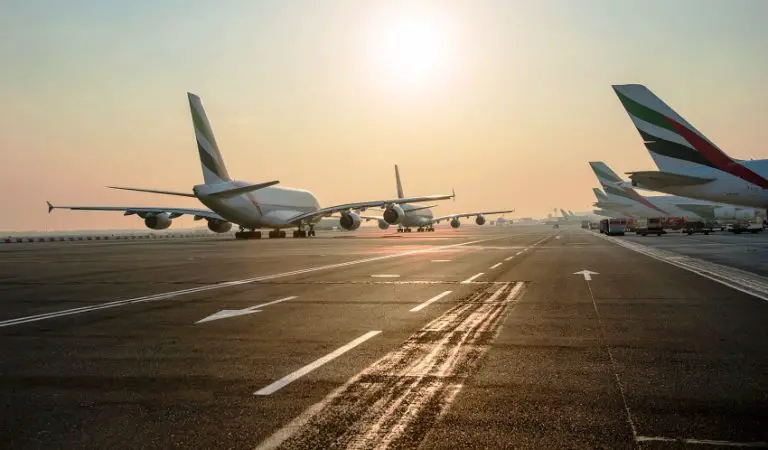
King Salman International Airport project continues to advance as construction activity gains momentum across key components in Riyadh. The King Salman International Airport project, one of the world’s largest aviation developments, is now moving beyond design into active delivery phases. Recent updates show steady progress on airfield infrastructure and real estate integration, reinforcing Saudi Arabia’s long-term aviation strategy under Vision 2030.
Construction progress accelerates across King Salman International Airport
The King Salman International Airport project has entered a critical construction phase, with work already underway on a third runway. This milestone reflects tangible progress in delivering the airport’s masterplan and boosting operational readiness.
Contractors have begun executing runway works as part of a broader infrastructure rollout. The third runway will enhance aircraft movement capacity and improve efficiency once completed. Additionally, the project continues to expand around the existing King Khalid International Airport footprint in Riyadh.
Moreover, authorities have confirmed that further construction phases will begin in 2026, including a major passenger terminal. This facility is expected to handle up to 40 million passengers annually, forming a core element of the airport’s phased delivery strategy.
King Salman International Airport construction pushes runway and terminal works forward
King Salman International Airport construction entered a critical delivery stage after contractors mobilized for runway, taxiway, and utility packages. Furthermore, preliminary site preparation works continue across multiple sections of the airport masterplan. Riyadh-based contractor Binyah also secured framework agreements covering earthworks, road diversions, and utility relocation activities.
The third runway project will raise operational capacity from 65 aircraft movements to nearly 85 aircraft movements hourly. Consequently, the airport will support future passenger growth while improving operational efficiency across Riyadh’s aviation sector. The runway design also aligns with prevailing wind conditions to improve aircraft safety and movement reliability.
Meanwhile, procurement activity continues for Terminal 6 and the airport’s Iconic Terminal packages. Several international consortiums have already entered early contractor involvement stages for the terminal development programme. Selected teams include UCC and CCC, Al-Gihaz Holding with TAV and Webuild, alongside PowerChina and MBL.
The airport developer also continues tendering packages for fuel storage facilities, hydrant systems, and additional runway infrastructure. These systems will support expanded aircraft parking areas and future airport operations. Moreover, several packages will follow public-private partnership structures to attract private investment into Saudi Arabia’s aviation expansion plans.
Mixed-use development and partnerships shape King Salman International Airport project delivery
The project is evolving into an integrated aviation and urban development hub. Developers are advancing partnerships with private sector firms to deliver real estate assets within the airport boundary. These agreements aim to create residential, commercial, and hospitality zones linked directly to airport operations.
The development spans approximately 57 square kilometers and includes aviation, logistics, and lifestyle components. Plans incorporate terminals, cargo facilities, and urban infrastructure designed to support long-term economic growth. Furthermore, the project supports Saudi Arabia’s ambition to position Riyadh as a global logistics and travel hub. It will significantly expand passenger capacity while integrating transport, tourism, and commercial ecosystems.
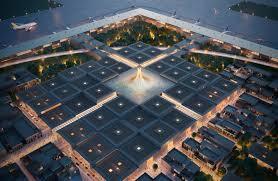
Strategic scale positions project among world’s largest airports
The project is designed to handle up to 100 million passengers annually by 2030. Long-term projections indicate capacity could reach 185 million passengers by 2050. Construction began in 2025 and continues in phases, with completion expected around 2034. The airport will include six parallel runways and multiple terminals, making it one of the largest aviation hubs globally.
Importantly, the project complements other aviation developments across Saudi Arabia. Similarly, the ongoing Aseer airport expansion project highlights parallel efforts to enhance regional connectivity and tourism infrastructure. Together, these developments demonstrate a coordinated national strategy to scale aviation capacity. The King Salman International Airport project continues to gather pace as construction milestones are achieved. Its scale, phased delivery, and integrated development model position it as a defining global aviation infrastructure project.
Contract Awards
The King Salman International Airport project has officially awarded its design contract to Foster + Partners. The UK-based architectural company won the design contract for the airport through an international competition.
As per the contract, the British architecture studio will be responsible for the design and development of the six-runway airport. The mega-complex will span a total area of 57 kilometers squared, approximately. It will feature six parallel runways that include the existing terminals, named after King Khalid.
The airport’s architectural design is driven by Saudi identity and culture. It will remodel the traditional terminal as a single concourse loop that is served and accompanied by multiple entrances. The design contract’s scope of work will also include, the company designing 12 kilometers squared recreational as well as residential facilities.
More on the design of the project
Additionally, the architectural studio will also design retail stores alongside airport support facilities. Furthermore, the project aims to offer passengers the sensory experiences of the city. Therefore, it will feature tempered lights, natural elements as well as state-of-the-art facilities.
While commenting on the project, which draws inspiration from the textures and colors of the desert landscape, Luke Fox, the head of the studio assured that the company will give the project their ultimate expertise and commitment.
Read Also First 3D construction printed (3DCP) villa in Saudi Arabia completed
King Salman International Airport to connect 180 Million Passengers
Upon completion, the King Salman International Airport project will enable the mega-complex to function as a global logistics hub. Additionally, it will serve as a bridge, that connects well over 180 million passengers from the West with the East, and vice versa. As a result, it will stimulate trade and tourism as well as transport.
Impressively, the King Salman International Airport will be one of the largest, on a global scale.
Project Fact Sheet
Project Name: King Salman International Airport Project
Location: Riyadh, Saudi Arabia
Estimated Cost: $30–50 Billion
Project Type: New international airport and expansion
Developer: King Salman International Airport Development Company
Construction Start: 2025
Expected Completion: 2034
Area: 57 km²
Runways: 6 parallel runways
Passenger Capacity:
- 100 million annually by 2030
- 185 million annually by 2050
Key Components: Terminals, cargo hub, logistics zones, residential and commercial developments
Major Milestone: Third runway construction underway (2025–2026)
Strategic Goal: Establish Riyadh as a global aviation and logistics hub
Project Team
Project Owner/Developer: King Salman International Airport Development Company (PIF-owned)
Masterplanner/Architect: Foster + Partners
Engineering & Consulting: Jacobs, Mace
Main Contractors (Runway Works): FCC Construcción, Al-Mabani General Contractors
Client Backing: Public Investment Fund (PIF)
Private Sector Partners: Multiple Saudi real estate developers under MoUs (Sumou, Kinan, Ajdan, Retal, among others)
Project Delivery Model: Multi-phase development combining aviation and real estate investment


Leave a Reply