Kenya’s KSh651 billion Standard Gauge Railway (SGR) extension from Naivasha through Kisumu to Malaba is advancing under a revised infrastructure financing plan, with the project designed to connect western Kenya to the Port of Mombasa and strengthen regional freight transport.
The Kenyan government plans to extend the Standard Gauge Railway (SGR) to Kisumu and Malaba on the Ugandan border. The National Treasury revised the budget for the wider Naivasha–Kisumu–Malaba extension to approximately KSh651 billion in October 2026. This is about KSh148 billion higher than the earlier estimate of KSh502.9 billion.
Project Developer and Main Contractors
The railway project is being implemented through Kenya Railways Corporation (KRC), under the Ministry of Roads and Transport. China Communications Construction Company (CCCC) and China Road and Bridge Corporation (CRBC) have been identified as the Chinese companies involved in delivering the extension.
President Ruto Launches Kisumu SGR Construction
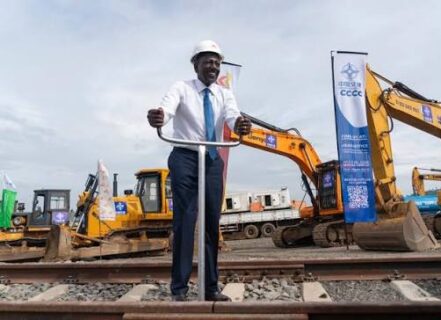
President William Ruto officially launched the project in March 2026. Construction activities on the Naivasha–Kisumu section were formally commenced in July 2026. The railway is intended to extend Kenya’s modern rail network beyond Naivasha. This is where the existing SGR currently terminates. The extension will then establish a connection with western Kenya and the Uganda border.
The Kisumu SGR development is expected to improve cargo movement along the Northern Corridor. This will connect the Port of Mombasa with inland commercial centres and neighbouring landlocked markets. The revised KSh651 billion budget, however, places financing at the centre of project delivery. The government is also considering revenue security and private-sector participation to support the capital-intensive railway expansion.
Naivasha–Kisumu–Malaba SGR Extension Project Scope and Railway Alignment
The Naivasha–Kisumu–Malaba SGR extension is divided into two main construction phases.
Phase 2B covers 264 kilometres from Naivasha to Kisumu. It also includes an 8.69-kilometre branch line to the proposed Kisumu Port on Lake Victoria. Phase 2C extends 107 kilometres from Kisumu to Malaba, near the Kenya–Uganda border. Together, the main railway sections account for 371 kilometres. However, the National Treasury’s latest reported budget indicates the Kisumu SGR as a 369-kilometre extension project.
The railway corridor passes through areas of Nakuru, Narok, Bomet, Kericho, Nyamira and Kisumu before continuing towards the western border region. The broader route is intended to improve rail access to agricultural, industrial and commercial centres. This is while supporting the movement of freight towards Uganda and other East African markets.
The proposed Kisumu branch line is also an important component because it is intended to connect the railway with the lakeside port. The connection could also support the transfer of cargo between rail and lake transport. This is however subject to the development of the port facilities and the availability of compatible freight-handling systems.
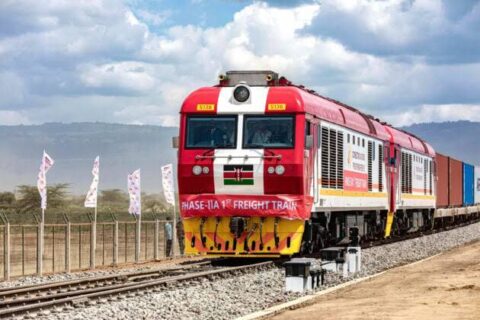
Additionally, the extension follows the completion of the Mombasa–Nairobi railway in 2017. The Mombasa-Nairobi railway was followed by an extension from Nairobi to Naivasha. The western section remained incomplete for several years after earlier financing arrangements failed to support continued development.
Kisumu SGR Extension Project’s KSh651 Billion Budget and Financing Structure
The latest project cost estimate stands at KSh651 billion, up from KSh502.9 billion. The KSh148 billion increase represents a substantial revision to the expected capital requirement for the remaining railway sections. KSh618.8 billion is expected to come from external financiers. Moreover, the exact financing arrangements and the mobilisation of the full amount have not been conclusively made public by the government.
The government has also been considering securitisation of future Railway Development Levy (RDL) collections. The levy is charged on imported goods. It is expected to provide a revenue stream that can support railway development. Under a securitisation arrangement, expected future revenue can be used to support financing raised through special-purpose vehicles or other approved structures.
The Government of Kenya has also previously indicated that it could raise up to KSh390 billion through bonds backed by future RDL collections.
A further element of the financing strategy involves separating railway infrastructure construction from the procurement and provision of rolling stock. Roads and Transport Cabinet Secretary Davis Chirchir has also previously outlined plans for private-sector participation. The private sector will mainly be involved in supplying locomotives, passenger coaches and freight wagons. The investors will potentially recover their investment through railway operations and freight charges. However, the final operating and concession arrangements remain subject to confirmation.
Construction Progress and Land Acquisition
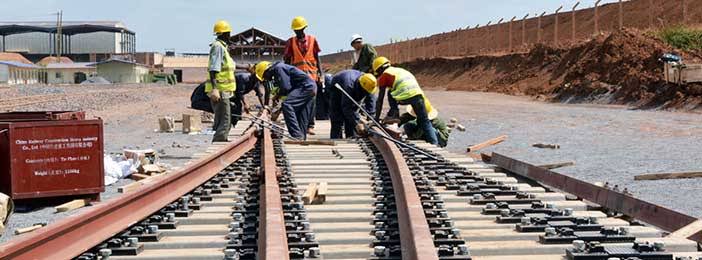
Construction of the Naivasha–Kisumu–Malaba extension was formally launched in March 2026. This was followed by the commencement of works on the Naivasha–Kisumu section in July. Kenya Railways reported that the contractor placed the first rail and sleepers in Narok on July 1 and continued the commencement activities on July 2.
Land acquisition also remains a major implementation requirement. The National Land Commission has been involved in identifying affected properties. NLC has also been involved in coordinating the compensation process along the proposed corridor. More than 5,000 acres have been identified for acquisition for sections of the western SGR extension. Affected landowners also expect to receive compensation in accordance with applicable law.
Additionally, the project requires completion of environmental and social safeguards. This includes environmental and social impact assessment requirements and resettlement planning. These measures are important for managing the effects of construction on communities, property owners and the environment.
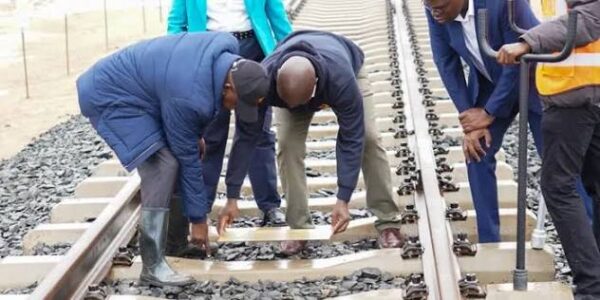
Other major construction activities will include railway earthworks, bridges and culverts, track installation and drainage systems. Stations, signalling, telecommunications and associated railway infrastructure also feature in the development plans.
Expected Impact on Kisumu and Regional Trade
The Kisumu SGR section is expected to improve access to rail freight and passenger services in western Kenya. By connecting the region to Naivasha and the wider SGR network, the project could provide an alternative to road transport for suitable freight and passenger journeys.
The proposed Kisumu Port branch line could also create opportunities for integrating rail and lake transport. Such integration would also depend on the development of port facilities, cargo-handling infrastructure and operational arrangements between railway and lake transport services. More inland, the Government of Kenya is also supporting trade and connectivity with projects such as the new KSh7.5 billion Nithi Bridge realignment project in Eastern Kenya.
At the national level, the extension is intended to improve freight movement from Mombasa towards western Kenya and Uganda. More reliable rail transport could help reduce pressure on highways, improve cargo logistics and support regional trade along the Northern Corridor.
The railway could also encourage investment in logistics centres, warehouses, industrial facilities and commercial developments near stations and freight terminals. However, the scale of these benefits will depend on actual cargo demand, service frequency, operating costs and the completion of connecting infrastructure.
Naivasha–Kisumu–Malaba Standard Gauge Railway (SGR) Extension Project Fact Sheet
Location: Kenya, extending from Naivasha through Kisumu to Malaba on the Uganda border.
Project type:Standard-gauge railway infrastructure.
Owner:Government of Kenya.
Implementing agency: Kenya Railways Corporation.
Supervising ministry: Ministry of Roads and Transport.
Main contractors: China Communications Construction Company (CCCC) and China Road and Bridge Corporation (CRBC)
Total main-line extension: 369 kilometres according to the latest Treasury budget.
Phase 2B: 264 kilometres from Naivasha to Kisumu.
Kisumu Port branch: 8.69 kilometres.
Phase 2C: 107 kilometres from Kisumu to Malaba.
Latest budget: KSh651 billion.
Previous estimate: KSh502.9 billion.
Expected external financing: Ksh618.8 billion
Funding strategy: Government financing and proposed revenue securitisation. Possible private-sector participation in rolling stock and operations.
Construction commencement: Official launch in March 2026. Initial construction works on the Naivasha–Kisumu section started in July 2026.
Construction status: Initial construction activities underway
Companies, Project Team and Stakeholders
Government of Kenya
Kenya Railways Corporation
Ministry of Roads and Transport
China Communications Construction Company (CCCC)
China Road and Bridge Corporation (CRBC)
Kenya’s National Land Commission
Kenya’s National Treasury



Leave a Reply