The rulebook for timber buildings just changed—again. The 2024 International Building Code and a new ANSI Fire Design Specification now demand tougher fire resistance and higher structural loads for every plate, screw, and hanger. Designers feel the squeeze, yet the warmth of exposed wood remains non-negotiable.
Manufacturers have answered with fire-rated brackets, self-tapping screw systems, and even seismic dampers slated for 2026, all proven in two- and three-hour furnace trials, according to Structure Magazine. This guide ranks the seven connector families that truly meet the code—so you can spec faster, sail through plan review, and keep the crane schedule on track.
Up next, we outline how the codes evolved, then walk through the scoring rubric that separates contenders from also-rans. Ready to choose hardware with confidence? Let’s jump in.
How the code got tougher (2021–2026)
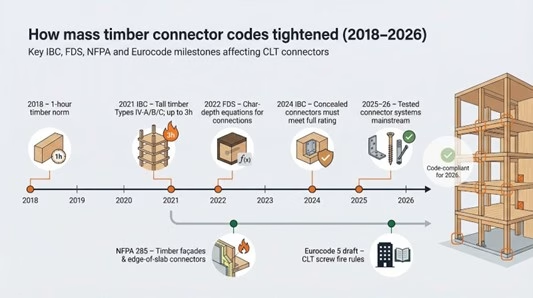
Back in 2018, most timber projects chased a simple one-hour fire rating and little else. Since then, each code cycle has added new layers of protection. The 2021 IBC opened the door to tall-timber Types IV-A, B and C, yet it also required up to three hours of resistance in the tallest buildings. The 2024 update tightened the same sections, closing loopholes and clarifying that connectors hidden in “concealed spaces” must still meet the full rating.
At almost the same moment, the American Wood Council issued its 2022 Fire Design Specification (FDS), giving engineers real equations, not guesswork, for predicting how wood char shields steel plates and screws. Chapter 16 walks through char depth, reduced thread capacity, and detailing techniques for two-hour targets. That single document shifted connection design from craft to repeatable science.
Parallel standards moved in lockstep. NFPA 285 now governs flame spread on timber façades, pushing edge-of-slab connectors behind insulation lines. Eurocode 5 is catching up with draft rules on CLT screws that mirror the U.S. char-depth approach. Manufacturers have followed suit, filing ICC-ES reports so plan reviewers can approve drawings without a variance.
The result is clear: the code no longer merely “allows” mass timber; it sets a high bar for every bolt, bracket, and self-tapping screw. Meeting that bar is the price of admission for any connector used in 2026.
How we scored the field
Choosing “the best” in a young, fast-moving market can feel impossible. To make the process fair, we built a weighted rubric and ran every major connector family through the same test set. We gathered published design capacities, ICC or ETA reports, verified fire-test results, and case studies that tracked site labour. We also interviewed builders and engineers to check the numbers against field reality.
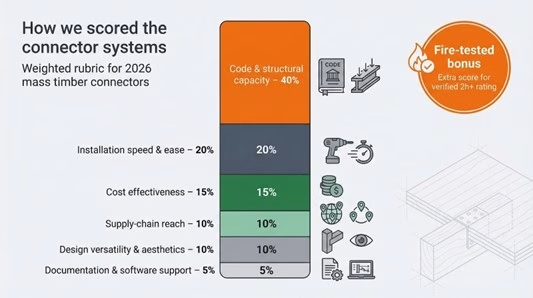
Each system earned points in six areas:
- Code & structural capacity — 40 percent
- Installation speed & ease — 20 percent
- Cost effectiveness — 15 percent
- Supply-chain reach — 10 percent
- Design versatility & aesthetics — 10 percent
- Documentation & software support — 5 percent
A connector that proves a two-hour or longer fire rating receives a bonus bump, because surviving the furnace is non-negotiable in 2026. We ranked the seven highest scorers; everything else remains in the comparison table so you can see where they missed the cut.
With the ground rules clear, let’s meet the hardware that rose to the top.
1. Simpson Strong-Tie “Off-Site” mass timber system
Simpson Strong-Tie’s Offsite team says its versatile connectors and jobsite support help crews “design and build safe, strong structures faster,” a claim detailed in its mass timber construction resource hub.

That focus on predictable speed means Simpson stands out in the connector aisle because it removes uncertainty. Nearly every bracket, hanger and screw in its mass-timber catalog carries an ICC-ES report, so plan reviewers nod instead of frown. The 2025 catalog update raised capacities: heavy post caps now clear 100 kips in tension, and the SDS screw line reaches 610 millimetres for deep CLT diaphragms.
Fire performance keeps pace. In an independent three-hour furnace test by Neutral and Southwest Research Institute, a stock Simpson concealed connector wrapped only with intumescent tape held firm until the burners shut off. That public result gives designers a direct path to Type IV-A and even variance requests for taller hybrids.
Field feedback echoes the lab. Crews like the pre-punched templates and the way Quik Drive guns set screws in seconds. Off-site fabricators welcome the CNC cut files that ship with many connectors, so pockets and pilot holes arrive millimetre-perfect from the factory.
Put it together: clear paperwork, proven fire resistance, rapid installs and global stock keep Simpson in the top slot for 2026.
2. MTC Solutions / Knapp concealed connectors
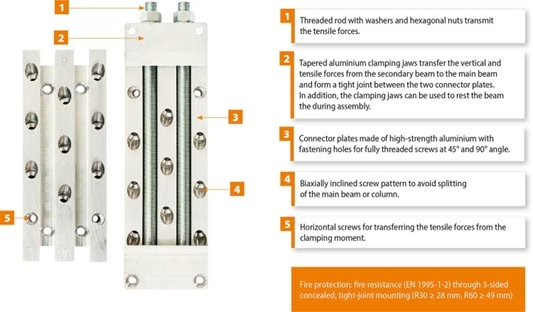
If your project team wants cathedral-like timber ceilings with no visible metal, Knapp concealed blades and sockets (distributed in North America by MTC Solutions) offer a clear path. The flagship MEGANT pocket connector carries up to 341 kN in shear yet hides inside a narrow CNC slot. Drop the beam, the blade slides into the socket, and gravity finishes the job. No through-bolts. No exposed plates.
Speed is the quiet strength. A 2025 Australian case study recorded a 50 percent cut in beam-hanger install time compared with bolted knife plates. That labour shift converts a premium connector into real savings, especially when crane hours cost four figures.
Fire design works in Knapp’s favour. Because the steel sits behind the char line, many joints meet a one-hour rating with only a wood plug. Add a gypsum strip and the rating exceeds two hours, aligning with Type IV-B limits.
Why is Knapp second, not first? Supply. Lead times for larger sizes can reach eight weeks in peak season, so place orders early. When the schedule allows, the reward is a clean column-to-beam aesthetic that satisfies architects and inspectors.
3. Rothoblaas integrated fastening system
Rothoblaas takes a one-stop approach. Order a pallet and you receive screws, plates, hangers, acoustic pads and lifting rings, each engineered to work together. The coordinated kit saves hours when you juggle dozens of connection details across a six-storey timber frame.
Performance stands out next. VGZ fully threaded screws reach yield strengths above 1,000 MPa and post withdrawal values that let you replace bulky plates in many joints. Paired with the Spider concealed knife connector, they deliver moment capacity plus the clean wood surface architects expect.
Fire design stays straightforward. Most Rothoblaas connectors sit deep enough to gain a one-hour rating from wood char alone. Add the company’s tested splines or a slim gypsum wrap and you reach two hours without special coatings, meeting the strict end of Type IV-B.
Cost looks high at first, yet the math shifts once you factor labour. Angled screw diaphragms install from one face, so crews stay on the deck and avoid wrestling heavy plates overhead. When every crane minute counts, that efficiency is tough to beat.
Supply once caused delays, but Rothoblaas opened a North American hub in 2024, cutting lead times to about two weeks for common sizes. The improved availability and a growing list of ICC reports place the brand solidly in our bronze position for 2026.
4. Fully threaded structural screws (SPAX & HECO)
Sometimes the smartest connector is no connector at all. A grid of high-strength screws can handle both shear and tension without plates. German-engineered SPAX and HECO threads have made this approach mainstream.
Capacity comes first. A single 12 × 400 mm screw driven at 45 degrees carries about 20 kN in withdrawal and a similar load in shear. Install crossing pairs and you create a moment joint that rivals small steel plates at a fraction of the weight. Designers trust the maths; installers trust the simplicity.
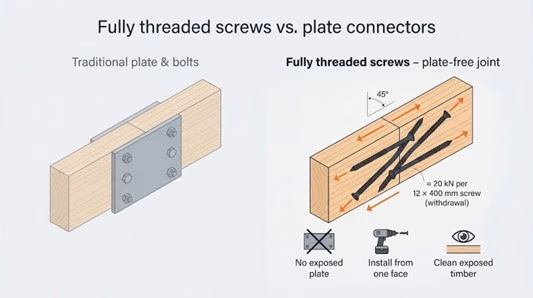
Speed follows. One worker with a cordless impact pins a CLT diaphragm from the top face without flipping panels or aligning bolt holes. On multi-storey sites that means fewer scaffold moves and much less crane time. Crews report screw-only diaphragms finish up to 30 percent faster than plate-and-bolt options.
Fire presents no hurdle. The steel sits inside the timber, and the char layer insulates the threads. Follow the 2022 Fire Design Specification and simply extend embedment length to account for sacrificial char. No coatings or wraps needed.
Cost closes the argument. Premium screws may cost a dollar or two each, but a custom plate demands steel, welding and touch-up paint. Once labour enters the calculation, screws often win on total installed price, especially in dense shear walls where plate counts soar.
Clean aesthetics, flexible detailing and confirmed site speed keep fully threaded screws in our fourth position for 2026.
5. MiTek / Pryda heavy plate connectors
Not every project needs museum-quality concealed joints. Sometimes the job calls for hardware that crews recognise, building officials approve and local fabricators can reproduce quickly. In those cases MiTek’s heavy plate line under the Pryda brand fits the brief.
The connectors scale up the familiar “gang-nail” concept into thick, laser-cut steel plates pre-drilled for bolts and dowels. Geometry stays simple, and capacities appear in MiTek’s design software, so engineers drop values into calculations and move on. For contractors the process feels old-school: measure, drill, bolt, tighten. No special jigs, no proprietary screws, just standard tools already on the truck.
Fire protection is direct. Because the plates mount on the face of the timber, crews can wrap them in Type X gypsum or tuck them behind a furring strip without pocket cuts. Builders in Australia have recorded 90-minute ratings with this method, giving United States teams a proven playbook as Type IV-B work increases.
Cost stays friendly. Plate steel is inexpensive, bolts are off-the-shelf and labour follows a routine every carpenter knows. That economic mix makes MiTek a reliable pick for big-box retail roofs, parkade framing and any job where architectural exposure is not the priority.
The trade-off remains visual. Exposed plates read industrial, so designers often hide them behind soffits or secondary cladding. If your concept calls for warm, uninterrupted timber, look at Knapp or Rothoblaas. If budget and schedule rule the day, MiTek delivers dependable strength without surprises.
6. Connext post-and-beam nodes
Big-city towers grab headlines, yet the mass-timber wave also fuels thousands of smaller pavilions, breweries and custom homes. For those jobs Connext supplies CNC-milled aluminium nodes that turn rough-sawn timbers into plug-and-play frames.
Installation feels almost like a flat-pack project. Mark the centreline, clamp the node and drive the supplied structural screws. No chisels, no mortises and no welder on standby. Builders on Reddit have shared photos of raising full frames in a single weekend, a timeline that resonates with owners facing tight schedules.
Structurally the system knows its limits: axial capacities land near 25 to 30 kN, suitable for low-rise post-and-beam grids, pergolas and mezzanines. Connext publishes stamped values by species, so engineers can size members with confidence rather than back-calculate from generic aluminium data.
Fire protection needs attention. Aluminium softens well below steel, so any rated assembly must enclose the node in gypsum or hide it behind exterior cladding. That restricts Connext to Type IV-HT or unrated spaces unless you add extra protection. For backyard studios and restaurants the trade-off is usually acceptable; for a four-storey school you would choose another system.
The return is approachability. Crews with standard carpentry skills, even ambitious DIYers, can erect elegant timber frames without centuries-old joinery. In a market looking for “mass timber for the rest of us,” Connext fills an important niche and secures its place at number six.
7. Tectonus RSFJ seismic hold-downs
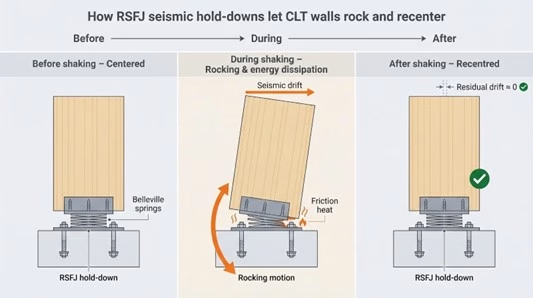
Mass timber’s low weight helps with gravity loads but can challenge seismic design. Tectonus meets that gap with the Resilient Slip Friction Joint (RSFJ), an energy-dissipating hold-down that lets CLT walls rock, absorb the hit and return to plumb.
The joint works like a miniature sliding brake. Stainless plates clamp against Belleville springs; during seismic drift they slide in a controlled path, turning motion into friction heat. After the shaking stops the springs recentre the wall, so doors still close and drywall stays intact. Lab tests in New Zealand recorded ductility values up to eight with almost zero residual drift, numbers that ordinary straps cannot achieve.
Installation mirrors a heavy steel bracket. Bolt the base to concrete, lag the upper plate to timber and torque to specification. If a major quake ever triggers the slides, crews can swap the internal shims without replacing the full wall.
Fire design stays manageable. The RSFJ sits outside the char zone, so designers treat it like any exposed steel plate: wrap in Type X gypsum or recess behind trim for ratings up to two hours.
Cost runs higher than a standard strap, yet on hospitals, emergency centres or tall-timber towers in Seismic Category D and above, the resilience premium often pencils out. When lives, downtime and brand reputation rest on post-quake performance, the RSFJ offers a dependable safeguard and earns the seventh slot in our 2026 ranking.
Quick-glance comparison table
You have the stories; now see the numbers side by side. We distilled the scoring rubric into six headline metrics and added notes on fire and supply. Treat the table as a reality check: if two systems look similar on paper, circle back to the narrative for the finer points.
| Connector system | Max published capacity (kN) | Verified fire rating | Install speed vs baseline | Cost tier* | Key certifications | Global availability |
| Simpson Strong-Tie | 100 + (post caps) | 3 h furnace pass | Standard | $ | ICC-ES, UL | North America, EU, APAC |
| MTC/Knapp MEGANT | 341 | 2 h with wood cover | −50 % crane time | $$ | ETA, ICC pending | EU stock, 4–8 wk US |
| Rothoblaas VGZ + Spider | 250 + (screw cages) | 2 h with spline | −30 % crew hours | $$ | ETA, ICC, CCMC | NA hub (2 wk) |
| SPAX / HECO screws | 20 kN per thread pair | 1–2 h by char calc | −30 % deck time | $ | ICC-ES | Global DIY & pro |
| MiTek/Pryda plates | 120 kN moment kits | Up to 90 min wrapped | Baseline | $ | Local engineer PS-1 | AU/NZ, US custom |
| Connext nodes | 30 kN axial | Rated only when encapsulated | DIY-fast | $ | PE calc package | US stock, ships in days |
| Tectonus RSFJ | 100 kN hold-down | 2 h wrapped | Same as heavy strap | $$ | NZ BC, ICC in review | NZ, US West Coast |
*Cost tier reflects material plus labour for a typical column-beam joint.
Notice the swing in install time. Concealed European systems and screw-only joints regularly cut 30–50 percent from on-site hours, according to the 2025 New Zealand project logs. Those minutes flow straight into crane rental and schedule risk, often a larger lever than the sticker price of the hardware.
With the data in view, match a connector to your real constraint: fire rating, speed, aesthetics or budget.
Installation and inspection tips
Great hardware still fails when an install crew treats it like a guessing game. A few disciplined habits separate smooth inspections from painful punch lists.
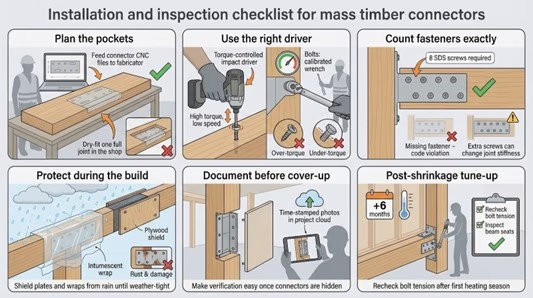
Plan the pockets. Concealed hangers and screw cages demand millimetre accuracy. Feed the connector manufacturer’s CNC files to your fabricator so every slot and pilot hole lands in the right spot. Dry-fit one full joint in the shop; you will catch misaligned screws before they reach the crane.
Use the right driver. Self-tapping screws need high torque at low speed; bolts need a calibrated wrench. Over-torque breaks heads, under-torque cuts capacity, and inspectors now carry torque sticks. Give them nothing to flag.
Count fasteners, not “close enough.” If the detail shows eight SDS screws, install eight. Adding extras can stiffen the joint and upset intended ductility in seismic zones. Skipping one is a code violation, full stop.
Protect during the build. Steel plates rust and intumescent wraps tear when left exposed to spring rain. Shrink-wrap critical joints or install temporary plywood shields until the building is weather-tight.
Schedule visual checks before cover-up. Once gypsum or wood trim hides a connector, verification becomes costly. Many teams snap time-stamped photos and store them in the project cloud as inexpensive insurance when the inspector asks.
Plan a post-shrinkage tune-up. Mass timber loses moisture during the first heating season. Recheck bolt tension and inspect beam seats about six months after occupancy. A half-day visit now can prevent a warranty headache later.
Conclusion
Mass-timber connection design has grown into a mature, code-driven science. Whether you prioritise fire rating, seismic resilience, install speed or visual purity, the seven systems above provide a proven path to compliance in 2026 and beyond. Match their strengths to your project’s real-world constraints, and the rest of the build will follow.