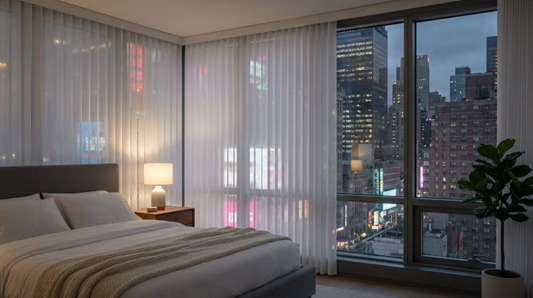
Imagine rolling over at 5 am and catching sunrise ricocheting off a neighbor’s glass tower. Flip over and Times Square’s neon still hums through last night’s shades. Realty Times measured 15 lux of stray light in Midtown bedrooms—enough to keep you half-awake.
Curtains eat space, horizontal blinds collect dust, and shutters panic landlords. Today’s vertical blinds pivot, glide, and even sync to your phone, sealing glare, privacy, and drafts without swallowing square footage. They’re cordless under the 2024 safety mandate, so protection comes baked in.
Ready to reclaim your view and your sleep? Let’s dive in.
How we picked the winners
We didn’t throw darts at a catalog. Instead, we started with the headaches New Yorkers mention most: light that leaks day and night, drafty panes that steal heat, and landlords who panic over extra screw holes.
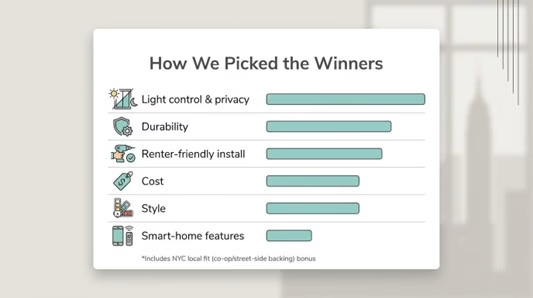
From there, we built six weighted criteria to mirror those pains. Light control and privacy count the most, followed by durability, renter-friendly install, cost, style, and smart-home features. Think of it as a scorecard balancing comfort, looks, and practicality.
Data guided every choice. Manufacturer specs showed which vanes block glare instead of merely dimming it. Owner reviews revealed which headrails still glide after three winters. Energy studies remind us that up to 35 percent of home heat escapes through windows, so any blind that adds insulation earned extra credit.
We also pressure-tested local fit. Does the product include a neutral street-side backing that keeps co-op boards calm? Can the installer handle pre-war frames that aren’t perfectly square? If both answers were yes and the price felt fair, the blind climbed our list.
The result is a top-ten lineup that fixes real problems, not showroom hypotheticals. Next, we’ll dive into the pick that does it all for you.
1. The Blinds Source – best overall custom service
The Blinds Source feels less like a vendor and more like a concierge, bringing a catalog of custom vertical blinds in wood, faux-wood, PVC, and textured fabrics to fit everything from a narrow casement to a floor-to-ceiling slider. A specialist walks through your door with a suitcase of samples, measures every quirky edge of your pre-war frame, and books installation before you finish your latte.
Because each blind is cut to your exact opening, the vanes seal tight and glide in silence. Choose opaque vinyl for blackout, textured fabric for a soft glow, or real wood for warmth. Motorization is available, so a quick tap on your phone blocks Midtown glare in seconds.
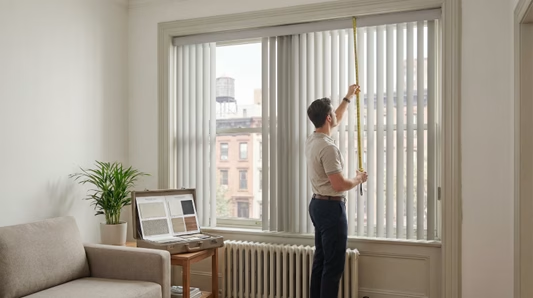
Local know-how sets this service apart. Every order ships with a neutral street-side backing to satisfy co-op boards, and the typical turnaround is two to four weeks, about half the wait of many national chains. Expect to invest roughly $600 to $800 per large window, installation and warranty included.
If you want a turnkey fix that nails fit, style, and speed, The Blinds Source sets the bar.
2. Hunter Douglas Cadence® soft vertical blinds – best premium design
If the phrase “vertical blinds” conjures clacking plastic from a 1990s office, Cadence changes the story. Each vane arches in a subtle S-curve that mimics drapery folds, creating a soft, almost sculptural look. Close them and the vanes nest together to block stray glare; slide them open and they stack into a slim bundle that frees the Hudson view.
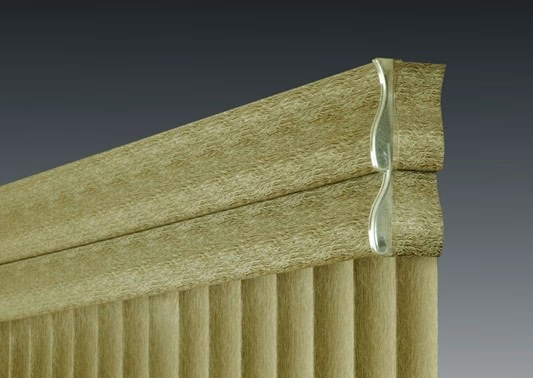
Build quality is unmistakably high-end. Fabrics range from linen-like weaves to textured vinyl that shrugs off humidity, and the headrail glides with a gentle hush. Add PowerView automation and a single tap or voice command handles the morning sun before your coffee cools.
Luxury has a price. Outfitting a standard balcony door often passes $1,000 once you add motorization and professional installation through a Hunter Douglas Gallery dealer. For design-focused apartments, such as Tribeca lofts or new-build condos, Cadence offers showroom polish and daily function. If style matters as much as sleep, this indulgence pays you back every sunrise and sunset.
3. The Shade Store – best for unlimited fabric choice
Picture a wall of 300 swatches arranged like paint chips at a design studio. That is the experience The Shade Store brings to vertical blinds. You can match a Tribeca loft’s concrete gray, a Park Slope brownstone’s warm taupe, or the exact teal of your sofa. Free samples land in your mailbox within days, and showroom consultants refine the palette from there.
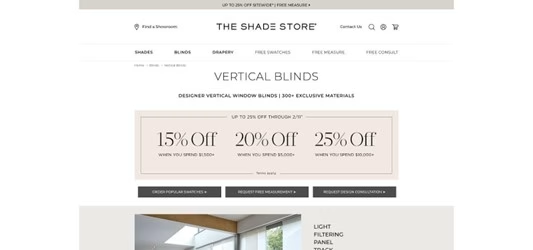
Production happens stateside in about ten days, so custom work never drags. Installation is optional: take the DIY route if you love a weekend project, or book their crew for white-glove service.
Expect to spend $1,200 to $1,500 for an eight-foot slider once you factor in premium fabric and professional install. The payoff is a treatment that looks designer-commissioned and works like a daily workhorse.
4. Bali DIY vertical blinds (Home Depot) – best budget fix
Sometimes you need your windows covered by Saturday night. Bali’s boxed kits solve that hurry; grab a set on your lunch break, toss it in a cab, and you are halfway to privacy before dinner.
Each kit includes a metal headrail, mounting brackets, and embossed PVC vanes in renter-friendly whites and creams. Home Depot trims the rail on the spot, so even a 73-inch width leaves the store ready to hang.
Installation is straightforward. Screw two brackets into the frame, snap in the rail, hook the vanes, and twist the wand. In less than an hour you gain glare control for about $60.
This option will not pass for designer work. The vinyl can sway when a summer breeze drifts through, and color choices remain basic. Yet for less than $100, Bali delivers the fastest, cheapest route to darkness and landlord-approved neutrality.
5. Levolor custom vertical blinds (Lowe’s) – best mid-range upgrade
Levolor sits squarely between box-store basic and boutique bespoke. Walk into Lowe’s, enter your measurements at the kiosk, and within two weeks a made-to-size blind arrives at your door, no trimming or guesswork required.
Vinyl vanes come in dozens of colors, and the S-curve option closes like a zipper for tighter light control. Hardware feels noticeably sturdier than budget lines, so tracks glide smoothly after years of daily pulls.
Expect to spend $200 to $300 for a six-foot slider. The price signals quality without shocking your card. If you want custom fit without luxury premiums, Levolor delivers.
6. Blinds.com custom vertical blinds – best online DIY value
Measure your window, grab a drill, and Blinds.com rewards you with custom sizing at online-sale prices. Enter width, height, stack direction, and vane style, and watch the price drop during one of the frequent 40-percent-off promotions.
Free swatches arrive in two days, production wraps in about two weeks, and the box lands in your lobby with hardware, instructions, and a no-questions SureFit guarantee if your tape measure was off. That safety net makes DIY feel less risky.
Plan on about $150 for a seven-foot patio door, about half the cost of showroom custom. You supply the elbow grease, but the result is a snug, polished blind that leaves budget for dinner.
7. Vertical cellular shades – best for insulation and blackout
Turn a drafty glass wall into a thermal quilt. Vertical cellular shades rotate the honeycomb design of pleated blinds on its side, so an accordion of air pockets slides across your patio door.
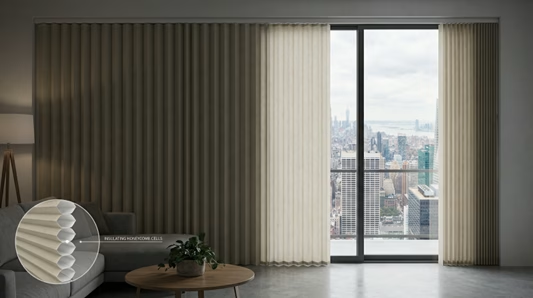
Those chambers trap heat in January and block it in August, trimming utility bills while the rest of the building cranks the HVAC. Choose blackout fabric and you erase the halo of city lights that seeps through standard slats.
Operation is simple. A single handle glides the shade along a top rail with no bottom track to trip over. Stack it to one side for a full skyline view; pull it closed for theater darkness.
Quality and comfort carry a price. Expect about $800 for a large slider through a Hunter Douglas or Bali dealer, an investment that can pay back through lower ConEd bills and deeper sleep.
If your windows act like space heaters in winter and floodlights at night, vertical cellular shades provide the strongest one-two punch of insulation and blackout in this guide.
8. Wood and faux-wood vertical blinds – best for classic warmth
Swap sterile vinyl for real grain and the room’s vibe shifts instantly. Wood vertical blinds carry the richness of hardwood floors up onto your windows, framing city views with maple, walnut, or a crisp painted white.
Heft is the hidden perk. Heavier vanes hang straighter, sway less in a draft, and muffle the click-clack you hear from thin PVC. A UV-protective finish keeps color true during steamy August and bone-dry February.
Pricing reaches four figures for genuine basswood on a large slider, while faux-wood composites deliver a similar look for about half and shrug off moisture even better.
For a brownstone library, a pre-war dining nook, or any space craving texture, wood verticals add elegance without sacrificing tilt-to-peek practicality.
9. 3 Day Blinds – best rapid installation
Move in on Monday, host friends by Friday. That timeline is 3 Day Blinds’ promise, and in New York speed matters.
A design consultant arrives within 48 hours, samples in hand. Measurements take place on the spot, orders go straight to the company factory, and installers return a few days later, often before your first IKEA box shows up.
Material choices cover the basics: solid PVC, textured fabrics, and sheer overlay verticals for a softer look. You trade a few exotic options for speed, yet the hardware feels solid and Somfy motorization is still available.
Pricing lands slightly above average. You are paying for the fast lane, but closing bare windows in record time is worth the premium.
10. Somfy motorized vertical blinds – best smart-home add-on
Hands full of groceries? Tell Alexa to open the blinds. Somfy motors slip into most vertical systems; a compact, whisper-quiet unit sits inside the headrail and turns or slides the vanes at your command by remote, phone, or voice.
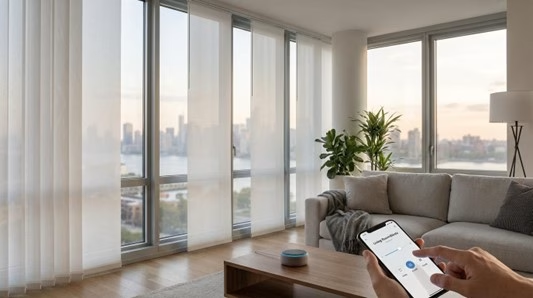
Automation is more than a novelty. Schedule blinds to close during peak afternoon sun, cut AC costs, and reopen at dusk for a skyline view. Sync multiple windows so an entire wall moves together, ideal for lofty living rooms wrapped in glass.
Power options suit renters and owners alike. Plug-in adapters work when an outlet sits high, while rechargeable packs hide wires and run six to twelve months on a charge. Budget an extra $300 to $500 per window plus about $150 for the Wi-Fi bridge that links everything to your smart speaker.
Installation is straightforward for pros and confident DIYers, and the daily convenience shows every time you reach for a switch and remember you no longer need one. If you already talk to your thermostat, adding Somfy to your blinds feels like the next natural step.
Quick comparison at a glance
Choosing between ten solid options can feel like speed dating for window treatments. To help you compare strengths and trade-offs quickly, we lined up the essentials below.
| Option | Best for | Price band | Materials | Install | Smart tech |
| The Blinds Source | Full-service ease | $$ | Vinyl, fabric, wood | Pro | Upgrade |
| Hunter Douglas Cadence | Luxury look | $$ | Designer fabrics | Pro | Yes |
| The Shade Store | Unlimited fabrics | $$ | 300+ textiles | DIY / Pro | Yes |
| Bali @ Home Depot | Fast budget fix | $ | PVC | DIY | No |
| Levolor @ Lowe’s | Mid-range custom | $ | Vinyl, fabric | DIY / Pro | Some |
| Blinds.com | Online DIY value | $ | PVC, fabric | DIY | Add-on |
| Vertical cellular shade | Insulation and blackout | $$ | Honeycomb fabric | DIY / Pro | Some |
| Wood / faux-wood | Classic warmth | $$ | Real or faux wood | Pro | Limited |
| 3 Day Blinds | Rapid install | $$ | PVC, fabric | Pro | Yes |
| Somfy motorization | Smart-home boost | +$ | Works with many | DIY / Pro | N/A |
($ = least expensive; $$ = premium)
FAQs about vertical blinds in NYC apartments
Next, we’ll tackle the biggest questions New Yorkers ask before drilling a single hole.
Conclusion
Scan the grid, match it to your top pain point, and you’re halfway to calmer, darker evenings.