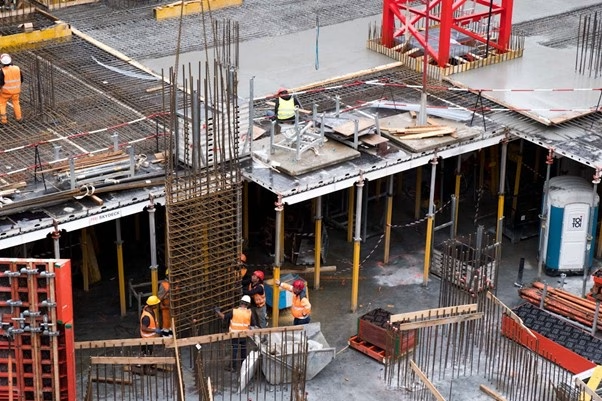
If you’ve ever set foot on a construction site, you know it’s basically organized chaos. You’ve got heavy machinery everywhere, tight deadlines breathing down your neck, and a million moving parts to keep track of. In this industry, time is literally money. Any delay burns a hole in the budget.
For a long time, we just accepted the headaches as part of the job. But things are finally changing. The industry is waking up, and we’re seeing a massive wave of new tech hitting the market. It’s not about replacing the crew with robots. It is about giving the workers on the ground the tools they need to get the job done faster, easier, and most importantly, without getting hurt. Here is a look at what’s actually moving the needle on sites today.
Stopping the “Hurry Up and Wait”
Nothing kills site momentum faster than a broken machine. You’ve got a crew standing around drinking coffee while a mechanic tries to revive a dead excavator. It’s infuriating, and it costs a fortune.
A successful build lives and dies by the reliability of its gear. You can’t afford to fight your own equipment. That’s why a lot of project managers are leaning heavily on specialized partners to keep things running. For example, bringing in Atlas Copco ITBA for engineered solutions takes a lot of the guesswork out of complex tasks. They build systems specifically designed to handle the abuse of a job site without constantly breaking down. When the tools do what they’re supposed to do, the crew can just put their heads down and build.
Swapping Mud for Drones
Remember when surveying a new site meant a team trekking through mud, brush, and uneven terrain for weeks? It was slow, tedious, and pretty difficult if the ground was unstable.
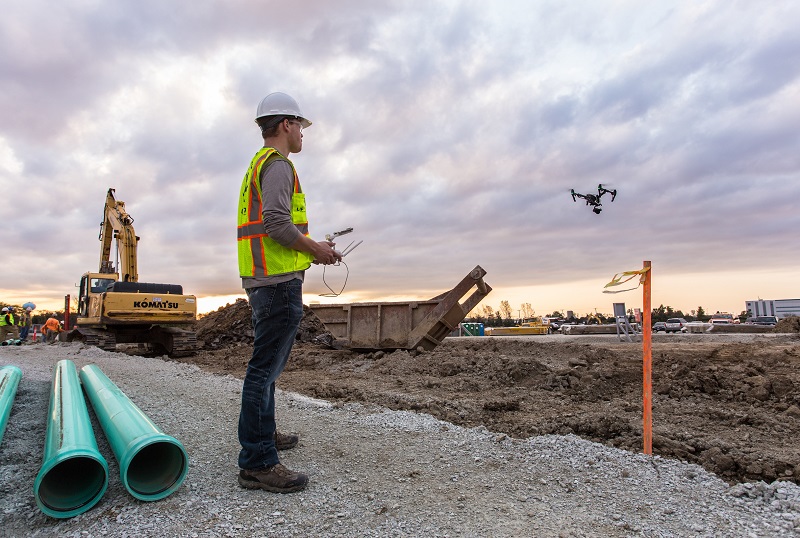
Drones have completely flipped the script. Now, you can just zip a drone up into the sky, let it fly its grid, and have a hyper-accurate, 3D topographical map on your tablet by lunch. It’s basically a cheat code for the planning phase. Project managers can spot drainage issues or elevation drops before a single shovel hits the dirt. Plus, it keeps the crew out of hazardous areas right from day one.
Gear That Actually Watches Your Back
Hard hats, steel-toe boots, and high-vis vests are standard. But they only help after things go wrong. The new wave of safety gear is all about stopping accidents before they happen.
We’re talking about wearable tech that actively watches your back. There are smart vests now with proximity sensors. If a worker gets stuck in the blind spot of a backing bulldozer, the vest vibrates and sets off an alarm. It’s a literal lifesaver.
On top of that, heat exhaustion and fatigue are massive problems during the summer months. Tired workers make mistakes. Some of the newer wearables track vital signs, letting a site manager know if someone’s heart rate is spiking or if they’re overheating. Instead of waiting for a worker to pass out, you can just tap them on the shoulder and tell them to go take a break in the shade.
At the end of the day, construction is always going to be tough, physical work. You can’t digitize pouring concrete or framing a building. But bringing this kind of tech onto the site just makes sense. It cuts out the frustrating bottlenecks, keeps the schedule on track, and makes sure everyone gets to go home to their families when the shift is over.