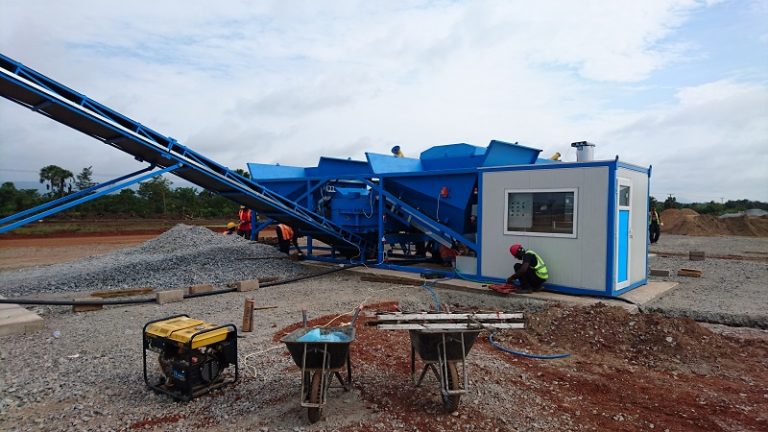
Construction consistently ranks among the industries with the highest rates of OSHA violations. In 2023, HazCom-related citations appeared in OSHA’s top ten most frequently cited standards for the eleventh consecutive year, with penalties reaching up to $15,625 per violation and $156,259 for wilful or repeated infractions.
The reason is not indifference. It is complex. A single commercial construction project can involve dozens of chemical products, including adhesives, solvents, concrete treatments, coatings, cleaning agents, and welding materials, cycling on and off site as trades move through. Keeping accurate, accessible safety documentation for all of them is a genuine operational challenge, and most sites are still trying to solve it with a paper binder.
Why Chemical Safety Is a Bigger Problem on Construction Sites
Unlike a fixed manufacturing facility with a stable chemical inventory, a construction site is a moving environment. The chemicals present on Monday may be different from those on Friday. Multiple subcontractors, each with their own chemical products and their own documentation, are working in the same space, often without a unified safety system.
This creates three specific problems. First, no single person has visibility into every chemical on site at any given time. Second, workers from one subcontractor may be exposed to chemicals brought in by another without knowing the hazards. Third, paper SDS binders are physically fixed to one location, may not be current, and are inaccessible to workers the moment they are needed most.
When a worker on the third floor needs to check the first aid procedure for a solvent exposure, a binder in the site office is not a practical resource.
What OSHA HazCom Requires from Construction Companies
OSHA’s Hazard Communication Standard (HazCom 2012, 29 CFR 1910.1200) applies to any employer whose workers may be exposed to hazardous chemicals. For construction, the core requirements are straightforward.
Every hazardous chemical on site must have a current Safety Data Sheet, and those SDSs must be accessible to workers at all times during their shift. Workers must receive training on how to read and use SDSs, understand chemical hazards, and interpret GHS labels before they work with or near hazardous substances. All chemical containers must be properly labelled with the product name, hazard pictograms, signal word, and supplier information.
Penalties for serious violations start at $1,000 and scale to $15,625 per citation. Wilful violations, where the employer knew about the hazard and did nothing, can reach $156,259 per instance. Beyond the financial risk, non-compliance leaves workers without the information they need to protect themselves.
How Digital SDS Management Solves the Problem
Cloud-based sds management software replaces the static paper binder with a centralised, searchable library accessible from any device on site. Every SDS in the system is tied to the current manufacturer version, with automatic flagging when a revision is issued. When a
supplier updates a formulation, the platform reflects it with no manual replacement required.
For construction specifically, QR code posters placed at chemical storage areas allow any worker to pull up the relevant SDS instantly on a smartphone, without going to the site office or locating a binder. Multi-site library management means a company running several projects simultaneously can maintain one standardised chemical inventory across all locations, with site-specific access for each team.
Before a chemical arrives on site, procurement and HSE managers can search for an online sds to review its hazard profile, confirm PPE requirements, and assess compatibility with chemicals already in use. This upstream check is one of the most practical ways to prevent exposure incidents before they occur.
Practical Tips for Construction HSE Managers
Centralise your SDS library before the project starts. Build the chemical inventory at the procurement stage, not after chemicals are already on site. Every product specified in the project should have a verified, current SDS loaded into the system before work begins.
Assign a compliance lead per site. One person should be responsible for maintaining the SDS library, onboarding subcontractor chemicals, and ensuring documentation stays current. On larger projects this may be a dedicated role. On smaller sites it is typically the site HSE officer.
Place QR code posters at every chemical storage area. Workers should be able to access the relevant SDS from the exact location where they are handling the chemical. A QR code linked to the digital library eliminates the need to leave the work area.
Train subcontractors on access procedures. Every subcontractor bringing chemicals onto site should know how to access the SDS system and understand that their products must be registered in the site library before use. Include this in the site induction process.
Audit your chemical inventory monthly. Chemical inventories change as trades progress through a project. A monthly audit confirms that all chemicals currently on site have current SDSs, that discontinued products have been removed, and that any new products have been properly documented.
The Cost of Getting This Wrong
An OSHA inspection on an active construction site is not a theoretical risk. HazCom violations are among the most common citations in the construction industry, and the financial consequences are significant. More importantly, a worker who cannot access accurate SDS information during a chemical exposure incident faces real physical harm.
The gap between a compliant chemical safety programme and a non-compliant one is largely a documentation and access problem. Paper systems cannot keep pace with a construction project. Digital chemical compliance software, centralised, searchable, and accessible from anywhere on site, is the practical answer for HSE managers who need to protect workers and maintain compliance across complex, multi-contractor environments.
If your current SDS process relies on a binder, now is the time to evaluate what a digital system would look like for your operations.