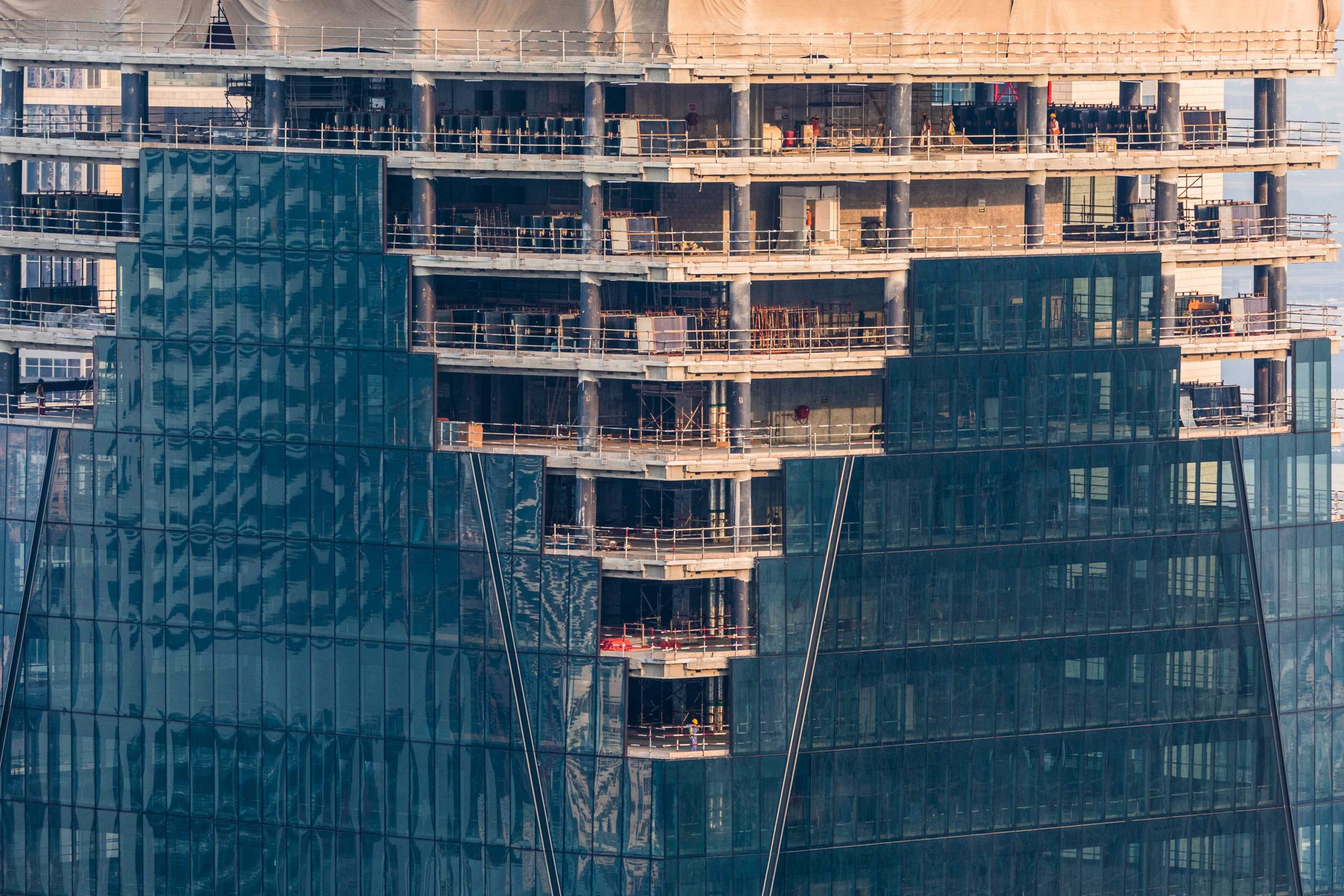
Large construction projects come with complex HVAC demands that go far beyond basic heating and cooling. Between massive structural loads, long-term energy goals, and the need for systems that stay reliable over decades, choosing the right solution becomes a foundational part of the entire build, not just a mechanical decision.
Choosing the Right Commercial HVAC System for Large Projects
Large-scale projects require a commercial HVAC system that can handle significant thermal loads, varying occupancy levels, and diverse space types under one roof. Beyond the technical demands, these projects introduce organizational, financial, and operational challenges that shape every design decision. Mechanical layouts for any HVAC system for large buildings must coordinate with structural and architectural elements, long duct runs and pressure differentials must be managed, and equipment size and weight often determine both mechanical room placement and rooftop design. The installation schedule has to align with structural milestones, inspection cycles, crane availability, electrical rough-in, and utility access; if any of these components fall out of sync, the entire timeline can slip.
Because massive concrete and steel structures hold and release heat slowly, designers must navigate thermal inertia rather than relying solely on occupancy loads. At the same time, HVAC for commercial buildings requires intensive commissioning, system balancing, BAS calibration, functional performance testing, and third-party verification, which directly influences equipment selection and final system configuration. Fire and life-safety considerations add another layer of interdependence, as stairwell pressurization, smoke evacuation strategies, and compartmentalization narrow the range of viable system types. Local power capacity, peak demand charges, and utility incentives may also force changes in system tonnage, staging, or even the overall approach for large commercial HVAC installations.
Together, these factors create a design environment where the commercial HVAC system must operate in harmony with construction sequencing, operational requirements, and regulatory compliance, not just the building envelope.
Types of HVAC Systems for Large Buildings
Variable Air Volume (VAV) systems use a central air supply with adjustable airflow to individual zones, making them well suited for buildings with fluctuating occupancy and strong temperature-control requirements. Variable Refrigerant Flow (VRF) systems take a more decentralized approach, using refrigerant-based distribution to give each zone independent control, an advantage in mixed-use buildings or those with limited duct space. Chilled water systems rely on a central chiller plant that delivers chilled water to air handlers or fan coils, offering high efficiency for HVAC for commercial buildings, especially in large campuses, hospitals, and high-rises; in multi-building properties, they can also support district-level strategies such as thermal storage or heat-recovery chillers.
Rooftop units (RTUs) and packaged systems consolidate equipment into self-contained units, typically placed on roofs or used where mechanical room space is limited. They provide straightforward installation and easy access for maintenance, which is why they’re common in large commercial HVAC applications for retail and industrial facilities. Each of these system types differs in zoning flexibility, energy performance, installation complexity, and long-term scalability, shaping how a HVAC system for large buildings must be configured.
Hybrid configurations are becoming increasingly important. VRF paired with a DOAS separates ventilation from temperature control so the VRF system can operate at peak efficiency while still maintaining ventilation standards. Hydronic heat pump systems extend this flexibility by enabling “heat shuffling” between zones, using internal loads to reduce overall energy demand, an essential capability in modern commercial HVAC system design. Geothermal or geo-exchange systems further enhance efficiency while offering grid resiliency and protection from future refrigerant phaseouts.
Across all options, the meaningful distinctions aren’t simply airflow versus refrigerant distribution; they lie in each system’s energy ecosystem potential, readiness for electrification, and ability to support a building’s adaptability over the next 30 years.
Factors to Consider When Choosing Commercial HVAC Services
Key considerations include load demands, energy-efficiency ratings, ease of maintenance, and the level of redundancy needed for mission-critical operations. Equipment selection must also align with local code requirements, ventilation needs, and compatibility with the building automation system, while total lifecycle cost, not just the upfront price, should guide the final decision for any commercial HVAC systems. Contractor selection follows the same logic: their experience with similar building types, ability to support advanced controls, and responsiveness to service needs directly affect long-term performance of HVAC for commercial buildings.
These decisions are also shaped by broader risks. Technology stability matters, especially as refrigerant regulations continue to evolve, because a system that becomes obsolete too quickly undermines the investment. Custom equipment strategies for large commercial HVAC installations must integrate with analytics platforms so operations teams can identify issues proactively rather than relying solely on a BAS. Some system types require specialized operator skills or service contracts, and that expertise may not exist locally, which can affect uptime. Supply-chain resilience plays a role as well; long lead times for compressors or control boards can shut down critical zones, while manufacturers with strong domestic distribution reduce that vulnerability. Warranty structures and service-level agreements become just as important as the technical specifications in HVAC system for large buildings design.
Ultimately, the right HVAC system is more than a mechanical selection, it’s a business-continuity decision.
Matching a Commercial HVAC System to Building Size and Use
Larger buildings typically rely on centralized systems with staged or modular capacity to handle high volumes and fluctuating demand, while complex layouts require intelligent zoning to maintain even airflow, prevent hot and cold spots, and preserve pressure balance. The building’s intended use shapes these decisions: healthcare facilities depend on strict humidity and filtration control, data centers require precise temperature stability, retail spaces need rapid recovery after door openings, and warehouses prioritize ventilation over tight temperature regulation. For any commercial HVAC system, the building’s function sets the performance thresholds the system must meet.
That performance is further shaped by space programming, since labs, commercial kitchens, and assembly areas each carry distinct ventilation codes that drive system design. High-rise structures must also account for the heat generated by elevators and escalators, and mixed occupancy, conference centers, retail areas, and office floors within the same building, requires distinct control strategies rather than simply separate zones. Large buildings operate as ecosystems of micro-environments, and every HVAC system for large buildings must reflect that complexity.
Energy and Cost Considerations for Large Commercial HVAC
Energy-efficient HVAC systems directly influence operational expenses and can reshape annual budgets for large facilities. For buildings with sustainability targets, options such as heat-recovery systems, low-GWP refrigerants, or electrified solutions like heat pumps support both performance and long-term cost control, especially in large commercial HVAC applications. The true financial picture lies in lifecycle factors, energy use, maintenance needs, repair frequency, and equipment lifespan, factors that often outweigh the initial purchase price. High-efficiency chillers, variable-speed drives, and smart controls help stabilize long-term operating costs while advancing sustainability goals for HVAC for commercial buildings.
These financial and sustainability pressures extend beyond equipment selection. Many large buildings pay more for peak demand than total energy consumption, so systems that flatten load curves, such as thermal storage or staged chillers, deliver meaningful long-term savings. Cities are also moving toward electrification, and commercial HVAC system designs that aren’t prepared for this shift may require expensive retrofits within a decade. Newer developments increasingly consider embodied carbon as well, evaluating not just operational emissions but the carbon footprint of the equipment itself.
Sustainability is no longer an optional feature, it’s a regulatory and financial strategy.
Air Quality and Ventilation Needs in an HVAC System for Large Buildings
Ventilation requirements shape system sizing, duct layout, and outdoor air intake strategy, while indoor air quality goals influence filter ratings, humidity-control equipment, and airflow patterns throughout the building. Comfort standards, defined by temperature consistency, noise levels, and air movement, guide diffuser selection, zoning strategy, and overall system choice for any HVAC system for large buildings.
In large facilities, these needs often require advanced modeling to predict how particles, odors, and pollutants move through the space, especially in areas with unique internal conditions. Tall atriums, trading floors, gyms, and labs can create microclimates that demand targeted ventilation engineering. Because IAQ now influences leasing decisions, many corporate tenants specify ventilation and filtration thresholds directly in their HVAC for commercial buildings requirements.
Ventilation and indoor air quality have become economic drivers, not just code obligations.
Installation and Maintenance Planning for HVAC for Commercial Buildings
Early planning must account for how large equipment will be transported, lifted, and installed, especially in dense urban settings or on tall structures, while mechanical rooms and access paths must be sized not only for initial placement but also for future service, component removal, and equipment replacement. Maintenance expectations play a central role: centralized plants may streamline service but require highly skilled technicians, whereas decentralized systems distribute maintenance responsibilities across many units. These considerations are especially important for large commercial HVAC installations expected to operate continuously for decades.
Because replacement decades later is inevitable, buildings must be engineered with clear pathways for disassembly, ensuring walls, shafts, and access routes can accommodate that work. Mechanical room planning must also allow space for larger or additional equipment, such as expanded chiller capacity or added heat pumps, to avoid structural modifications down the line. Digital tools, predictive sensors, vibration monitoring, and fault-detection algorithms, now influence equipment selection for any commercial HVAC system.
Good HVAC planning anticipates not only the first installation, but the one that comes decades after it.
Design Coordination for a Successful Commercial HVAC System
Collaboration should begin in the earliest design phases, ideally before architectural plans are finalized, because HVAC requirements influence structural loading, shaft locations, ceiling heights, and electrical capacity. Early coordination ensures that duct routes, mechanical rooms, and piping layouts fit naturally within the building framework, while continued alignment between engineers and contractors helps guarantee that a commercial HVAC system performs as intended.
This coordination starts even earlier, at site selection, where soil conditions, utility availability, and municipal regulations shape HVAC viability before any drawings exist. As structural engineering progresses, column spacing, slab thickness, and penetration limits must align with duct paths and equipment weight. Long equipment lead times, often 30-60 weeks, require procurement planning well ahead of construction sequencing. Commissioning, controls integration, system balancing, and performance testing should drive design decisions for HVAC for commercial buildings, not be addressed only at the end.
True collaboration starts before design and continues through occupancy.
Avoiding Common Mistakes in Selecting Large Commercial HVAC
Common pitfalls in large-building HVAC design often stem from shortcuts or late-stage decisions. Sizing equipment based on rules of thumb rather than detailed load calculations, choosing systems without considering long-term operational costs, and overlooking ventilation or humidity requirements all lead to performance issues in large commercial HVAC installations. Poor equipment placement can limit maintenance access, and delaying HVAC coordination creates conflicts that are costly to resolve. Many problems also arise from failing to anticipate how a building’s use may change over time; systems designed narrowly for present conditions struggle to adapt, especially in complex HVAC system for large buildings environments.
Additional risks come from designing only to today’s codes while ignoring upcoming changes, particularly as electrification and ventilation standards continue to tighten. Real buildings rarely operate exactly as modeled, so ignoring occupant behavior patterns undermines comfort and efficiency. Relying on the BAS to “fix” design flaws rarely works; controls cannot overcome poor equipment selection or a flawed duct layout. Long-term planning must also account for decarbonization timelines for HVAC for commercial buildings, because equipment acceptable today may face regulatory phaseouts within a decade. When mechanical, electrical, structural, and architectural decisions are made in silos, these issues compound.
Avoiding these pitfalls requires precise calculations, early stakeholder involvement, lifecycle cost analysis, and a whole-building perspective that looks far beyond mechanical systems alone.