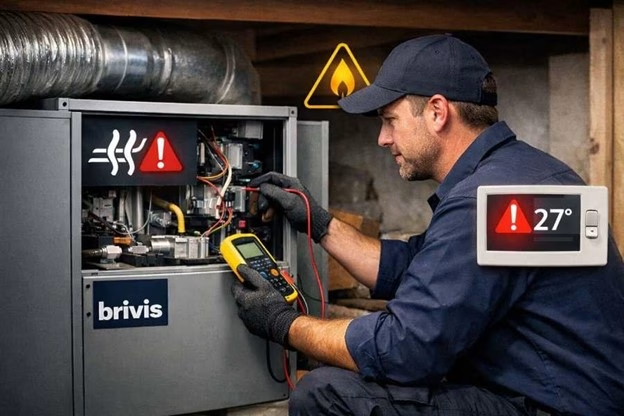
Brivis heaters have become a favored option for residences in Melbourne. However, as with any heating unit, they may encounter problems as time goes on typically when you rely on them the most. Common issues include ignition failures, inconsistent heat distribution, airflow obstacles, and thermostat malfunctions, all of which can affect warmth, safety, and energy efficiency.
This article outlines the frequent challenges faced with Brivis heaters and illustrates how skilled technicians in Melbourne efficiently identify and resolve these problems.
What Melbourne homeowners can check first on a Brivis heater: filters, controller modes, and gas supply
Before scheduling a repair for your Brivis unit, consider performing some simple checks that could help improve its performance and eliminate the need for a service visit. These suggestions are relevant for Brivis ducted heating, combined heating and cooling systems, evaporative coolers, and split systems.
- Verify filters and return air pathways: A clogged return grille or filthy filter can impede airflow, leading to weak heating, frequent cycling, or safety shutdowns in a Brivis heater.
- Types of return grilles and filters: Brivis systems might utilize panel filters or filter grilles. A certified Brivis technician can identify the appropriate filter size and MERV rating for your unit.
- Review controller settings, gas, and power essentials: Make sure the controller is set to the Heating mode, the temperature exceeds the current room temperature, the fan is on Auto, schedules are not interfering, and that both gas and power supplies are functioning.
- Inspect the gas meter and isolation valve: If there’s no gas odor, ensure that the meter and isolation valve for the appliance are open, as low gas pressure can hinder ignition and needs to be assessed by a professional.
For fast help, see Brivis Repair Melbourne.
No heat or weak airflow: how Melbourne technicians diagnose ducts, blowers, and thermostats on Brivis systems
Duct leaks and airflow balancing
Technicians inspect for crushed flex, disconnected plenums, and return leaks that dilute warm air. Static pressure tests and thermal imaging help pinpoint losses in Brivis ducted heating runs. Sealing, balancing, and, if needed, ducted heater repair or ducted heater replacement of damaged sections restore design airflow.
Sealing, insulation, and zoning
- Seal joints with mastic and insulate runs in roof spaces.
- Fix faulty zone dampers so heat reaches all rooms.
These steps are a common part of Brivis service and ongoing heating maintenance Melbourne plans.
Blower, motor, and thermostat diagnostics
A weak or noisy fan suggests a failing ECM motor, worn bearings, or a dirty wheel. Pros test capacitors, motor windings, and controller/thermostat communication. They also verify the high-limit and rollout switches. If components are beyond repair, targeted Brivis parts replacement and, in older units, Brivis replacement may be recommended.
Ignition and pilot problems on Brivis units: cleaning flame sensors, replacing igniters, and decoding error codes
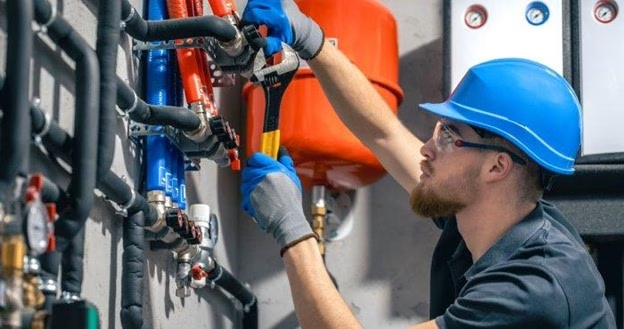
Flame sensors, igniters, and decoding Brivis error codes
Experienced technicians clean flame sensors with non-abrasive pads, check microamp signal strength, and ensure proper burner grounding. They measure igniter resistance and replace brittle or open-circuit igniters. Controllers that lock out often store fault histories; decoding these error codes expedites Brivis troubleshooting and avoids unnecessary Brivis parts replacement.
Safe cleaning procedure
- Isolate power and gas.
- Remove and clean the sensor; re-seat with correct alignment.
- Verify flame carryover across burners and correct manifold pressure as part of comprehensive Brivis maintenance.
Typical Brivis fault codes to note
While models vary, repeated ignition retries, flame failure, or high-limit trips are common. A licensed Brivis repairer will interpret codes, differentiate true flame loss from sensing issues, and advise on Brivis repair versus Brivis replacement where appropriate.
Short-cycling, overheating, or loud operation: the Brivis limit switch, motor, and duct fixes Melbourne pros use
Limit switch, motors, and duct fixes for short-cycling and noise
- Short-cycling: Techs verify correct gas rate, clean blocked return paths, and recalibrate or replace a faulty limit switch. They’ll also inspect undersized ducts that spike static pressure, an overlooked cause in many gas ducted heating repair cases.
- Overheating: Removing lint from heat exchangers, restoring airflow, and correcting burner pressure often resolves repeated high-limit trips.
- Loud operation: Balancing dampers, re-hanging drooping ducts, and replacing worn motor mounts or bearings reduce boom, rattle, and whine. If blower assemblies are aged, ducted heater replacement of the fan module may be more economical than piecemeal fixes.
Where breakdowns occur after-hours, many providers offer emergency Brivis repair across heating and cooling Melbourne suburbs. This support extends to commercial HVAC Melbourne and residential heating service clients alike.