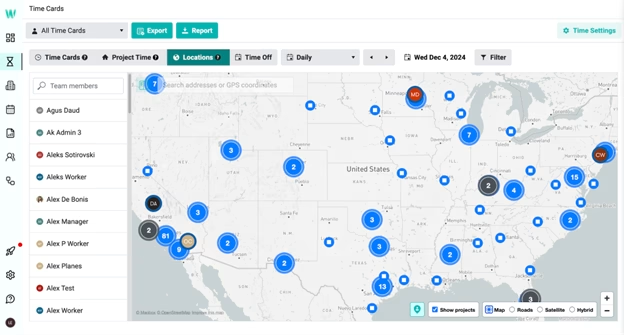
Research shows that the burden of labor costs for US construction companies ranges from 33.6% for SMBs to 52.9% for larger businesses. This already heavy cost can grow even more when labor hours are not properly documented, especially when you have multiple teams working across multiple sites.
GPS time tracking is therefore a must-have for construction crews in the US. It keeps time records straight, payroll accurate, and profitability high.
This guide ranks the top construction GPS tracking apps based on features, pricing, pros and cons, and use cases:
- Workyard
- Buddy Punch
- busybusy
- ClockShark
- Timeero
- ExakTime
- Jibble
Let’s jump in.
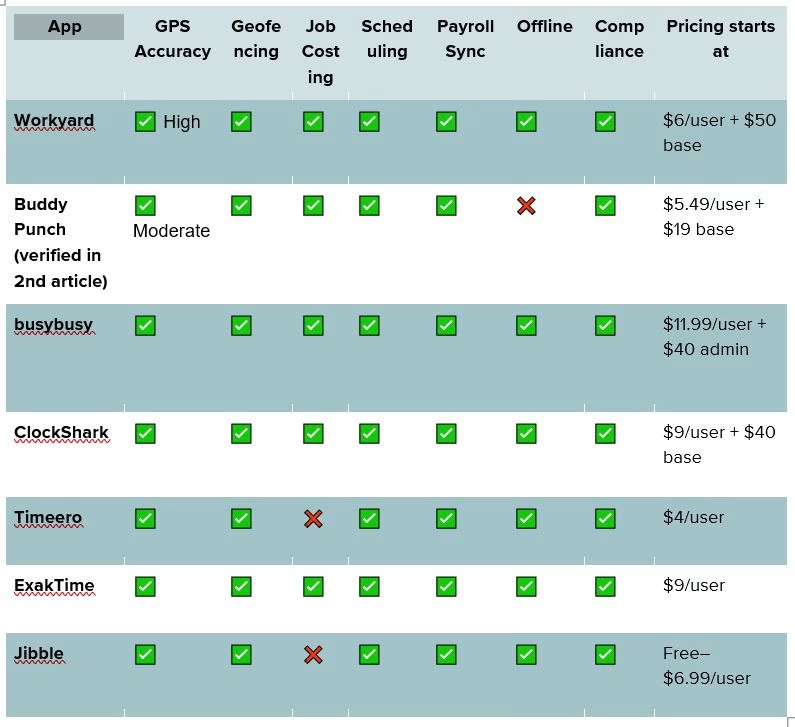
GPS Time Tracking Apps for Construction Crews at a Glance
How We Chose These Apps
We evaluated each app based on the following features.
- GPS accuracy & background tracking – Accurate location data ensures time entries are linked to the right job sites, while background tracking keeps records precise even when the app isn’t actively open.
- Real-time job costing & reporting – Up-to-date cost insights enable managers to control budgets and intervene before labor costs get out of control.
- Scheduling & field supervision tools – Integrated scheduling cuts down on idle time while supervision features like live maps improve oversight to boost productivity.
- Payroll and accounting integrations – Seamless integration with payroll and accounting systems reduces manual data entry, minimizing errors and speeding up payment cycles.
- Offline reliability – Many construction sites have poor connectivity, so apps must function fully offline to capture data without disruption.
- Compliance and audit readiness – Apps need features that support regulatory compliance and generate audit-ready reports to protect contractors from disputes or penalties.
- Scalability for crews and subcontractors – Solutions ideally should accommodate growing teams and multiple subcontractors to support contractors’ expanding operations and project complexity.
#1 Workyard: The Most Accurate GPS Time Clock for Construction Crews
Workyard tops the list because its GPS time tracking tool was made by construction people for construction people. So the product is built around the real problems crews and contractors deal with every day: missed job switches, guessed hours, payroll disputes, and unclear labor costs. Workyard captures exact entry and exit timestamps with real-time GPS, supports task-level job costing, and applies construction pay rules automatically, giving crews a simple app to use in the field and giving the office accurate hours they can rely on.accurate GPS time tracking and an easy-to-use mobile app praised by field users.
What are Workyard’s key features?
- Real-time GPS timestamps for exact entry/exit at each jobsite
- Job and task-level cost coding with automatic switch prompts
- Scheduling with crew assignments and job locations
- Timesheet issue flags for missed switches or incomplete entries
- Automatic overtime and state-based pay rule calculations
- Offline time and GPS tracking for low-signal sites
- Payroll integrations (QuickBooks Online/Desktop, ADP, Gusto, Sage)
- Photo ID verification and kiosk mode for shared devices
How much does Workyard cost?
- Free Trial: 14 days (no credit card required)
- Starter: $6/user/month + $50 base
- Pro: $13/user/month + $50 base
Learn more about Workyard’s GPS time clock app
What are the pros and cons of Workyard?
Pros:
- Accurate real-time GPS
- Easy mobile app for crews
- English + Spanish support
- Automatic overtime rules
- Reliable payroll integrations
Cons:
- Field crews may need in-depth onboarding to address privacy concerns about GPS tracking
- Higher-tier plan slightly costlier than generic trackers
What is Workyard best for?
Multi-site contractors, subcontractors, prevailing wage, and time & materials (T&M) projects.
#2 Buddy Punch: Flexible and Compliance-Friendly
Buddy Punch is a time tracking platform built for small and mid-sized businesses that need detailed control over attendance and wage data. Its core app focuses on time tracking, scheduling, and PTO, with optional payroll tools available as a separate add-on.
What are Buddy Punch’s Features?
- Multiple clock-in methods: PIN, QR code, password, or facial recognition
- Customizable overtime and break rules
- Built-in PTO, sick leave, and vacation tracking
- Drag-and-drop employee scheduling
- Payroll integrations (QuickBooks, Paychex, etc.)
How much does Buddy Punch cost?
- Free Trial: 14 days
- Starter: $5.49/user/month + $19 base
- Pro: $6.99/user/month + $19 base
- Enterprise: $11.99/user/month + $19 base
Pros and Cons
Pros:
- Highly configurable compliance rules
- Multiple secure clock-in options
- Built-in scheduling tools
Cons:
- No true offline mode
- Optimized for smaller organizations
- Mobile app occasionally has connectivity issues
What is Buddy Punch best for?
Small construction firms or subcontractors focused on wage compliance and simple scheduling.
3) busybusy: Equipment Management
busybusy stands out for offering both crew GPS tracking and equipment management, a rare combination in time clock apps. It’s well-suited for construction companies managing heavy machinery or vehicles across sites.
What are busybusy’s features?
- Geofenced onsite-only clock-in
- GPS breadcrumb tracking for workers & equipment
- Offline mode with automatic sync
- Photo & note logs with timestamps
- Custom project and cost code fields
How much does busybusy cost?
- Free Trial: 14 days (Pro)
- Pro: $11.99/user/month + $40 admin license
- Premium: $17.99/user/month + $40 admin license
Pros and Cons
Pros:
- Excellent customer support
- Built-in safety and injury reporting
- Built-in equipment management
Cons:
- Requires admin license fee
- Occasional sync lag in mobile app
- Geofence bypass if project code missing
What is busybusy best for?
Heavy equipment contractors and demolition/excavation firms needing GPS tracking for both people and machinery.
#4 ClockShark: For Franchises and Field Services
ClockShark is a mature GPS time clock app popular among contractors and field service providers. It offers GPS and geofencing, a built-in CRM, and invoicing features for small businesses.
What are ClockShark’s features?
- GPS time clock with geofencing
- Mobile, web, and kiosk tracking
- Facial recognition on kiosk mode
- Job and customer management
- Built-in quoting, invoicing, and payments
How much does ClockShark cost?
- Free Trial: 14 days
- Standard: $9/user/month + $40 base
- Pro: $11/user/month + $60 base
Pros and Cons
Pros:
- Built-in payments and invoicing
- Kiosk mode for large worksites
- Suitable for franchises with distributed crews
Cons:
- Some users report GPS accuracy issues after updates
- Limited clock-in/out rule customization
- Connectivity bugs on mobile
What is ClockShark best for?
Small contractors, service franchises, and construction firms that invoice customers directly.
#5 Timeero: Simple GPS Time Tracking with EVV Compliance
Timeero is a general-purpose GPS time tracking solution that works well for blue-collar teams. It’s especially known for its Electronic Visit Verification (EVV) compliance feature, useful for healthcare and field service industries.
What are Timeero’s features?
- GPS + mileage tracking
- Time-off management
- Real-time scheduling with maps
- EVV compliance tools
- Facial recognition clock-ins
How much does Timeero cost?
- Free Trial: 14 days
- Basic: $4/user/month
- Premium: $8/user/month
- Pro: $11/user/month
- Enterprise: Must contact sales
Pros and Cons
Pros:
- Simple and affordable
- Great support team
- Good features for remote field services
Cons:
- Not built primarily for construction
- Less construction-centric features like detailed construction job costing
- Occasional mobile bugs
What is Timeero best for?
Small field teams or mixed industries needing reliable GPS tracking without construction-specific costing.
#6 ExakTime: Optimized for Large Construction Crews
ExakTime focuses on large-scale workforce management with an intuitive interface built for crews and foremen. It is part of Arcoro’s end-to-end employee lifecycle management solution.
What are ExakTime’s features?
- GPS mobile tracking and portable time clocks
- FaceFront photo ID verification
- Advanced analytics and reporting
- Integration with Arcoro HR software
How much does ExakTime cost?
- Essential: $9/user/month + base fee
- Professional: Custom quotes
- Elite: Custom quotes
- Free Trial: Not available
Pros and Cons
Pros:
- Great for large centralized teams
- Biometric verification reduces time theft
- Integrates with Arcoro’s broader end-to-end employee lifecycle management solution
Cons:
- Not built specifically for construction
- No built-in mileage tracking
- Custom quotes required for most tiers
What is ExakTime best for?
Large construction companies using Arcoro’s HR suite or managing crews from centralized jobsites.
#7 Jibble: Free GPS Time Tracking for Contractors
Jibble is a lightweight, free GPS workforce management app that works across devices. Though it’s a general-purpose solution, it adapts well to contractors managing smaller crews or mixed job types.
What are Jibble’s features?
- GPS-based geofencing time clock
- Facial recognition with self-learning AI
- Offline-capable time tracking
- Automated timesheets
- PTO and overtime tracking
How much does Jibble cost?
- Free Plan: Yes
- Premium: $3.49/user/month
- Ultimate: $6.99/user/month
- Enterprise: Custom quote
Pros and Cons
Pros:
- Free plan for unlimited users
- Facial recognition on mobile and kiosk
- Quick setup with Google, Apple, and Xero logins
Cons:
- No built-in team communication tools
- Limited timesheet export options on free plan
- Not built primarily for construction
What is Jibble best for?
Contractors needing free, reliable GPS time tracking with basic crew management.
Why GPS Time Tracking Matters for Construction
GPS time tracking gives contractors accurate hours tied to the worker’s actual location, not estimates or manual guesses. It reduces payroll loss by preventing offsite clock-ins, missed job switches, and rounded hours, issues that commonly happen when crews move between multiple jobsites in a day.
Real-time GPS timestamps also help allocate labor to the correct job or cost code, giving project managers clean job costing data they can rely on. This is essential when labor is the biggest line item on a project.
Accurate GPS-backed records support compliance with federal and state labor rules by providing verifiable logs for audits or disputes. Managers also get a clear, real-time view of where crews are working without having to drive to every site, making coordination across multiple jobs simpler and more reliable.
Buying Guide: How to Choose GPS Time Tracking for Construction Crews
Now that we’ve covered the top apps for time tracking for construction workers, let’s discuss how to choose the right fit for your business and workflow. First, look for apps that offer the following basic set of features out of the box:
- Reliable GPS with background tracking: Accurate GPS captures exact locations continuously even if the app isn’t open, ensuring time records mirror real work done on site.
- Geofence-based clock-in/out: Geofencing automates attendance by restricting clock-ins and outs to predefined jobsite areas, preventing offsite or inaccurate logging.
- Scheduling and approval workflows: Drag-and-drop scheduling combined with straightforward approval processes helps managers assign shifts easily and validate time entries.
- Payroll export or integrations: Integration with payroll and accounting systems automatically transfers verified hours, speeding up payroll processing and eliminating mistakes.
Once you’ve made a shortlist of apps that offer these features, it’s time to test them out. Here are some roll-out tips to help you do so:
- Pilot on one jobsite first. Start by piloting the app on a single jobsite. Note any significant user challenges that come up. Use these to adapt settings before scaling across projects.
- Train foremen and set geofence radius. Be 100% involved in the onboarding process. Proper training ensures supervisors understand how to manage the system. Work on setting the right geofence sizes and adjust as necessary.
- Use photo verification to reduce buddy punching
If your app comes with facial capture or photo verification, use them to protect time records and payroll against fraud. This will also promote transparency among your workforce and prevent disputes.
As you test different time-tracking apps, keep an eye out for these common pitfalls:
- GPS that only logs at clock-in: Some apps fail to capture continuous location data, which translate to inaccurate work hour reporting.
- No offline sync: Apps without offline functionality risk missing data on sites with poor connectivity, disrupting records and reducing clarity.
- Hidden or confusing pricing: Look out for hidden implementation or onboarding fees. Also, be aware of how unclear or complex pricing models add up as these often lead to unexpected expenses, undermining the value of your investment.
With these considerations in mind, you can select the right GPS time tracking app and streamline your workforce management.
The Bottom Line
Every app on this list supports GPS-based time tracking, but only Workyard was designed specifically for the realities of US construction work. Its unmatched GPS accuracy, compliance support, and real-time job costing make it the best choice for builders and contractors managing mobile crews.
FAQs
How does GPS time tracking differ from a regular time clock?
GPS time tracking automatically logs both the location and worked hours of employees at designated jobsites. This reduces manual data entry and decreases errors, which traditional time clocks are more vulnerable to.
Does GPS tracking work offline?
Yes, most construction GPS apps, including Workyard, enable offline data storage and will synchronize the information with servers once a connection is re-established.
How can GPS improve construction job costing?
By linking time entries directly to specific projects, cost codes, or sites, GPS tracking allows admins to view and analyze labor expenses in real time. This in turn facilitates efficient job costing.
Is it legal to track workers with GPS in the US?
Yes, GPS tracking is legal provided that employees are informed about tracking methods. It should also only be employed during work hours to comply with privacy laws and uphold employees’ rights.
How accurate is GPS on smartphones for construction crews?
Modern GPS-enabled apps like Workyard usually offer location accuracy within a few meters, which is generally sufficient for verifying worker locations on construction sites.
What’s the best way to roll out GPS tracking to teams?
It’s best to start with a small pilot group, clearly communicating the benefits and limitations of the app. Then, provide comprehensive training to field leaders on how to use the system effectively.