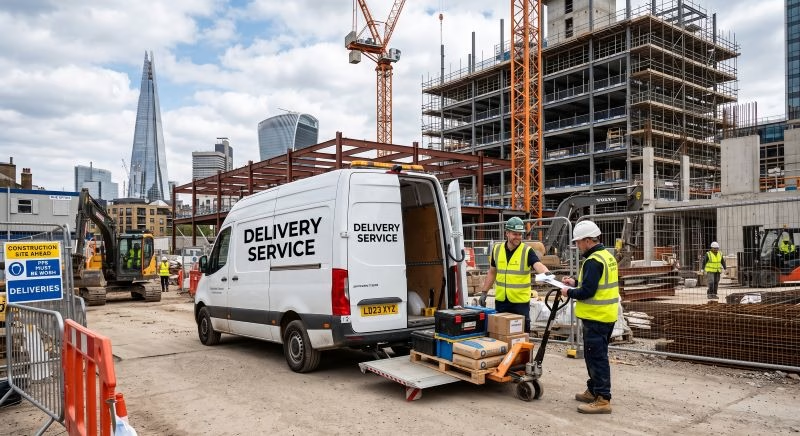
Delivery is no longer a side service for construction suppliers. Contractors expect materials on site at a set time. Miss the window and crews stand idle.
Growth strains delivery fast. Orders are heavy, sites are tight, and schedules shift by the hour. Adding trucks alone will not fix that. Process comes first, then capacity.
Measure Cost Per Delivery Before You Grow
Start with a clean baseline. Track cost per stop by truck, route, and product type. Include fuel, driver hours, maintenance, and time spent waiting on site.
Review the numbers weekly. Look for stops that run past the planned time. Flag customers who always need extra help. Adjust pricing or terms based on what you find.
Most suppliers guess at these numbers. Manual tickets and spreadsheets hide the real picture. Good software for delivery management pulls stop times, mileage, and proof of delivery into one record. That data shows which routes earn money and which ones drain it.
Fix Order Intake First
Bad orders create bad routes. A missing gate code or vague unload point stalls a driver at the curb. Every stalled stop pushes back the rest of the day.
Make key fields mandatory. A ticket should not close without a site contact, unload method, access limits, and delivery window. Drivers should not call the office for basics.
Set firm cutoff times. Require next-day orders by a fixed hour. Charge a fee for rush requests. This protects your route plan and covers the cost of disruption.
Plan Routes Around Load and Site Limits
Construction routes are not parcel routes. A stop is not just an address. It may need a boom, a forklift, or two laborers.
Match equipment to the stop. Send the boom truck only where the site cannot offload. Keep heavy loads like block and pavers off light trucks. Check weight limits and bridge restrictions before dispatch. Confirm the forklift or crane will be on site before the truck rolls.
Build windows around site reality. Concrete crews want mornings. Framers want lumber before the first shift. Sort stops by these needs, then optimize by distance.
Add Capacity Without Adding Trucks
Buying a truck is the costliest way to grow. The American Transportation Research Institute’s 2026 cost analysis shows the average cost to operate a truck reached $2.336 per mile in 2025. That is up 3.4% from 2024 and a record for the report.
Raise utilization first. Cut idle time, reduce empty miles, and combine partial loads. Track deadhead miles per route. Anything above your baseline needs a reason. Every hour a truck sits at a site is capacity you already paid for.
Once utilization is high, match the next step to your demand pattern:
- Third-party carriers for overflow and peak weeks
- Dedicated trucks for your top accounts
- Smaller vehicles for remodel and residential drops
- An early shift for pre-dawn site deliveries
Keep Contractors Informed
Contractors want to know where materials are. Send text alerts with a narrow arrival window. Share a live tracking link on request. Fewer calls will reach your counter staff.
Capture proof of delivery at every stop. Take photos of the drop location and collect a signature. Note damage when it happens. This cuts disputes and speeds up invoicing.
Use Live Dispatch and Telematics
Telematics gives dispatchers live truck location and engine data. Use it to reroute around delays. Watch idle time, harsh braking, and unscheduled stops. Coach drivers with the data, not opinions.
Dispatch should plan by weight and cube, not stop count. A truck with ten light stops has room. A truck with four block loads may already be at its limit. Set payload caps per vehicle in the system and block overloads.
Scale in Stages
Do not roll out changes everywhere at once. Pilot one route or one branch for 30 days. Compare cost per stop and on-time rate against your baseline.
Expand what works. Train drivers and dispatchers together so both sides know the rules. Review results monthly. Keep a short written playbook for exceptions like missed windows, damaged goods, and site refusals.
Scaling delivery is an operations problem, not a truck problem. Fix your data, order intake, routes, and yard flow first. Then add capacity where the numbers say it pays back.