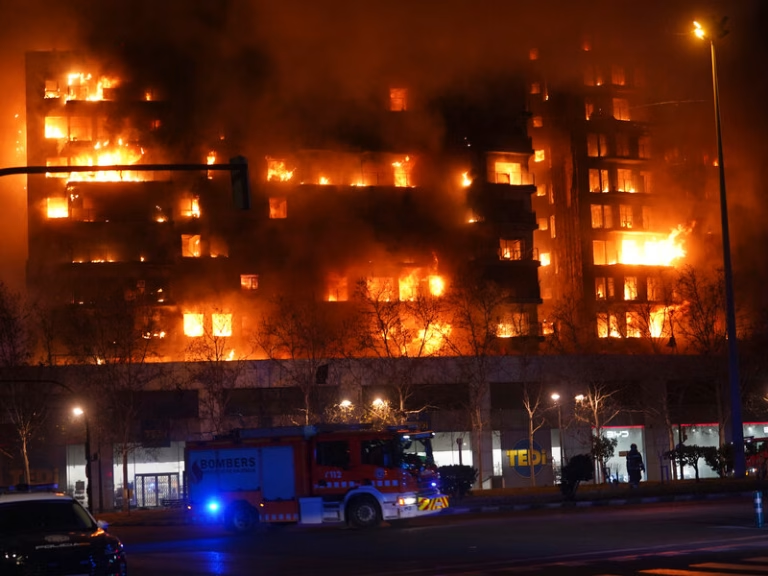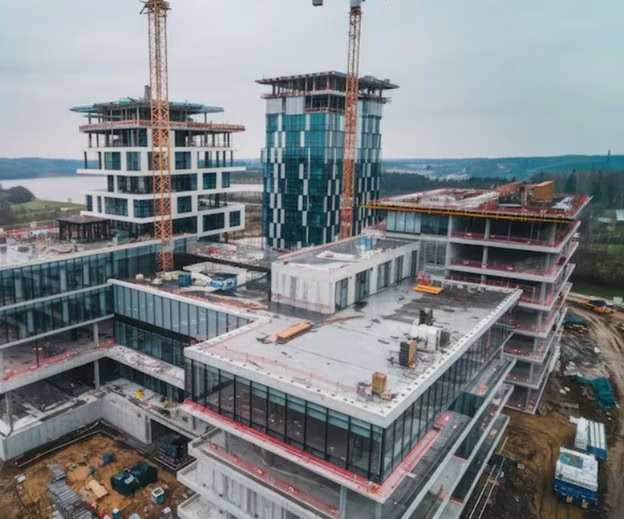
The construction industry operates in a fast-changing environment. Material prices fluctuate, labour shortages affect timelines, supply chains shift unexpectedly, and design trends evolve constantly. From residential developments to commercial towers and infrastructure projects, uncertainty is part of the industry.
Yet the most successful construction projects are rarely built on short-term decisions.
They are built through long-term planning.
Developers, architects, contractors, and interior specialists who focus on durability, lifecycle performance, maintenance, and sustainability create buildings that remain functional and valuable for decades. In modern construction, stability does not come from reacting quickly to every challenge. It comes from building with the future in mind.
Why Construction Projects Become Unstable
Many construction challenges begin long before work starts on-site.
Poor coordination between design teams, unrealistic schedules, low-quality materials, and rushed budgeting often create delays and expensive corrections later. Projects may look efficient in the early stages, but short-term decisions frequently increase long-term operational costs.
For example:
- Inadequate waterproofing can lead to structural damage and interior deterioration.
- Low-cost flooring may require replacement within a few years.
- Poor ventilation planning can increase energy consumption and reduce occupant comfort.
- Limited maintenance access can make future repairs expensive and disruptive.
These issues show why long-term thinking is essential in both construction and interior planning.
Buildings Are Long-Term Assets
Unlike temporary products, buildings are expected to perform for decades. Residential properties, offices, hospitals, hotels, shopping centres, and public infrastructure all rely on systems designed for long-term use.
Structural integrity, energy efficiency, safety, maintenance access, and interior functionality all influence how a building performs over time.
A project may officially finish within months or years, but its success is measured across its entire lifecycle.
That is why modern construction planning increasingly focuses on:
- lifecycle cost analysis
- sustainable materials
- energy-efficient systems
- resilient infrastructure
- adaptable interior spaces
- long-term maintenance planning
The goal is no longer just to complete a project. The goal is to create a building that continues to perform efficiently long after construction ends.
Durable Materials Reduce Long-Term Costs
Material selection plays a major role in project stability.
While lower-cost materials may reduce initial expenses, they often increase maintenance and replacement costs later. Durable construction materials improve reliability, reduce downtime, and extend building lifespan.
This applies to both structural and interior elements.
For example:
- High-performance roofing systems improve weather resistance.
- Quality insulation reduces long-term energy consumption.
- Durable flooring performs better in high-traffic commercial spaces.
- Moisture-resistant finishes help protect interior environments.
- Long-lasting exterior cladding reduces maintenance frequency.
In modern building projects, durability is directly connected to financial stability.
Smart Interior Design Supports Building Performance
Interior design is no longer viewed as purely decorative. Today, interior planning is closely linked to efficiency, flexibility, and occupant wellbeing.
Well-designed interiors improve how people use and experience a building. In offices, adaptable layouts allow businesses to evolve without major renovations. In hospitality spaces, durable finishes improve operational efficiency. In residential developments, practical layouts improve long-term comfort and functionality.
Long-term interior planning also considers:
- natural lighting
- ventilation
- acoustics
- storage efficiency
- ease of maintenance
- material durability
Spaces that balance aesthetics with functionality tend to maintain value more effectively over time.
Sustainability Requires Long-Term Thinking
Sustainable construction depends on decisions that extend far beyond the handover phase.
Green building strategies focus on reducing operational costs while improving environmental performance. Energy-efficient systems, water-saving fixtures, smart lighting, passive cooling strategies, and recyclable materials all contribute to long-term sustainability.
However, sustainability is not only about technology. It is also about designing buildings that can adapt to future needs.
Flexible spaces, resilient infrastructure, and efficient maintenance systems help extend building lifespan and reduce unnecessary reconstruction.
This approach is becoming increasingly important as cities continue to expand and governments strengthen environmental regulations across the construction sector.
Technology Improves Efficiency, But Planning Still Matters
Modern construction technologies continue to transform the industry. Building Information Modeling (BIM), prefabrication, smart building systems, and digital project management tools have improved coordination and productivity.
These technologies help teams:
- reduce construction errors
- improve scheduling accuracy
- monitor budgets
- enhance collaboration
- improve energy performance
However, technology alone cannot guarantee project success.
Long-term planning remains the foundation of stable construction. Even the most advanced systems depend on proper execution, realistic budgeting, skilled labour, and strong project coordination.
Large-scale industrial and infrastructure developments often rely heavily on this long-term approach. Companies involved in energy and infrastructure operations, such as G2 Petroleum Texas, understand the importance of durability, operational continuity, and lifecycle planning when managing complex assets and development projects.
Maintenance Planning Protects Building Value
One of the most overlooked aspects of construction planning is future maintenance.
Buildings that are difficult to inspect, clean, repair, or upgrade often become more expensive to operate over time. Long-term construction planning ensures that maintenance requirements are considered during the design phase rather than after completion.
This includes:
- accessible service systems
- proper drainage design
- durable mechanical systems
- replaceable interior finishes
- efficient utility layouts
Preventive maintenance planning helps extend asset lifespan while reducing operational disruptions.
Common Short-Term Mistakes in Construction
Several common decisions can reduce long-term project stability:
Choosing Materials Based Only on Initial Cost
Cheap materials may increase repair and replacement expenses later.
Ignoring Lifecycle Costs
Operational and maintenance expenses often exceed initial construction savings.
Prioritizing Trends Over Functionality
Interior trends change quickly, but functional layouts remain valuable.
Rushing Project Timelines
Compressed schedules can reduce construction quality and increase rework.
Overlooking Future Adaptability
Buildings should be able to support future renovations, technology upgrades, and changing user needs.
Why Long-Term Planning Creates Better Projects
Construction projects succeed when teams think beyond immediate completion deadlines.
Long-term planning improves:
- structural reliability
- operational efficiency
- energy performance
- maintenance management
- occupant comfort
- property value
It also reduces costly surprises throughout the building lifecycle.
As the construction industry continues evolving, developers and contractors are increasingly prioritizing resilient design, sustainable systems, and durable interiors that provide long-term performance rather than short-term savings.
Final Thoughts
Modern construction is about more than completing projects quickly. It is about creating buildings and interiors that remain efficient, durable, and valuable for years to come.
Long-term planning helps construction professionals make smarter decisions about materials, sustainability, maintenance, and design. It reduces risk, improves lifecycle performance, and creates spaces that continue serving occupants effectively over time.
In an industry shaped by constant change, long-term thinking remains one of the strongest foundations for stability.