Inadequate sanitation is one of the most common citations issued on US job sites and one of the most avoidable. Getting portable toilet provision right is not just a compliance box to tick, but also affects crew productivity, morale, and how a site reads to an inspector.
This guide walks site managers and contractors through the practical criteria that matter when sourcing the right porta potty for sale or hire for an active build.
OSHA Requirements: How Many Portable Toilets Does a Construction Site Need?
The governing standard is OSHA 29 CFR 1926.51(c), and its Table D-1 sets the minimum count by crew size. For 20 or fewer workers, you need at least one toilet facility.
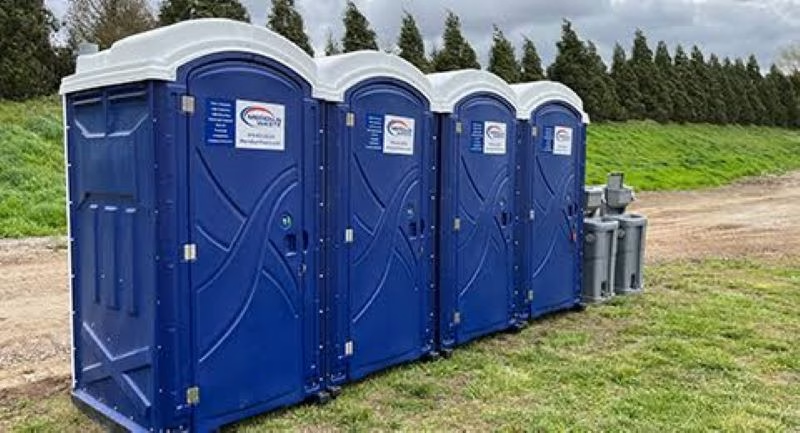
Portable restroom for construction crews of 20 to 199 workers require one toilet seat and one urinal per 40 workers. At 200 or more workers, that ratio shifts to one toilet seat and one urinal per 50 workers. Count your peak headcount, including subcontractors, not your daily average.
Two points trip up site managers.
- OSHA has confirmed that an out-of-service or unsanitary unit does not count toward your minimum.
- Facilities must be readily accessible, generally interpreted as reachable within a ten-minute walk of the work area. Many contractors voluntarily follow the industry guideline of roughly one unit per ten workers, which exceeds the legal minimum and helps keep wait times down on busy sites.
Rent vs Buy: Which Makes More Sense for Your Project?
Finding a porta potty for sale is easy, but knowing whether to buy or rent should be based on key factors, such as holding tank capacity, ADA compliance, ventilation, and durability for outdoor long-term use. Purchasing rather than renting makes economic sense for contractors with recurring multi-site sanitation needs or long-duration projects.
The decision framework is straightforward. A short, one-off project almost always favors renting, avoiding storage, servicing logistics, and capital outlay.
For operators running multiple concurrent sites, projects measured in years rather than months, or firms that rent the same units season after season, recurring rental fees start to look like a lease on equipment you could have owned outright.
When Purchasing Portable Restrooms Is the Right Call
Buying tends to pay off for multi-site general contractors and large operations that can amortize the upfront cost across years of use. If your company is consistently paying for units across several jobs at once, ownership beats a rolling service contract within two to three years. When you find porta potty for sale, compare tank capacities and build quality before committing capital. Ownership also gives you control over servicing schedules and unit availability, rather than depending on a rental provider’s calendar during a regional demand spike.
What to Look for When Selecting a Construction Site Porta Potty
Capacity is the first specification to check: standard units typically carry a holding tank in the 60 to 70 gallon range, which dictates servicing frequency for a given crew size. Look closely at ventilation, as a well-vented unit remains usable for far longer between services, which directly affects your compliance position. Holding tank size should match your crew and shift pattern, not the lowest sticker price.
Beyond the tank, evaluate hand sanitizer versus an integrated handwash station. OSHA requires handwashing facilities where running water is available, and sanitizer alone is not a substitute in those conditions. For mixed-ability crews or sites open to the public, ADA-compliant units are non-negotiable. Finally, prioritize durable polyethylene construction designed to withstand months of outdoor exposure, UV, and repeated relocation around an active site.
Placement and Site Logistics
The placement of your construction site portable toilet area matters as much as how many you have. OSHA expects toilets to be within reasonable proximity to the work area, and away from hazardous zones, material drop areas, and storm drains. Set them on stable, level ground so they don’t tip, and ensure the placement provides clear access for pump trucks to service the tanks without crossing active work areas. On tight urban sites, plan servicing access into your site logistics from day one; a unit that can’t be reached by a vacuum truck becomes a compliance problem fast.
Frequently Asked Questions
How many porta-potties per construction workers?
At a minimum, OSHA requires one toilet for up to 20 workers, then one toilet and one urinal for every 40 workers thereafter. Many contractors exceed this, using roughly one unit per 10 workers to reduce wait times and keep units sanitary between services.
What is the OSHA requirement for portable toilets on a job site?
OSHA 29 CFR 1926.51(c) and its Table D-1 set the minimum toilet counts by crew size, require facilities to be readily accessible (generally within a ten-minute walk), and mandate handwashing where running water is available.
Is it cheaper to rent or buy a portable toilet for construction?
For short, single projects, renting is usually cheaper. For recurring multi-site use or long-duration projects, buying typically becomes more economical within two to three years once accumulated rental fees are factored in.
What type of portable toilet is best for long-term construction use?
Durable polyethylene units with larger holding tanks, robust ventilation, and ADA-compliant options where required hold up best for extended outdoor use and reduce the frequency of servicing.
Make the Right Call for Your Site
Choosing a portable restroom for construction job sites comes down to four decisions: how many units your peak crew size requires under OSHA, whether your usage pattern favors renting or owning, which specifications match your shift and site conditions, and where the units can be placed for both access and servicing.
If your operation is leaning toward buying a portable restroom, research manufacturers directly and request full unit specifications before you commit.