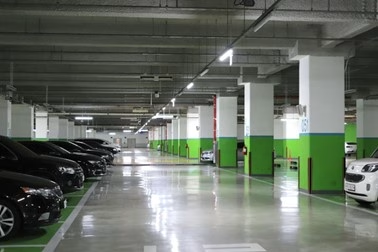
For most commercial business premises, the parking lot is the first thing everyone sees. Commercial parking lots are used for pedestrian traffic and vehicle parking. The lot’s impression of potential customers, employees, and customers influences a user’s feeling about your company. A well-designed parking lot varies based on its function, size, and other needs. This post details the size of the parking lot, thickness of the pavement, and more considerations when planning parking lot installations.
The Size of the Parking Lot
The size is mostly determined by the number of people a parking lot can accommodate at a time. Different industries may use a facility’s square footage when determining the overall size of the area. Some business establishments have specific parking lot requirements depending on the seating capacity or rooms available. Your type of business will determine the industry’s code or recommended number of parking stalls and least dimensions of the parking lot.
Thickness of the Pavement
A pavement’s thickness of the surface and base will depend on the weight the asphalt can handle everyday. The kind of vehicles that will be using the pavement, the load weight, and quality of subgrade soil affects the pavement’s thickness to achieve adequate durability. When you use the minimum thickness of the pavement in your design, always remember that reductions under the required minimum value causes failure in your asphalt.
The Parking stall Layout
The layout of the parking stall will depend on how people will utilize it. For instance, rows of parking stalls are usually designed at an angle of 90, 60, or 45 degrees depending on its purpose. Angles of 45 to 60 degrees are suitable for facilities with high turnover. 90 degrees parking angles are a bit challenging to park.
However, they have the highest number of passenger car capacity. Architects must consider the intended use before incorporating design elements and a layout. This objective helps you optimize space while still in the planning stage.
Exits and Entrances
To ensure your design is functional, you need to consider the traffic flowing in and out of the commercial parking space. The access opening influences many important elements of design, such as the angle of each parking stall. If an exit is under 30 feet wide, you may consider planning for a separate entrance and exit.
On-Foot Traffic
Plan for a commercial lot that caters to both pedestrians and drivers. Consider how customers and employees will move from the parking space to the building’s entrance. To minimize the risk of accidents, you need to include driver’s and pedestrian safety in the design layout. Create design elements that make everyone’s experience convenient and easy.
Truck Lanes
Some industries have to expedite traffic to loading areas and heavy equipment zoning. In such cases, the design of the parking lot requires heavy truck lanes with a pavement structure to handle the heavy loads. Put into consideration how heavy vehicles might use the parking and install the required pavement thickness.
Pavement Drainage
Consider the parking lot’s surface drainage. A saturated pavement loses its strength and stability quickly, which causes pavement failure when heavy loads are on it. It is required to address asphalt drainage issues at the beginning of the construction and implement different methods of prevention in the design.
Construction of the Base
When constructing the base, consider whether the parking pavement should have an aggregate base or full-depth asphalt. The subgrade, or ground below the pavement needs grading to the chosen base’s requirements. The subgrade’s surface needs to be compacted and any mistakes corrected before construction of the base.
Routine Maintenance
Regularly maintaining the parking facility is essential to extend its lifespan. Maintenance might include routine inspections, minor repairs of issues potholes, cracks, and drainage issues.
Working with Experienced Professionals
Large paving projects involve heavy machinery, complex planning, and specialized expertise. Collaborating with experienced professionals ensures that the design, materials, and method of construction are up to the industry standards.
Many developers rely on experts such as a commercial paving contractor to manage these projects efficiently. These professionals understand the technical aspects of site preparation, grading, material selection, and installation. This helps reduce costly mistakes and delays.
Endnote
A well-executed parking installation can significantly enhance the usability and value of a property. By focusing on proper planning, efficient design, and reliable construction practices, developers can create surfaces that are capable of handling heavy traffic while maintaining their structural integrity for years.