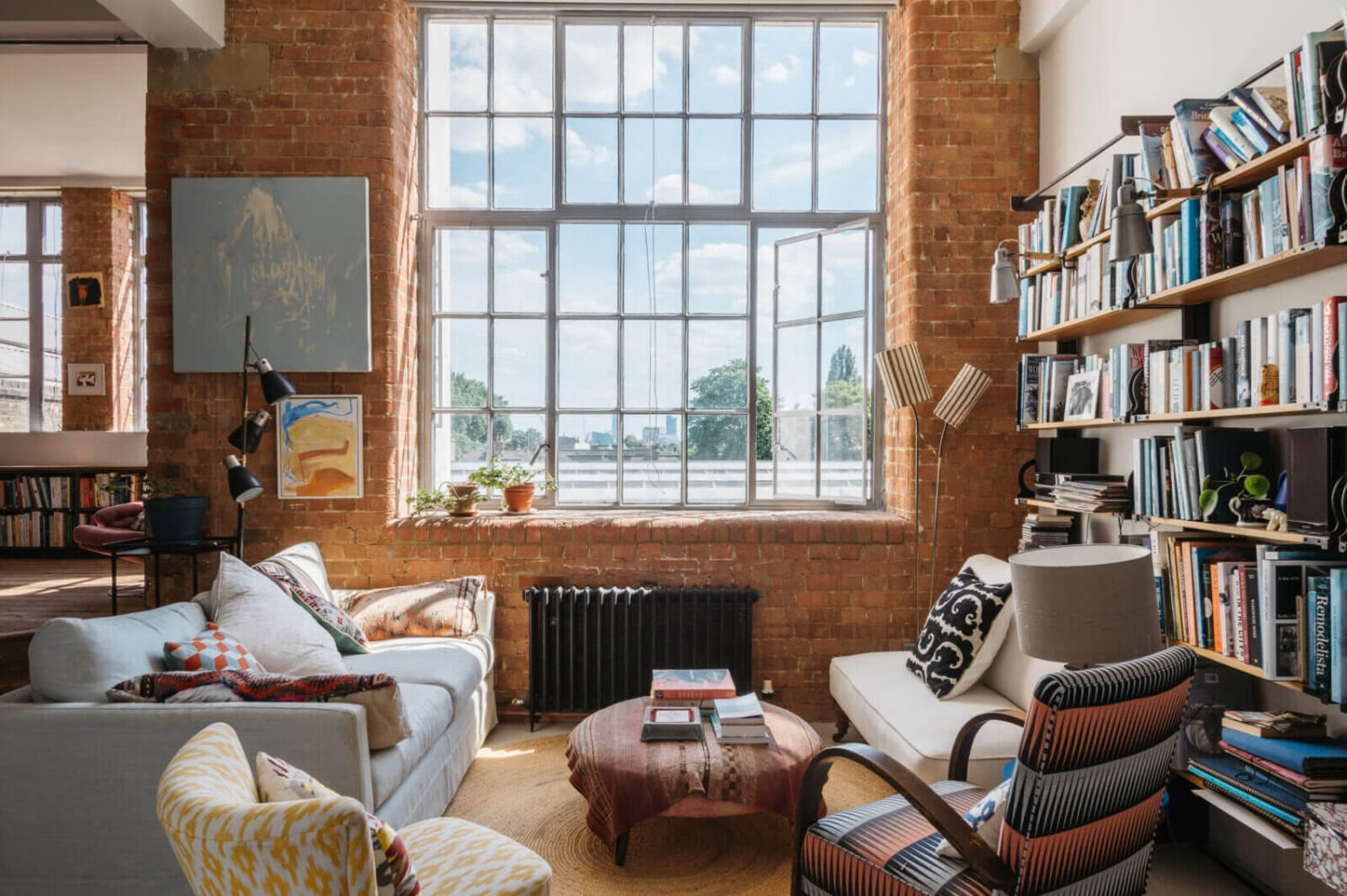
London’s housing crisis continues to challenge homeowners seeking additional space without the hefty price tag of moving. With property prices remaining stubbornly high and stamp duty costs adding significant expense to any move, more Londoners are discovering that the answer lies not in looking outward, but upward. The sophisticated world of loft conversion design London specialists are transforming unused attic spaces into valuable living areas, offering a practical solution that adds both space and significant property value.
The Economics of Vertical Expansion
The financial case for loft conversions in London has never been stronger. Current market analysis shows that a well-executed loft conversion can add between 20-25% to a property’s value, often exceeding £70,000 in many London boroughs. When compared to the combined costs of estate agent fees, stamp duty, and moving expenses—which can easily reach £40,000-50,000 on an average London property move—the economics become compelling.
Beyond the immediate financial benefits, loft conversions offer homeowners the opportunity to create bespoke spaces tailored to their specific needs. Whether it’s a master bedroom suite with en-suite bathroom, a home office addressing the permanent shift to hybrid working, or additional children’s bedrooms for growing families, these conversions provide flexibility that buying a larger property might not offer.
Navigating London’s Complex Planning Landscape
The regulatory environment surrounding loft conversions in London requires careful navigation. While many conversions fall under Permitted Development Rights (PDR), allowing work to proceed without formal planning permission, the reality is often more complex. Properties in conservation areas, those with Article 4 directions, or conversions exceeding specific volume increases require full planning applications.
Professional architectural technologists and structural engineers play a crucial role in this process. They understand the nuances of each London borough’s planning policies, from Westminster’s strict conservation requirements to Hackney’s more progressive approach to residential extensions. This expertise proves invaluable when dealing with Party Wall agreements, Building Regulations compliance, and the technical challenges of working with London’s varied housing stock.
Technical Innovation in Modern Loft Design
The technical aspects of loft conversions have evolved significantly over the past decade. Modern conversions must meet stringent Building Regulations including Part L for thermal efficiency, achieving U-values of 0.15 W/m²K for roofs. Fire safety requirements under Part B mandate specific escape routes, fire-resistant materials achieving 30-minute fire resistance, and appropriate smoke detection systems.
Structural considerations remain paramount, particularly in Victorian and Edwardian properties that dominate much of London’s housing stock. Load calculations must account for new floor joists, typically requiring 200mm x 50mm C24 grade timber at 400mm centers, while steel beams (often 178 x 102 x 19 UB sections) support dormer structures and roof modifications. These calculations become even more critical in terraced houses where party wall implications affect neighboring properties.
Contemporary Design Trends Reshaping London Lofts
Today’s loft conversions reflect changing lifestyle patterns and aesthetic preferences. The post-pandemic emphasis on home working has driven demand for dedicated office spaces with excellent natural light and acoustic separation. Biophilic design principles are increasingly incorporated, with large roof windows, living walls, and natural materials creating healthier living environments.
Sustainability has become a key driver in design decisions. Triple-glazed windows, mechanical ventilation with heat recovery (MVHR) systems, and high-performance insulation materials like sheep’s wool or recycled newspaper are becoming standard specifications. Smart home technology integration, from automated blinds to climate control systems, appeals to London’s tech-savvy homeowners.
The aesthetic has shifted from purely functional to architecturally ambitious. Crittal-style windows and doors, exposed structural elements, and minimalist storage solutions create spaces that feel integral to the home rather than afterthoughts. Wet rooms and compact luxury bathrooms maximize limited space while maintaining high-end appeal.
Cost Considerations and Budget Planning
Loft conversion costs in London vary significantly based on type and specification. A basic Velux conversion typically ranges from £20,000-35,000, while dormer conversions cost £35,000-60,000. Hip-to-gable conversions, popular in semi-detached properties, range from £45,000-70,000, with mansard conversions—common in conservation areas—reaching £60,000-95,000.
These costs must factor in professional fees (typically 10-15% of construction costs), Building Control fees (£750-1,500), Party Wall surveyor costs (£1,000-2,000 per neighbor), and potential planning application fees if required. VAT at 20% applies to most residential conversions, though reduced rates may apply to properties vacant for over two years.
The Construction Process: Managing Disruption
The construction timeline typically spans 8-12 weeks for a standard dormer conversion, though complex mansard conversions may extend to 16 weeks. The process begins with scaffolding erection and roof strip, followed by structural alterations including steel beam installation and floor joist positioning. Dormer construction or roof light installation follows, with insulation and internal finishing completing the shell.
Minimizing disruption requires careful planning. Most work occurs externally initially, with internal breakthrough delayed until essential. Dust protection systems, designated access routes, and clear communication protocols help maintain livability. Many families choose to remain in residence, though temporary relocation during the 2-3 week roof-open period is sometimes advisable.
Future-Proofing Through Intelligent Design
Forward-thinking loft conversion design anticipates future needs. Structural provisions for eventual lift installation, pre-wiring for electric vehicle charging points accessible from roof terraces, and modular design allowing easy reconfiguration ensure longevity. Climate change adaptation through increased insulation specifications and passive cooling strategies protects against rising temperatures.
The integration of renewable technologies, while challenging in conservation areas, offers long-term benefits. Solar panels, air source heat pumps serving loft spaces, and battery storage systems reduce operational costs and carbon footprints. These considerations, while adding initial cost, enhance property value and appeal to environmentally conscious buyers.
Conclusion
Loft conversions represent more than mere home improvements; they’re architectural solutions to London’s space crisis. Success requires balancing technical expertise, regulatory compliance, design innovation, and budget management. Professional guidance from experienced architectural consultancies ensures these complex projects deliver maximum value while minimizing risk.
For London homeowners, the question isn’t whether to convert their loft, but how to ensure the conversion meets both immediate needs and long-term aspirations. With proper planning, professional expertise, and quality execution, loft conversions offer a transformative solution that enhances both lifestyle and property value in one of the world’s most competitive property markets.