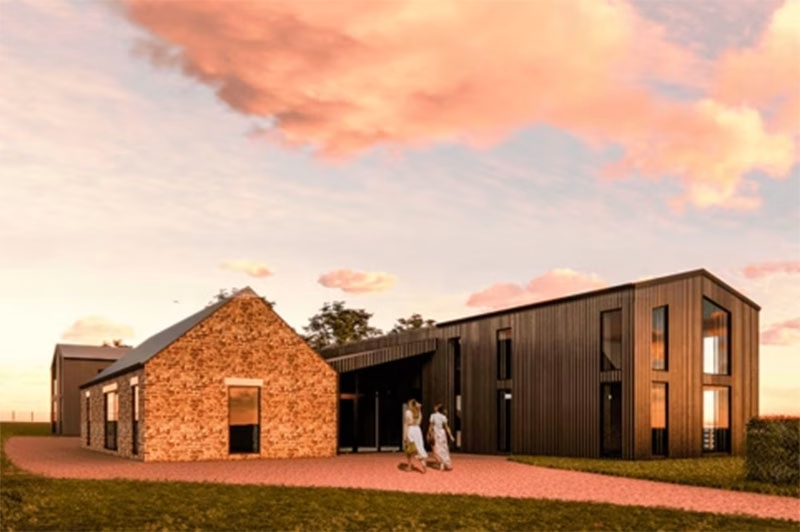
Agricultural facilities no longer function as simple shelters for equipment, animals, or crops. They have become complex working environments that support productivity, compliance, sustainability, and long-term operational stability. As farming practices evolve, the design of agricultural buildings adapts to meet higher expectations around efficiency, resilience, and environmental performance.
Modern agricultural facilities reflect broader shifts in agricultural building design, where efficiency, adaptability, and long-term performance increasingly shape how farm structures are planned and used.
This evolution reflects a broader understanding that the physical environment plays a direct role in output quality, operating costs, and workforce wellbeing. Well-designed facilities reduce friction in daily operations and support predictable performance across seasons.
Agricultural Facility Design in a Changing Landscape
Agricultural buildings were once designed with a narrow functional focus. Storage, shelter, and containment defined most layouts. Today, facilities must support complex workflows, integrate technology, and comply with environmental expectations that did not exist a generation ago.
Climate pressure has become a defining factor. Temperature extremes, irregular rainfall, and stronger winds require buildings that manage airflow, moisture, and insulation more effectively. Economic pressure adds another layer. Facilities must deliver efficiency over decades, not only at installation. Short-term savings that lead to higher maintenance costs now carry greater risk.
Design decisions increasingly follow a sustainable farm design process that accounts for climate volatility, operational efficiency, and long-term environmental performance from the earliest planning stages.
Consumer expectations also influence design. Transparency around food production, animal welfare, and environmental impact has pushed many operations to open parts of their facilities to visitors, auditors, or partners. Buildings increasingly balance operational efficiency with a clean, professional appearance that reflects modern agricultural values.
Layouts now prioritise smooth movement of people, animals, and materials. Clear separation between clean and dirty zones supports hygiene standards. Dedicated service corridors improve access for maintenance without disrupting core operations. These design decisions reduce downtime and improve long-term reliability.
Modern Materials Reshaping Agricultural Buildings
Material selection plays a central role in modern agricultural design. Traditional timber and corrugated metal remain in use, but newer materials offer improved durability, insulation, and resistance to environmental stress.
Composite panels have gained traction across livestock, processing, and storage facilities. Produced using recycled or engineered components, these panels resist moisture, pests, and UV exposure more effectively than many conventional options. Their dimensional stability reduces warping and cracking, especially in humid or temperature-variable environments.
In practice, composite cladding lowers maintenance demands and extends service life. Facilities exposed to washdown routines, condensation, or airborne moisture benefit from surfaces that do not degrade quickly under repeated cleaning cycles.
Low-impact options such as hempcrete and bamboo are increasingly used as low-impact building materials, supporting thermal stability while reducing reliance on mechanical heating or cooling.
Bamboo has emerged as a renewable option for non-load-bearing applications. Its rapid growth cycle and high strength-to-weight ratio make it suitable for partitions, fittings, and internal finishes where sustainable sourcing is a priority. Used correctly, it supports durability without increasing environmental load.
Technology Integration in Agricultural Facilities
Technology now shapes how agricultural buildings function on a daily basis. Automated systems monitor and adjust internal conditions, reducing manual oversight while improving consistency.
Greenhouses and controlled growing environments rely on integrated climate systems that track temperature, humidity, light levels, and external weather patterns. Adjustments occur in real time, supporting stable growth conditions and predictable yields. This level of control reduces waste and limits crop stress during sudden weather changes.
Modern facility design increasingly includes automated climate management. Through data-driven systems, Agriteer supports stable environmental control while lowering overall energy demand in sensitive growing environments.
In livestock facilities, automated ventilation and cooling systems protect animal welfare during heatwaves. Maintaining stable internal conditions lowers stress-related health risks and supports steady production levels even during peak summer temperatures.
Sensor networks extend beyond climate control. Structural monitoring detects moisture ingress, material movement, or equipment irregularities early. Addressing small issues before they escalate reduces repair costs and prevents operational disruption.
Energy management platforms further optimise facility performance. By tracking consumption patterns, systems adjust lighting, heating, and cooling to avoid unnecessary load. Load-shedding features reduce energy draw during peak tariff periods, supporting cost control without compromising operational needs.
Designing for Workforce Comfort and Productivity
Human factors play a larger role in agricultural design than ever before. Facilities that support physical comfort and efficient movement reduce injury risk and improve task accuracy.
Ergonomic planning begins with workstation height, reach distances, and circulation paths. Principles of ergonomic workplace design help workers perform varied tasks without excessive bending or stretching. Clear sightlines improve coordination and reduce errors in processing environments.
Practical outcomes follow. Facilities that redesign sorting, packing, or handling areas often report faster throughput and reduced fatigue. Involving staff in layout testing before final installation helps identify friction points early.
Natural light improves working conditions across agricultural spaces. Roof lights, clerestory windows, and reflective surfaces distribute daylight deeper into large sheds or halls. Reduced reliance on artificial lighting lowers energy use while supporting alertness during long shifts.
Noise management has become a priority in mechanised environments. Acoustic treatments, zoning of loud equipment, and strategic placement of barriers limit exposure to continuous noise. Separating high-noise zones from quieter work areas supports concentration and protects hearing over time.
Sustainability as a Core Design Principle
Sustainability now influences agricultural facility design at every level. Renewable energy integration has moved from optional upgrade to standard consideration.
Large roof spans provide ideal surfaces for photovoltaic installations. Solar panels generate on-site electricity while also shading roof structures, reducing internal heat gain. Facilities that integrate renewable energy on farms through on-site generation and storage gain resilience during grid interruptions.
Wind energy complements solar in exposed rural locations. Small-scale turbines placed at field margins supply energy for grain drying, ventilation, or processing equipment. Proper sizing and professional installation remain essential to ensure consistent output.
Water management systems also shape modern design. Rainwater harvesting captures runoff from roofs and yards, storing it for irrigation, cleaning, or livestock use. Greywater recycling further reduces reliance on mains supply and improves resilience during dry periods.
Passive design strategies reduce mechanical demand. Building orientation captures winter sun while limiting summer exposure. Thermal mass, such as concrete floors, absorbs heat during the day and releases it overnight, smoothing temperature fluctuations without active systems.
Green roofing solutions add insulation and improve stormwater management where structural capacity allows. When properly designed, green roofs moderate internal temperatures and extend roof membrane lifespan.
Waste management completes the sustainability cycle. Anaerobic digestion systems convert animal waste into biogas for heating or electricity generation. Composting transforms crop residue into soil amendments, closing nutrient loops and reducing disposal costs.
Modern agricultural facility design now balances efficiency, sustainability, and long-term resilience. Buildings that respond to climate pressure, integrate smart systems, and prioritise human comfort perform more reliably over time. Thoughtful material selection and adaptable layouts reduce maintenance risk and support evolving farming models. When design decisions reflect real operating conditions, agricultural facilities remain productive, compliant, and economically stable across decades.
Future-focused agricultural facilities succeed when planning aligns technology, materials, and daily operations. Investing in resilient design today protects productivity, controls costs, and supports regulatory compliance, allowing farms to adapt as environmental, economic, and market pressures continue to change.